
Zattoo is a little bit of code that allows you to watch streaming television from the comfort of your laptop rather than using a television or other device. It’s better than Joost because they don’t discriminate against PowerPC users. It means I can watch BBC 1, 2 3 4, ITV, C4 CBBC, BBC news 24 (that’s the crappy England only version). I’m happy to see this change. I had tested it months ago in Switzerland and found the product interesting. You can read more here....
Posts tagged “tech related”
-
Zattoo finally ready for England — May 1, 2007
-
Yahoo live — Feb 10, 2008Yahoo live is an interesting live video conferencing tool still in it’s early days. It allows you to stream video live from your webcam and watch up to four other streams at the same time. There’s a chatroom and you can see all the participants at once and select which ones you want in vision and which you’d prefer out of vision. There are a few bugs at the moment. I haven’t found sound that easy to deal with, especially since there’s a five to ten second delay. Chatting with Msiou he told me that what he had done is use skype conference calls to keep the conversation going. Of course this is a makeshift solution and some better interaction should come. My Channel, My live profile...
-
Yahoo live — Feb 10, 2008RandellFever - Feb 0, 2008...
-
Will Marshall: Tiny satellites that photograph the entire planet, every day — Nov 24, 2014Up to date earth imagery every day....
-
Wikipedia Reaches 2 Million Articles — Aug 7, 2007A recent article has brought to the world’s attention that Wikipedia has over 2 million articles on its website and that’s great. What it means is that thousands of people have taken a little time out of their day to provide what knowledge they had to a global audience through their small contribution....
-
why RSS feeds should be complete — Nov 27, 2007When you’re creating web content that’s fed please think about those that are reading your feed from a device that is disconnected. here I am on a train and I’m captive to the content that you make available on your feed. Some feeds have the full article but others don’t. The result of this has a simple consequence. There is no use for your feed on my mobile device since there is no content. I would thus urge anyone with a feed to make sure to make all content available so that people may access it on the move, especially since Wifi is not yet ubiquitous....
-
why RSS feeds should be complete — Nov 27, 2007Jennifer - Nov 3, 2007...
-
Why I am happy that youtube is being sued — Jan 28, 2007I am happy that youtube is being sued because out of the hundreds of video sharing websites out there it is the most devious. It has taken hundreds of hours of content produced at great expense by teams of professionals and offered them in poor quality for nothing on their site. To make it worse it’s made them billions of dollars. How can the mega corporations, through the intermediary of the RIAA give so much trouble to those who share music let allow youtube to thrive. It doesn’t make sense. What about all those video sharing websites that went about making content and distributing it the right way? What about those who decided that they would provide a service at no cost to themselves. I’m speaking of those guilty of unlawful distribution of video material. It’s a website about deception, look at lonelygirl, look at the coke and mentos adverts. Look at the ball in groin laughter. It’s all a form of sadistic pleasure. Why would you want to be manipulated in such a way. On the positive side it was fun to see the world cup celebrations and I uploaded some video of my own in response to other people’s content. When it’s used as a video version of flickr it’s an excellent website because it’s an audiovisual window onto the world where a vast wealth of video content may be accessed. Good snowboarding, post it, good party, post it, personal work you’re proud of, post it. Everyone of us is a content producer and distributor and everyone of us is challenging himself to create something that other people will enjoy. Geocities was about websies, the original sixdegrees was inspired by the film to show that everyone is related throough less than six people to everyone else. Blogging allowed people to reount their lives to anonymous audiences, flickr allowed the sharing of instants and video sharing websites allowed for the sharing of moments. Is it voyeuristic to look at online videos and photographs made by friends and random strangers and is it exhibitionist of them to show that content? Is it wrong to look at it? I would participate in this more actively were it not for the droit d’image. I don’t want others posting pictures of me without my consent and I won’t post pictures of others without their consent. Doesn’t mean I won’t keep looking. It’s fun to constantly refresh the most recent pictures on flickr and see all the events that have been taking place around the world....
-
Why Audiovisual Content That's Not On-Demand is Dead to Me — Oct 14, 2007I’m online from 10-15hrs a day on average and as a result I’m used to having everything available within a short amount of time. I also had access to a PVR with a hard disk upgrade for quite a long time. As a result of both these developments anything that is not available to me when I want to watch it goes unnoticed. That’s because “It’s an on-demand world” as was concluded in one edit I worked on for a client about the future of broadcasting....
-
Why a 20% drop is not necessarily a bad thing for myspace — Sep 12, 2007According to recent articles myspace is losing user share in relation Facebook but this is not necessarily a bad thing. When you think of facebook you know that it’s a glorified phonebook therefore everyone “needs” to use it to remain in the loop. In contrast Myspace is a specialised music sharing site for artists and creators of music to come together and collaborate as members of the same art form. As a result of many users leaving myspace for other social networking websites so Myspace will have far less noise, in other words extra chatter that does not contribute to the appreciation of music. I for one have found myself using Myspace slightly more due to certain bands using the website. There are a hardcore group of people that are part of many social networks at once and they are able to cope with the demands. Most people spend twenty minutes in front of facebook getting up to date with their friends before disappearing. “MySpace’s lead in terms of “attention” is almost embarrassing: it scores 10.79% against Facebook’s 1.67%.” source. People look at more content on Myspace than Facebook and user involvement is what counts to advertisers. Myspace is good for the sharing of music you create without people having to install extra api whilst Facebook is personalised by adding api and hoping that your friends install the same. Both will co-exist happily for another few months whilst waiting for the next site of interest....
-
What the World Searched for in 2014. — Dec 17, 2014Not the most inspired year in search....
-
Watching RC helicopters fly — Aug 27, 2018https://www.youtube.com/watch?v=icXbEiUg9i0...
-
Watching clouds form as a 360 timelapse — Jun 22, 2016Time-lapse videos are fun because we can see something happen faster or slower than real time. By watching this content we gain a better understanding of the world and how it works. For years I have been filming time-lapses and the results can be fun. In some cases we record time-lapses with video cameras and at other times we set an interval timer to take pictures every so many seconds. In this post you will be watching clouds form as a 360 timelapse. I have chosen to share both the flat image and the spherical image. The reason for sharing both versions is to give you an overview of how objects move in both....
-
 Walking Into Heavy Rain — Dec 15, 2022Sometimes you end up walking into heavy rain. That’s what I did today. I looked at the weather and because it was meant to get better over the coming days I assumed that this evening it would get better. Instead, as I walked it started to rain a little more, and then a little harder, and eventually quite a bit harder. Did I get wet beyond the top layer? Nope, but my beanie got a little wet, as did my fleece. My shoes on the other hand were clean, thanks to the flow of water....
 -
 Walking “Barefoot” with The Vapor Glove 6 — May 25, 2023Most shoes are designed to protect the heel with a cushion of air or material that absorbs heel strikes, before they are transmitted to the rest of the skeletal system. With barefoot shoes, especially the Vapor Glove 6 those heel strikes are not absorbed. You feel the force with which your heel is hitting the ground....
 -
Virtual Reality Goggles and multicamera Production — Apr 5, 2016I have worked with video cameras, from hi8 to MiniDV, Beta SP, SX, DVCAM, XDCAM, AVCHD and other formats. Cameras have grown and shrunk, controls have changed from manual to partially automated to fully automated. Television news and Studio camera productions have gone from three or four camera operators to needing a couple and then a single camera operator sitting in a side room with controls for all three cameras. Crane and jib moves are programmed so that the same action is performed at the start of each news program. Virtual Reality technology and Virtual reality headsets are going down in price. Apps provide mobile phone users with 360° videos in normal vision and 3D. The technology we use to watch 360° content and immerse ourselves in the VR world could be adapted and made suitable for multi-camera production. It would be nice for software to be written that moves the camera as we move our heads. This technology is already used by gunners flying in Apache helicopters. The point would be to adapt this technology to camera operating. I would manual controls for zoom and focus and a control to lock off the camera once the desired shot is ready. Imagine how much simpler controlling drone and crane cameras would be. Imagine also how much nicer it will be for conference attendees, concert goers and UN delegates if a smaller remote controlled camera could be used. Camera operators often obscure people’s view. This technology would be less intrusive. Camera operators could sit rather than stand for hours at a time, barely able to move. VR goggles and the technology they contain should not be used just to consume a finished product but should instead be used as a creative/production tool. VR goggles and related tech could be used to simplify people’s work, to make it more intuitive. Multicamera production with VR goggles would reduce costs and make high-quality video coverage achievable even for modest budgets. The excuse for using a single webcam to Livestream an event will be gone making virtual attendance of events more enjoyable....
-
Virtual Reality Advertising — Apr 8, 2016At this moment in time Virtual Reality is an abstract notion for most people. It is easy to find news features and documentaries speaking about the potential of the medium. The video above is the most effective demonstration of Virtual Reality that I have seen so far. I like that they use a greenscreen to key in the environment that the guinea pigs are in. We are immersed in to the reality that they are seeing. It demonstrates not only the games and environments you could find yourself in but how it is a communal rather than solitary experience. This advert removes some of the stigma of virtual reality. From the 6th of May to the 8th of May 2016 a meeting will take place in Crans Montana Switzerland. It has the title of World Virtual Reality Forum. “The World VR Forum is dedicated to advancing the virtual reality industry and culture.” Artists, documentary makers, news producers, architects, surgeons and an ever-expanding group of people will benefit from this technology. The video above helps us understand the intricacies of using something as simple as two hand held controllers. In two to three months the Music festival season will start with Caribana, Montreux Jazz, Paléo Festival and many other music festivals. During these events media outlets and artists love to give interviews to journalists to drive interest in their upcoming performance. For now we usually have two or more cameras. In some cases you have one wide shot of the room or the artists and the second camera is a close up of the artist as he speaks. This summer I expect that we will watch interviews in 360° video where we can turn and see the journalist asking questions and turn to face the artist when he answers. When a group of artists are interviewed you will be able to watch the antics whilst listening to what they are saying. You will watch the artists and the journalists smile and laugh. When I think of VR goggles I do not think so much about gaming as I think about documentary and television production. I like to think about how it could provide new opportunities for content producers to create interesting and immersive video content. “Their headsets were connected with the school campus more than 900 miles away in Okinawa, where the school’s headmaster spoke. The students were also treated to a 360 degree view of the campus inside the augmented reality.” (source) Google Streetview could provide live 360° vision of specific squares, St Marco in Venice, Notre Dame in Paris, St Peter’s in Rome or the market Square in Wroclaw. Imagine Google Street view when wearing a VR headset. VR headsets are being offered by a number of brands for all mobile phones and the number of cameras able to provide 360° video are growing in number. As both of these democratise the market so content creators will have more customers and more incentive to produce relevant content....
-
Vimeo On Demand: Sell your work, your way — Mar 26, 2013Vimeo On Demand: Sell your work, your way from Vimeo Staff on Vimeo....
-
VideoSurf - Video search engine with a difference. — Sep 13, 2008Videosurf, still in beta is an interesting way to search videos. I got my invite this morning and so far there are a number of features I find interesting but I’ll learn more about it before going into detail. When it’s ready it will be an interesting to site to use to sort through many videos at once and will allow you to see what’s within the video, at least visually so far....
-
Video piracy in the 21st century — May 4, 2015A few days ago I was watching a Magnum PI episode where Higgins had a film camera pointed at the television screen to record a game of snooker broadcast from “half way around the world” by satellite. Today I noticed this article speaking of the way in which twitter’s Periscope app and Meerkat were used to pirate a fight. Piracy is nothing new but the simplicity with which people can pirate and share content has evolved. Piracy required rolls of films at first. These rolls had to be developed and then copies had to be made. This could take several days. VHS came along and made it easier. With several VHS decks you could make several copies at once. Steve Jobs is well known for the boot leg tapes he had of music concerts. My generation streamed live music concerts using mobile phones. Football enthusiasts used satellite receivers and streaming software to re-distribute live football matches years ago. This is true both for european Football and American football. The live streaming of broadcast content is now so simple that multiple people, using social media, redistribute content as it happens. There is no lag time. There is no exclusivity possible. PeriscopeTV and Meerkat have made it very simple to share live events circumventing the gate keepers. Gate keepers provide the highest audio and video quality possible for their customers and for this reason they are safe for now. The pirated copy has low video and audio quality and is filmed by a mobile phone camera. Social networks such as Twitter and sporting organisations will need to strengthen their collaboration. Both of them can and will benefit from joining forces. If PeriscopeTV and Meerkat both get paid by the Fight promoters to carry the signal as premium content then the pirate streams will be of less interest. Price will have to reflect the platform on which content is being shared of course....
-
Using leopard as an operating system — Oct 29, 2007Leopards are a strong animal capable of lifting animal carcasses into trees to keep their catch safe. It’s also the new Apple operating system and I purchased it. After taking about two hours to install the operating I’m quite happy with the new operating system. Safari has had some new interactivity added. With most browsers the tabs are fixed at the top of the page and there’s not much you can do. If you’re in a playful mood then open up safari in Leopard and you can switch the tabs between each other. If you feel that one tab deserves it’s own browser window simply pull down the tab and it goes to a full size browser. The user interface for the finder is quite a bit more fun. You’ve got coverflow for you pictures. What this means is that you can go through your pictures with no need to open iphoto and other applications. As a result the ability to be disorganised is greatly enhanced. At the same time looking at photographs and documents is quite a bit easier. The time machine is an interesting piece of software that backs up your data every hour for 24 hours, then every day for a month and after that every week for as long as there’s space on the hard disk. If you’re on a desktop and your external hard drives are always plugged in then this is excellent. If you’re like me and you’re using a laptop the idea is not that great because the time machine is only active whilst I’m taking the time to plug in the hard drive. Setup is really easy therefore anyone with an external hard drive that mirrors the space used on their computer should be able to use it. If you’re using an internal spare hard drive does it work the same way Items in the dock look the same as in tiger except there is a blue dot at the moment to display the applications that are currently active. The mail application has an RSS feed of apple news, just in case you’d missed the latest. You have both to do and notes included straight within the mail application. The calendar has had one or two improvements of which the most useful is the pop out when you’re adding an event. In previous versions you would have to go to either side and type in additional information. With this one data input is overlayed over the calendar greatly increasing usability. The ichat chromakey technology is quite interesting. If you want you can choose any background you want from the database of videos and photographs you have on your laptop. Simply choose the background you want. Move out of shot and wait till it’s seen the image. When you move back into frame you’ve got whichever background you chose. It works moderatly well depending on the type of background you’re using though. Leopard is a nice operating system with a number of new features that make it fun to try out and use. The way information is displayed is interesting and the additional features like cover flow for document browsing, time machine for backup and more are taking advantage of the fact that people’s use of the computer has progressed over the years. By being better at media browsing the operating system is more intuitive to use. So far I’m happy with it....
-
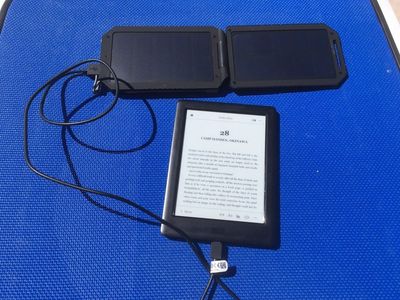 Using an Xtorm Solar Charger — Apr 17, 2017While in Spain for three weeks I was playing with the Xtorm solar Charger. I found that it worked well for the charging of tablets and e-book readers but not mobile phones. [caption id=“attachment_3462” align=“aligncenter”] Solar charger and external battery For years I have wanted to play with solar power. I have wanted to buy a solar panel that I could fix to my bag or that I could use to charge devices. I often looked at the price and weight and changed my mind. I don’t want something that adds kilos to my load, especially if I am climbing. With a small device like the one pictured above you can carry it with you and use it to charge devices. When you drive to the hike or climb, or when you stop for lunch or a drink you can take out this device and start charging your phone, gps, led lights or other devices. if you want to charge devices to 100 percent then I would recommend charging ipads, ebooks, gps watches and other devices with this device. I found that it’s great for providing a phone with a top up charge but that because of my mobile use patterns it will only provide one full charge per day. When we hear people speak about solar power we always hear about “How do we store the power we generate so that we can use it when we need it?” and I found a way. When I woke up in the morning I would put the solar charger near a window or outside if there was no chance of rain to charge up to over 75 percent. When it reached this charge I connected the solar charger to a 10,000mah external battery. It is by using this technique that I have been able to keep my external battery fully charged with no need to plug it in to mains power. In effect it means that I can charge the ipad, the phone or the e-book reader without using mains power....
 -
 Updating Old HTML Webpages — Apr 29, 2023Most websites are simple. They have five to ten pages at most but usually a single page is enough. Most pages are about one specific thing, whether it’s a CV inspired page to find new clients or a simple page with a few products. Most are usually about a single topic....
 -
Two Things — May 24, 2007There are two things to write about. The first of these is that I recently tested the new mobile web version of the TFL website and it’s really good. It’s got a great user interface for a web based service and i think I’ll be using it from time to time when it’s needed. The second bit of info is that I’m moving into a house with 15 megabits per second web connection. I hope that the antenna is powerful to get up to my bedroom. It’s not hard to test anyway. It’s a top floor bedroom in zone two of the tube which means it’s cheaper to get around compared to living in zone four. There are quite a few shops close by although I need to scout the area properly beforehand. I may rent a car to move the stuff since it’s easier than doing three or four trips on the tube. Flat hunting was fun from the point of view that you can choose precisely where you live but in the long run it’s frustrating due to the fast rate of release and take up of flats in a city with over seven million people. Film students got to the end of an essay last night therefore quite a few were at the SU bar. I didn’t spend much time chatting with them but rather with some other friends. The night was particularly good and relaxed. There is one key reason for this. Summer’s here....
-
Two mobile content mentalities. — Mar 17, 2008When’s the last time you visited a wap site? Have you thought of how content displays on mobile phones other than the Iphone? I hadn’t until quite recently. Recently I moved back to Switzerland and have started to work for Allthecontent / Toutlecontenu.com and they provide multiplatform content for devices ranging from televisions to mobile phones and more. As a result of reading too much American press I lost interest in what Nokia were doing until it was mentioned that the iphone is not true mobile web use. At first that statement didn’t make much sense but since then I’ve bought a Nokia N95 8 gig model and I’ve been playing with vodafone live, seeing how content is presented. It’s very simple, quick and to the point. Images are small and sparse but text is heavy. Naviguate from one menu to another and you eventually get to content that’s paying. That’s where it becomes interesting. There are quite a few topics, from sports to entertainment to adult content. Some of this content is in video form, some in MMS form and yet some more comes as text. As a result content is easily accessible from most media handsets. Then there’s the question of data packages. Look at Swisscom. For 18 swiss Francs you receive a hundred megabytes of data transfer. That’s not much when considering the 3 gigs a day of transfers via my laptop. Mobile is different. I read that not more than fifty megabytes a month are downloaded over the air. Take a look at Iphone optimised pages in contrast. They’re graphic intensive, slow to load and designed for one specific screen resolution. As a result of this that content is not accessible on most data plans or mobile devices. Iphones have a good part of the market but they’re excluding many users. You can’t download content on the iphone. You’re losing revenue right there. What I think will be interesting over the coming months is to see how the European Vs. US mentality of mobile delivered content will affect telephone operators in these markets....
-
Twittervox now has a facebook page — Nov 19, 2007Twittervox, a show which I do under the name Warzabidul with the help of Loudmouthman of Loudmouthman.com now has a facebook page which I created earlier in the day. The point of this facebook is to bring together all those that have participated in the show so that they may discuss past and future program topics, from social media, through twitter rules and regulations and towards related topics like seesmic and Second life. If you’re on twitter or seesmic and have a facebook account then come and join the conversation. We’re waiting for you....
-
Twittervox, flatlisters and a possible trip to Paris — Oct 3, 2007In today’s Twittervox episode we had Nik Butler talking about his idea of the flatlister. The concept is based around the idea that when someone is promoting themselves and building their own persona they are a flat lister. In other words they are in charge of their own persona and their own reputation. This carries on from a topic that was discussed by Jeff Pulver when he asked whether we prefer to use our real name or a nickname. There is one school of thought that believes that you should turn yourself into a brand whilst another school of thought believes that you should create a nickname as your brand can be sold off should it become successful enough. That’s just scraping the surface though and here is a short description of how others and I are attempting to use new media and social networking to promote our skills. A few months ago I got a message from a documentary producer asking whether I had more footage of an event they were interested in. They had seen a short edit either on youtube or my site and thought that this would be of value to their project. I said that I had more footage and so over a period of time I sent over the material which they looked through. They decided to use my footage and as a result their documentary will be broadcast sometime in Springtime of 2008 on Arte. That’s great news for me and I’m really happy. There’s going to be a screening of the documentaries and I’m going to do my best to get there to meet these people in person. Any opportunity should be taken to meet new people. In today’s media and cultural landscape any job that’s advertised is seen by thousands of eyes. What that means is that you’ve got a lot of competition and sending your CV is not enough. One job I recently applied to had over a thousand people apply to it. With such great numbers of people applying there’s little chance of finding work through as passive a method as sending an e-mail and electronic cv to find work. One person in Geneva said that you’ve got to stand out, after all those sorting through applications have a pile of several hundred cv on their desks to sort through. I’ve been using Linkedin recently, adding all those people whom I have had contact with to see whether there are any of their contacts that could help me find people whom have a need for my expertise. Jemima Kiss recently made a comment about Linkedin asking why people don’t put their full CV on the website. As a result of that comment I added a few of the more interesting experiences I have had. When you’re at Podcamp every single person has a website. Everyone is their own brand. If you listen to them introduce themselves they will all say who they are and what their website is. Some will even wear the T-shirts that promote either their site or that of the software they use as work tools. They also have twitter accounts. Twitter is one of those tools that’s great for entrepreneur and freelancers because it makes it so much easier to judge the quality of character of those you are working with. You get an idea of their lifestyle, of their work ethic and more. if you’re awake by 7 or 8am then that shows through. If they’re working on one large project or several smallers ones you see it as well. In brief you know when is the best time to contact them for working on current or new projects. We are now living in an era where everyone has access to the same information around the globe and as a result we have a great deal of competition. It is up to us, as individuals, with the tools we have available to demonstrate that we have the required know how. How do you use the tools currently available to us and do other people in your circle of friends also use them? Has it changed your way of working? I’m looking forward to Nik Bulter’s Flatlister article and your feedback....
-
Twitter is Suffering — May 17, 2007[](/content/images/2007/05/jaikutwitter.jpg "jaikutwitter.jpg) source Twitter is suffering and Jaiku is showing off about how great that website is in comparison. They omit to mention two facts. 1. It’s (giving the impression of being) proprietary, interesting mainly to Nokia users (at the moment) 2. It’s better online (requires a browser to take full advantage) Twitter is a mobile status tool of sorts --edit note-- All text in italics is an edit following on from Petteri’s comment....
-
Twitter is Suffering — May 17, 2007Petteri Koponen - May 4, 2007...
-
Twitter IRL — Aug 10, 2007Last night I went to the London twitter meetup and enjoyed the event. I’m used to going out and hearing people talk about music and other things but here is a community that was talking about technology and internet-based activities. Sizemore and Trusted Places organised the event which took place at the Ishtar restaurant....
-
Twitter as a way of life — Apr 14, 2008Twitter is not a social network, rather it’s a way of life. The more you use Twitter the further it gets into your way of life. It allows you to follow current affairs, geek out about social media and keep in touch with friends that uses the social network. What’s more it’s a network that does not require any specific device. At first it’s a confusing place. Look at the public timeline and it’s a torrent of junk and sifting through it will take hours a day. As you spend more time on twitter though you find people of interest to follow. In some cases it’s friends from the physical world, in other cases friends from other websites on the web and then more. In reality what makes twitter interesting, and part of what makes people use it is how efficient it is at getting a message across. You’ve got 140 characters to express yourself. In Paris I was told I speak in 140 characters or less. That’s not a bad thing. In fact it’s good. It’s about the continual flow of information. Imagine you’re swimming down a river but everytime you move to stay afloat you have to close your eyes. That’s what article and blog reading is. As you focus on one task so your ability to focus on anything else dissapears. That’s fine in the old media where pages are static and where airwaves are limited. In the modern world though it is necessary to absorb many sources of information at once. How many of you have your ipod, laptop and mobile phone with you at the time you’re reading this post? I’m sure most. How many of you have more podcasts than you can view or listen to? How many of you have more programs recorded on PVR than you can watch? That’s why twitter is a lifestyle. It’s about constantly looking for information and building an understanding of current affairs through constantly taking in little bits of information. Stop talking about the social media on twitter, rather start talking about the good old fashioned time efficient soundbyte. Want to be heard. Don’t take people’s time. Encourage interest instead. Many people are complaining about the decentralised conversation, the notion that blogs are no longer the center of attention, that twitter, friendfeed, facebook and others are killing the conversation. In fact quite the opposite is true. If you’re in New York you’ve got one set of people, if you’re in London you’ve got another. if you’re in Geneva you don’t have much… To have a decentralised conversation means that many ideas can be explored at once and as pillars of the online community meet at various events so the conversations can once more converge. Don’t worry about comments on a blog, think about the conversations and the people you’re having them with. That’s where the fun is to be had....
-
Twitter as a way of life — Apr 14, 2008Laura Whitehead - Apr 1, 2008...
-
Trying Out Drupal — Jul 5, 2007I’ve just spent at least two hours playing around with drupal. I was working on bit by bit and actually had a case where I had to RTFM. Over the past few hours, I was trying to understand why I couldn’t place the blocks where I wanted. Finally, I found out. I had forgotten to upload the themes folder therefore no content was uploaded. It’s a Content management system, developed so that people may contribute new content without the hassle of uploading HTML files. I’ve used a few but this is the best implementation so far. So far my impressions are good. I’m running version 5.1 of Drupal, the most recent one. It’s got quite a good number of features and looks really flexible so I may have quite a bit of fun with it. At the moment drupal is not available for direct viewing by people visiting my page but as I get it to behave as I want it to I may bring it forward. As a result, I may finally bring my website into the web 2.0 world. It will be database driven from this point forward rather than static pages as it had been till then. I’m happy with it. Time to continue playing with it....
-
Trendio And a Nice Increase — Jun 8, 2007I’m still playing with trendio and I’ve had a nice increase over the past week with the stock value. It’s not monetary but I have finally started to make some “profit”. It’s gone up by 16 percent in a week....
-
Trendio - A Word-Based Stock Exchange — May 5, 2007I’ve just started playing with Trendio which seems like an interesting website. In the past i’ve played on websites where you’re playing the stockmarket with virtual money and you can see how you’re doing without the risk of bankrupcy usually associated with investment. I’ve only been using it a few hours now and I have yet to make a profit on the search terms but over a short amount of chance there is a chance that I will make virtual credit. I’ll come back to this topic once I have more experience of it....
-
Travian, an online game — Sep 12, 2007Travian is one of those games you would have loved to play after reading a few Asterix comics. There are three civilisations you can be, Gaul, Roman or Teuton. Each player starts off with one village and expands from there. There are four types of resources. These are wood, clay, iron and wheat. As your village begins you need to decide on what resources you want to grow. Click on the land type and you will see a display with the amount of time it will take for the order to be completed. The next step is to look at your town. Build a granery, a cranny, a warehouse and other buildings that make a village what it is. Overtime as your buildings improve so the town is large enough for more buildings. These are stables, palaces, residences for kings and more. Getting your village to expand is just one step. The next step is to make sure that you’re safe. Around you are many other villages and some of these players have been playing for a number of months. As a result they have amassed many resources and alliances. They will attack and pillage you therefore you must defend your land with troops. As you expand and form alliances so the game becomes more interesting. At this point you are competing not just as a village but as alliances to see which can be the most prestigious. It’s a fun game, reminiscient of such games as Civilization amongst others. If you need a two minute break whilst working on a long project then this may be the game for you. I’ve enjoyed it and so may you....
-
Travian, an online game — Sep 12, 2007warzabidul - Jan 0, 2009...
-
Transmitting Photos by Phone — Apr 28, 2023Recently I watched a 1930s film about how photographs were transmitted by phone. What makes this feature so interesting is that it is explained in a simple to understand manner, using, string that has an image, of all things. This is a clear explanation of how image sending works, but also how television and other technologies would work in year to come....
-
Tourism and Ingress — Jan 2, 2015If you’re a geek and you like mobile phones with a data plan then ingress is for you. Over the last two days I walked 18 kilometres playing ingress and winning back the City of Nyon for the Resistance. It didn’t last long. The same evening the enlightened players destroyed my hard work. I will just have to go back and liberate the city later. I have more important tasks this weekend. Tomorrow Ingress FS Neuchatel will take place. At least twenty of us will be playing, walking around the city, looking for portals and trying to take over the city. Staring at a phone while walking around a city may sound counterintuitive, or absolutely normal for those who still use text messaging apps or tweet. In this case though you discover details of cities that you would not notice. You notice plaques, the names of places which you always walk by but never knew about and more. Playing the game has two parts. Attack and defence is one part and farming the second. Attack and defence are good because they don’t require much walking around. They just require having a lot of “toys” to play with. The drawback to having a lot of toys to play with is that you probably walked around like I did going from portal to portal and hacking it. You get weapons, modules, resonators and more. They are good for game play. There is a cultural aspect to farming. Missions designed by L9 players of ingress have portals related to a certain theme. If you walk in the old town of Geneva you can follow the Calvin track, the park brunswick mission or the Geneve, around the Cathedral mission. There is a good chance that you will know some of the monuments and you will discover others. With each portal players can write a description. These descriptions can provide you with a new understanding of the places you pass by. In essence it could serve as a guide book for those who like to see things in a different light....
-
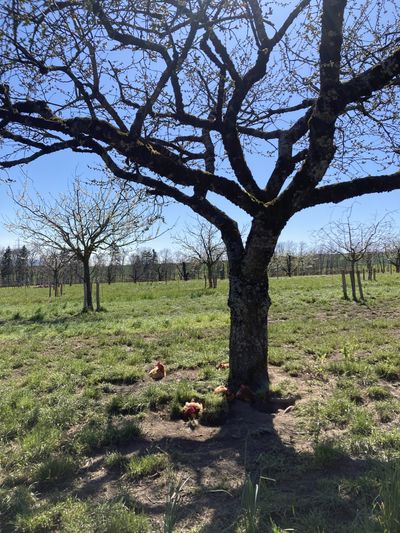 To Blog Or To Newsletter, That Is The Question — Apr 15, 2023With the sudden growth of audiences for newsletter writers on sub stacks as they start to use Notes so the question emerges on whether to dump blogging, for news lettering. In theory by news lettering on Substack we grow an audience that is pre-packaged and ready to go....
 -
To all facebook users please take this survey — Apr 12, 2007For the purpose of the last assignment in my last module please take this survey on how you use facebook. Click here to take the Online Survey Thanks for your time and see you soon...
-
Timetrap - A Command Line Time Tracking App — Oct 23, 2020Today I played with Timetrap, a command line time tracking app. It allows you to track the time you spend doing specific tasks with ease. To install the app you can run the command....
-
Three percent of people in Europe use maps on their mobile phone — Aug 2, 2008According to the report, the majority of users – 73% in the United States and 57% in Europe – accessed mobile maps via the handset’s browser. Less than a third of customers in these markets used a downloaded application....
-
Thoughts on the Oculus Quest — Sep 12, 2019During the World XR Forum I had to carry six or more Oculus Quest devices from a car to the conference centre and then help with setting up at least one of these devices. At first I thought it was like most VR headsets where the phone is the display....
-
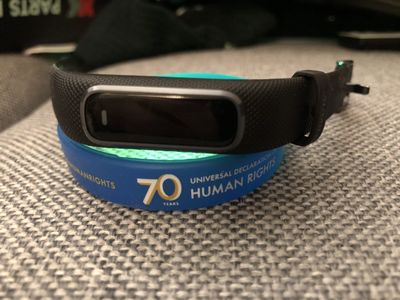 Thoughts on the Garmin Vivosmart 4 — Jan 22, 2019The Garmin Vivosmart 4 is the first activity tracker that I see tracking descent as well as ascent. It is yet another fitness tracker and in theory I had no need for it as my Suunto Spartan Wrist HR Baro and my Apple Watch Series 4 do almost the same thing....
 -
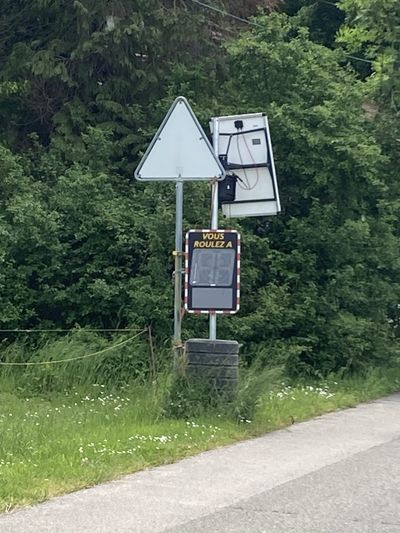 Thoughts on Moonwalkers Shoes — May 18, 2023Some of us remember a time when you could get roller skates that fit shoes. Moonwalkers have the same idea, except that the goal with their project is for the wheels to be powered, to drive you forward at a maximum speed of 11 km/h....
 -
Thoughts on Google's fine. — Jun 27, 2017In a Facebook dominated world, in a world where people see Facebook and the Internet as the same thing it saddens me that Google gets a 2.7 Billion Euro fine when Google is an excellent source to search for products, reviews and the best deal....
-
There Are Two Parts To The World Wide Web — Jul 23, 2007the future of the web...
-
The youtube application on the N95 — Mar 22, 2008For those of you with good data packages an application that could be a lot of fun is youtube on the n95. I was out and about and decided to check the youtube site and I was given the option to download their beta. I managed to play vides but I had no sound. What they offer are: - upload your videos from the phone - watch your friends’ videos - view relatd videos - view received videos - search for content. In other words you can do everything you’d want to from the n95 that you’d do from a computer. It does look like an interesting application although unless you’ve got wifi this is a very expensive gimmick. It’s nice to try nonetheless. Let me know if you try it and tell me what you think of it....
-
The youtube application on the N95 — Mar 22, 2008richard - Apr 6, 2008...
-
The year the Internet lost the cloak of anonimity. — Dec 31, 2007This has to be the year where I have met the most people online before meeting them in person, which is quite amusing. It’s also the year that warzabidul as a nickname became a person in the physical world to more than two or three people. It’s the year an online person become a nickname for a real person. It’s the year where, at least for early adopters, Twitter and Seesmic both helped create opportunities for people to meet and get to know each other online before taking it back into the physical world. It’s the year I went to a Podcamp, some tweetups and some seesm’up. It’s the year many of us stopped hiding behind avatars and nicknames and moved towards creating a brand or identity, depending on whether your point of view is that of marketing or personal fun. I’ve enjoyed learning about the “social media” and all the new possibilities. I look forward to 2008 when many more such networks and events will be organised. It’s been a fun year to be introduced to the “Social Media” and I’m happy to have met so many people....
-
The year the Internet lost the cloak of anonimity. — Dec 31, 2007Jennifer - Jan 4, 2008...
-
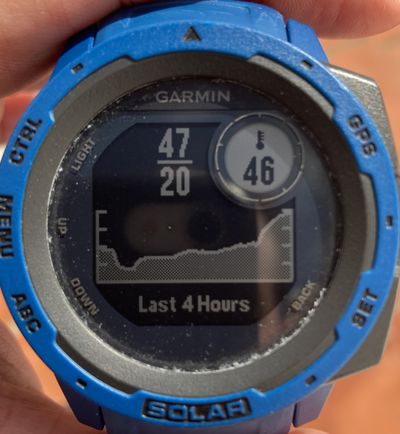 The Warm Sun — Dec 30, 2022Warmed by the sun...
 -
the tapeless workflow - Videoforum — Feb 8, 2008The tapeless workflow is a term used to describe video production without the use of tapes. That is to say that from the point the material is recorded in camera to the point it is distributed it never changes from being data. In other words television production has become a profession of data managment as some would say. A few production companies came to give demonstrations of their tapeless workflow system, at least in broad terms. Red Bee and Virgin Media showed how they have collaboratively brought the post production process to being a tapeless one. In order to do this good networking capability is needed and so is storage. They had to digitise over 40,000 tapes as well as face many more challenges. Some of these challenges have to do with meta data. Everyone is used to dealing with tapes. you shoot your material, you label it for post production and then store them for later use. When dealing with data though the mentality is different. Some productions have shot straight to P2 cards, backed up the day’s shoots to external P2 hard drives before sending them from China to London for example. Of course when doing this everyhting must be planned ahead. Part of this planning has to do with the compatibility between recording format and editing. If you get this wrong then you either don’t get the quality you were looking for or you slow down the process. That was part of a case study between Panasonic and two of it’s camera’s during a shoot in China. The second example was between Red Bee Media and Virgin Media in relation to the creative Village. The idea is that when the material is ingested by Red Bee media it’s saved to a central server from which it can be accessed by a number of workstations, from transcribing to tapelogging, editing and producer’s work stations. it also has to be available in two buildings. There are a number of advantages to this workflow. The first is that the work is available to the producers when they have the time to check the material rather than when everyone has ten free minutes. As a result the editor can edit a rough cut and a number of producers at up to two hundred workstations may check the edit and say whether they like it. If they don’t then it’s quick to make any changes that are required. It also means that there’s far less mess and expensive equipment is not tied up. When you’re working on post production dubbing to tape used to take a lot of time, real time and with DVD it’s quickly a messy affair. Files in an edit folder are far easier to deal with. I really like the idea o the tapeless workflow and i’m going to work on that for my own work, first with affordable equipment and then work my way towards more fun alternatives. It’s what we expect. No more ingestion time, no more dubbing time, just straight editing, agreement and finally output to a number of formats. Of course that’s not as easy as it sounds but post production companies are working on making this a smoother process....
-
The Social media Misnomer — Nov 28, 2008This morning I spent three hours chatting to people in Australia, Sweden and France via both twitter and plurk and it felt great and the reason for this is that it was personal. We hear so much and read even more about the social media and the social web but there is one fundamental flaw and oxymoron in this vision. That is that there is an utter lack of the social aspect. Everyone is here, trying to promote their work, their brand, their friends and everything. They re retweeting what other people say and do to promote work. They are promoting things that they think can promote a person’s value. The trouble is that how many of these people do you know as friends. Do you know anything than their marriage, their recent hirings or their job. Do you know where they’ve been out with friends? I could name a hundred locations where podcamp have been, where tuttle have gone and many other things but I couldn’t tell you where more than two or three people like to go for drinks or good food. That’s because the social media are hidden. Everyone is hiding their real identity, their real friendships and their real passions. That’s why some of them have a public twitter account and a private one. That’s why there is so little conversation left on twitter. That’s also why you want to have 20,000 followers. The truth is that if you use the social media as a professional tool, as a branding tool then you might find work, and you may find those who provide you with an increased profile but is that what the web is really about? How many of you will send more than two tweets to anyone except for work? How many of you will spend an hour just chatting? You see for most of the people I follow on twitter it’s about work and nothing else. Sure there’s the charity for breast cancer and the organ donation drives that give good results but what about the mondane conversations? That’s lacking on twitter. That’s why plurk is more fun at moments. In reality if what you called the social media were truly social then I would have had nothing to write and dream about in my nanowrimo effort. That’s why I lampoon most of you. You haven’t understood the social nature of the social web because for you it’s a work tool, not a play thing. Learn to play with the social media and you will get a lot more out of it. You will build friendships and the transparency will result in some positive things. I’ve seen the Francofous community, how it grew, how it meant there were many meetings and how they talked behind closed doors. i’ve also seen the consequences of the lack of openness and what it can do to people’s involvment in the communities they’re part of. How many francofous still use seesmic for example. Of those I follow I see just one person still on seesmic. Plurk at the moment is more social, you see conversations between friends and they have fun. it’s about funny images, it’s about night shifts, it’s about waking up, or going to sleep. In general it’s just a convivial social space where no one is using the network as a professional tool. I’m not saying that you should be social all the time, what I’m saying is that you need to think about how to give time to the communities you’re part of. Ping.fm, hello text and others provide no value to those that are listening. Engage with your audience on a personal level. SHow them that you’re interested in the individuals, not the professionals....
-
The social media living room. — Nov 23, 2007The social media living room is great because it’s really any device that you can connect to the web with, whether a simple mobile phone or a full spec desktop computer. Some of us look at the computer first thing in the morning and last thing at a night. This is as much as part of a technological expansion in the form of broadband. Just today an article by the BBC described how people are more and more wired with 90% using broadband, or some similar number. What this means is simple More hours spent therefore more conversation. With twitter it’s more overheard conversations. That’s not where it stops. Twitter, seesmic and similar websites turn a private discussion into a public one where the “overheard conversation” is a key point. It’s an evolution back to the route of internet chat. 10 years ago I spent 13hrs in a row online and I saw the shift from Australia to Japan, India, South Africa, Eastern Europe, Europe, NEw York and more. The difference is that at that time there was no meta data and the initiator to conversations was ASL. Now it’s reached maturity for those of us early adopters. Many of our friends are middle adopters and when they start using it they will not take full advantage. Look at how people use facebook. When asked by @leisa on twitter during a meeting in real life how often I checked facebook I answered as much as my e-mail. A lot of people do. What is not talked about is how middle adopters use it. They are far more limited. They don’t add rss feeds because they have no blog, few pictures if any on flickr and in general do not create content. They’re lurkers. Almost all of my friends are facebook I’ve been to parties with, studied or a combination of more. As a result it’s a personal network of IRL friends who have links to each other as well as through me. These people don’t use twitter, jaiku, tumblr, Pulse plaxo or more. I surprised a conversation on facebook where after seeing someone comment on their post one facebook user asked the other how dare they comment. They didn’t understand the principle of the forum. That’s something all of us are familiar with as early adopters. We are not technological determinists. We believe in the need for something and create a technology to cope. Look at Seesmic. It’s video. It’s twitter with video. One person commented on how it was based on time consumption. He said that although he would love to see everyone’s video and listen to what they have to say that because it’s time based it would take too long. As a result he’d follow just the friend’s timeline. This brings me back to twitter. How many friends do you have. Do you still use the public timeline or is your friend’s timeline filled with more than enough conversations not to need this? I think it’s a really interesting conversation. How does the social media living room integrate into your daily activities....
-
The social media Living Room — Dec 29, 2007Yesterday afternoon I dropped by Nik’s house, (Loudmouthman) for what would be the first Social Media Living room event. The idea is simple. Participants of Social Media, whether through Twitter, Seesmic and other networks meet in the physical world to have nice conversations. Quite a few people turned up including Fred2baro, Danacea, Mark Harrison, Jason Jarrett and one or two other individuals. we talked about tech and about life. The point is that to create a podcamp takes too much time and there is a need for more frequent smaller events. This was a perfect opportunity. Among the amusing features of last night was the recording of a seesmic post via three laptops, three accounts and three webcams. We joked about which camera to look into and it was yet another example of taking Social Media friendships into the physical world. No more complaining that spending time online means meeting fewer people. It doesn’t. I’m looking forward to more such events....
-
The social media Living Room — Dec 29, 2007Jamie Coomber - Dec 1, 2007...
-
The podcasting demographic — Sep 4, 2007Whilst listening to a conversation between several podcasters in their debriefing they were asking the question of how to involve a different demographic in the process of podcasting. This is an interesting question. As one participant pointed out the demographic seems to be for white males over 30 years of age to create content whilst younger people seem not to be active. If that last statement is true then I am an anomaly to the rule since I have over four years even to reach that age. What is the strength of podcasting and how does it differ from mainstream media? What is the difference between the mainstream media and podcasting What makes a documentary a documentary rather than a podcast? Are podcasts and amateur pieces of work because the person creating that content has less experience? If so does the habit of podcasting turn them into professionals and do they as a result lose their identity. Is podcasting about content on demand and fed automatically to the player? In that case how long do we wait before the mainstream media do the same thing? It’s an interesting topic and I’d like to see what people have to say about this. I know that some people at the Podcamp complained about people talking about podcasts in podcasts but there are some important questions to be answered. I don’t see myself as a podcaster because I’ve spent so many years in Uni studying this that I believe I deserve another label. I’m a television producer, or at least I aim to be one. There’s something that has really changed from my childhood to now. When I was no more than ten years old I decided that I wanted to do video and that I wanted to edit but I had no access to any hardware that would allow me to do anything. There were two reasons for this. The first of these was cost. At the time two beta sp decks would cost 30,000 CHF a piece. Now for 3200 CHF you get yourself a portable edit suite. Add a small camera and you’re doing ENG. What growing up when I did meant is that I had to content myself with books on the subject. I bought books about editing, about basic camera work, basic betacam work, theory books by Eisenstein and still more books. What this meant is that although I had never been able to edit the material I had shot I had the chance to think about shooting and editing style. It was nothing more than an intellectual pursuit. As a result of the time I spent daydreaming about having the facilities to produce television programs it meant that finally when I had the equipment I was in a much better place than young content producers are today. Most people pick up a camera and film something without thinking of sequences of shots, story telling and more. Instead they do anything and put it together. As a result there are some products that are hard to watch. What about duration. In broadcast when you’re a beginner you’re given one or two minutes for the video you want to create. As you prove your skill at short items you progress to longer, more informational and more interesting pieces. Of course those are documentaries in the Griersonian sense of the word rather than podasts. You see documentaries are the creative treatment of actuality. They are built as a means by which to document what happens in real life rather than something setup. These are actualities, Actualié in french. Find the means by which to make them about current affairs and you have a documentary. Dziga Vertov with “The Man With the Movie Camera” played with this idea. So did Flaherty before him with Nanook of the North. John Pilger, Nick Broomfield and documentaries after them have also experimented with different styles. All of them were broadcast. Now we’ve come to another era in factual production. This is the personal era of video production. If you think of early literacy you may have seen the same fears as there are now. If everyone can writ then what prevents them from writing their own books and no longer buying material by those who do it for a living? Time, for a start. Producing high quality content takes a lot of time and thought. What is the difference between a podcaster making a documentary about the steam railway and Fred Dibnah? Contacts, budget and organisation. Fred Dibnah is in front of the camera telling you so much about what he knows but how much information did the researcher go through before providing the right amount of information. How long did the script writer take. How many shots in a professional production are handheld and whom do they have access to. Did they spend three days to get the shots they needed. Of course they did. As a documentary maker you’ve got the pitch, the proposal and getting it agreed, the budget and getting that agreed, the shooting schedule and then editing. You also need to understand the demographic you’re providing content for. Podcasters do it as a hobby and they’re surprised when people watch their programs. It fills them with joy and pride. I saw many people and the passion they had for their productions as podcasters. They’re filled with ambition and this is what makes their programs interesting. They give us their point of view and it’s great. I think teamwork may be what’s lacking from podcasting. Lot’s of people want to create content yet when you meet them you see that many of them do so alone. If that is the case then the reason to have Podcamps is to encourage people to create networks and teams. As the teams grow and as a variety of people with specialist knoweldge join together so their product increases in visibility. What makes Leo Laporte such a great podcaster? The people he involves in his work. He recently stated that he has at least two podcasts a day to record and that he gets other people to do various things he needs help with. He’s got one or two guests to speak about law, a few more to speak about Macs and yet more for This Week in Tech. As a result he’s got a “Twit Army” to help with content creation. With more Podcamps and greater participation there is a greater chance of teams being formed and creating nice networks of podcasters to produce compeling content. Europe as a whole needs to provide much more content so that we get a European take on all these topics. Better still, involve a variety of people. Get women involved. Mention the name Allie (sp?) and see how many of those at Podcamp remember her. Why aren’t more girls involved so that we may remember and interact with a team of them. I’ll see what others have to say about this...
-
 The Pay To Play and Pay To Win iOS Games — May 31, 2023I like casual gaming. I like to play games on the iPhone when commuting or waiting for something to happen. The problem is that casual gaming is about seeing adverts at the end of every puzzle or challenge. For every game of solitaire, every game of Woodoku and more games, you see adverts....
 -
The Nokia N95 and some fun to be had. — Mar 15, 2008Seesmic’ favourite phone at the moment appears to be the Nokia N95 and after months of thinking about whether to get the Iphone or the Nokia I turned to the Nokia because of everything it allows you to do. It’s a GPS, web streaming camera, time lapse camera, e-mail and web browser among other things. It’s also easy to use with services like Jaiku. Streaming Video stremaing from computers is becoming commonplace and as a result we’re growing tired of that piece to camera straight from people’s desk. That’s where Bambuser, Qik and seesmic come into play. Bambuser is still in alpha and has an intuitive easy to use streaming interface giving you an easy selection between the main camera and the front camera. It’s very simple to use and I’ve played quite a bit with it but there are lag issues where the stream doesn’t keep up. The settings can be adjusted quite specifically by the user allowing for quite a bit of experimentation. A second service is Qik. This one has a nice user interface and has in built buffering. This means that as you stream the application buffers and indicates the delay between what you are seeing on the phone and what is being seen. This service has too main options. Optimised for quality or optimised for creating a reliable stream. Seesmic has already been discussed but it’s a good video sharing website. It allows for conversations to take via video similarly to instant messaging. The Seesmic application still needs some work but if you’re using shozu you can record your seesmic posts and FTP the files to the site for others to enjoy. I’ve done a few posts from the car once I’ve arrived at work and the results are good, except for a loss of synchronisation… but that’s in camera rather than seesmic. Jaiku Jaiku was developed by people who worked for Nokia and it’s similar to twitter but with a better front end mobile wise. The application automatically displays where you are, whether you’re free or busy to answer calls and you can follow conversations. **Photo Camera ** One interestig feature of the camera that I haven’t used is the ability to take a picture every ten seconds. In other words to create time lapses that last as long as you would like. I haven’t tried the option but the idea is interesting. **GPS ** I haven’t played with the GPS so far but so far it looks nice enough, I’ll write more once I know more. So far I’m happy with the N95 because of all it can do and I’m looking forward to using it extensively in the near future. As I learn more about the phone and what it can do I’ll write most posts....
-
The Modern phonebook — Aug 19, 2007Recently I have been trying to categorise websites and how they are used into single words. To this end I have recently started to view facebook as a self actualising phonebook. There are a number of factors which help to contribute to this feeling. One of these is the ability for me to add all “real life” friends without adding any “virtual friends” - friends I do not know in person. In so doing it limits the number of people in my contact list to those I have talked to in person at least once, but occasionally spanning two decades or more. What is great about facebook is that those you have not seen in a decade are once more part of your daily life. I look at what people are posting and I know they’re in a number of countries. I can see which are their favourite films, whether they have recently travelled, whether relationships have crashed and burned or more. I can also see what they’re up to. Twice in the last week I have noticed events put on by friends. One event was by friends whom are part of my University of Westminster days whilst others are from when i was a Bournemouth University student (albeit in Weymouh an hour away). When I went to the Westminster event I recognised quite a few faces since they are part of my recent history. It allowed me to meet new people and one comment was interesting. The girl who organised the event commented that most of these people did not know any others. She was the degree of seperation between all of us. As the night progressed so the links would strengthen and people who had been strangers just a few hours before would become familiar once again. The next day saw me going to another facebook event but this time with people I had not seen for half a decade. By taking a look at the newsfeed in facebook I could catch up with these people. I saw that one friend was having their birthday that night and that another friend from the same time period was also going to be there. Looking through the photo stream I could see what the latest adventure had been. If people think that it’s important to mention something then it’s easy for you to notice and aknowledge this once you meet them next time. When you think of a phonebook you usually associate a limted amount of details like phone number, address, business and address. Facebook gives these details but it also gives us so much more. It’s a great tool for those of us who are mobile and willing to travel. There are three contributing factors which help make facebook popular; the first of these is mobility, the second is international travel and the last is broadband. The first two factors are related. I am thinking about the distance and time it takes to get from where you live to where the friend lives. If you’re in North London and your friend is in North London then it’s easier to keep in touch via the facebook newsfeed than to commute over an hour to see that individual. At the same time as more of us have international groups of friends so the cost of phone calls and ability to see how friends regularly declines. We need technology that allows us to keep up to date with friends and that’s why we need the enhanced phonebook. Broadband is the enabling technology. There is a lot of information. Imagine taking two hundred pictures of an event where twenty of your friends are. If you have to mail each of these to each friend then this is going to take a lot of time and effort. Facebook allows you to do this without hinking about it, hence keeping friends you may not see frequently current to the life you are currently leading. In effect the more open your network of friends are the easier it is to remain up to date with current developments. At this moment in time Facebook is one of the best adapted to these needs...
-
The mobile phone app — Sep 11, 2007Everyday at least one friend has one of their friends lose their mobile phone and all numbers on that device. As a result you find that there are hundreds of groups with the title “named individual has lost their phone” where everyone is expected to post their mobile number for quick synchronisation. It would be quite simple to implement. As everyone adds their contact details into the database and as you acknowledge that those in your contact list are your friends you could develop an api that would allow you to download all that information straight to your phone whether HTC, motorola or nokia. It’d be an interesting application to have. It would also slow down the rate of “i lost my phone” which in itself would be a great improvement....
-
 The Mindful Shave — May 30, 2023For two weeks or so I have been using a safety razor rather than the usual electric shaver, or conventional three to four blade shavers. In the process I have had to become more attentive to what I am doing....
 -
The London Videoforum - Cameras — Feb 1, 2008From the 30th of January to the 1st of February 2008 the VideoForum event was held at Earl’s Court in London so that Television and video professionals may meet and talk in a number of conferences, seminars and tutorials as well as on stands. During this time I got to see what were the major trends in the video producing environment in London and England as a whole. Cameras Two Red Cameras were on the Showroom floor yesterday, one owned by Decodeuk and the other I am not sure about. It’s a nice camera in that it can shoot 2 to 4K but the price to rent per day is very high at the moment. It’s a technician’s camera rather than a cameraman’s camera. Other camers that I saw and thought of interest were the Canon XH A1 which is a beautiful camera and all the controls are in the right place. Two drawbacks are that it seems to record in interlace and that it’s only tape based. If it recorded to hard disk i would seriously think of getting it. The second camera was the Panasonic HVX-200 because the controls are directly accessible from the body of the camera rather than sub menues. It’s interesting because it records as well to P2 cards as to tape so there’s the option of both. The PMW EX-1 XDCAM is another really nice camera. I’m fond of Sony cameras and this is one of the nicer ones. With the ability to take two two XDCAM EX flash cards it has a potential of around 32 Gigabytes. The Flash cards are small therefore easier to deal with and carrying spares should be good. What I love about these three cameras as well as others is that they’re small as people move towards towards a new filming mentality. Of course you can go for the Sony F23, the F900 or others but these are small. Most of their size is due to the lens rather than the interior mechanism and they’re hand held rather than shoulder mounted. The VX1-E and subsequent cameras were great for shooting and once more these cameras are being made to create cameras that are very appealing to those that shoot video the same way as I do....
-
The Joy Comes In The Pursuit — Dec 3, 2014The joy comes in the pursuit...
-
The "Jobs" sense — Sep 7, 2007If you’re the head of a company that’s doing as well as Apple there’s something you’ve got to be admired for. It’s the ability to sell a phone with no keyboard and get people to love it. It’s also about selling it for $599 and taking it back down to $399. What appears to be an act of generosity is a great PR stunt. Everyone that got an iphone and saw the price drop was angry so they wrote complaining. Steve jobs then “decided” to take the price down. The effect of such a move is clear. He’s proved to his shareholders that the market was ready for a device that was $200 higher than it needed to be. Investors have a boost in confidence in the company and he gets glowing reviews from the blogosphere....
-
The Iphone is coming to Switzerland — May 9, 2008According to a Le Matin article the Iphone will come to switzerland. It’s the 3g version of course so for those that have been patient this should be a fun time. I see no mention of cheaper dataplans as of yet but it’s an interesting time for those creating mobile video content. It’s also a new version of mobile web browsing....
-
The idiocy of the Hashtag — Nov 4, 2015Every day I am reminded of the Idiocy of the Hashtag. Twitter is a conversational medium where the more we converse the more addictive the social network becomes. Every single @ reply was a reaction to what we said or shared. Connections between users were strong and so the network effect took twitter from being a strange experiment in 2006 to being a social network from 2007-2009. In those days we engaged with people directly. Social media marketers, people with families and other priorities came to twitter and decided that they would indoctrinate people in to seeing twitter as a broadcast rather than conversation tool. Broadcasting did away with the conversation. It replaced the conversation with buzz words like ROI (return on investment) and other buzz terms. From a conversational medium where everyone talked directly to everyone else these “experts” hijacked the conversation and encouraged the use of the hashtag. The hashtag took person to person communication, encapsulated it in a hashtag and neutralised the individual to individual communication channels. Individual to individual communications are what makes all social networks addictive. If I believe that someone wants to listen to me, to talk, to exchange ideas then I am likely to make time for them, to read what they have to say, to create a personal connection. That personal connection had me travel to Paris, London, Geneva, Lausanne, Lille and other destinations. Imagine that twitter was still a conversational medium. Imagine that we established personal connections with the event organisers. Imagine that instead of a hashtag we were talking with the twitter account of event organisers. Imagine for a moment that twitter was seen as networking, that socialising on this network was not seen as a waste of time. Imagine that it was seen as a wise investment of time. I was at two international events last month in Geneva and I had my laptop and a data connection (or two if we count event wifi). I could have listened and live tweeted the events and I could have engaged people socially. I could have engaged with the panel and the speakers. They want me to use a hashtag. I refuse to use hashtags because a hashtag is not a conversation. A hashtag is metadata. Metadata should be used to help with threading but should not be the conversation. The conversation, comments and thoughts should go directly to the organisation. The impact of a conversation is far stronger than a hashtag. A hashtag is solitary, is lonely, is disjointed, fails to engage. We see it’s weakness every time an event takes place. I was at one event where I saw that the hashtag only appeared in tweets by the event organiser. The only other place it appeared was in retweets. If you work as a social media marketer you need to engage with people. You need to get people to reply to your tweets, not tweet a hashtag. Event twitter accounts should serve as a conversation hub. They should trigger groups of people at the event and following the event remotely to converse, to share what they think, what they do, who they need to help them. There are two strengths to twitter that very few people use. These are the ability to connect with like minded people before an event, so that by the time you meet them in person you can proceed with a collaboration rather than small talk and secondly to connect with other people after an event, to establish more personal connections. Remember that twitter is a 140 character medium. Twitter is great for short conversations and quick updates. It lacks in substance when it comes to sharing content. Facebook, Google Plus are better when what you have to share takes more than 140 characters. Facebook and Google Plus allow you to build connected communities in a way that is impossible on twitter. Both Facebook and Google Plus have threading, have topic separation and more. They are modern web forums. Twitter is a chat room. Use the web forums to have threaded conversations around specific events and panels and use twitter to establish personal connections with event attendees and others. Yesterday Twitter decided to allow people to follow 5000 twitter accounts. “While it’s entirely possible to see a lot of activity when you’re following 2,000 accounts, the 5,000-user limit increases the chances that you’ll see something interesting.” Social network stickiness relies on familiarity and a personal connection. If you follow 5000 accounts there is an excellent chance that you will fail to personally engage with any of these accounts. As a result twitter will be the place you visit because of hype rather than personal interest. Twitter is a conversation medium that has identified itself as a broadcast medium which is why there are so many spammers present today. It has encouraged people to have millions of followers, it has encouraged people to follow other people whom there is no chance of personal engagement. They have encouraged their user base to listen rather than interact. Look at the million follower accounts and how they idealise this, rather than the more manageable 300 person limit. Three or four years ago there was some discussion on the number of people that individuals could know well and that number was low. They said that we could get to know about three hundred people well. This means that if we’re on twitter we should not follow more than three hundred people. We should follow those whom engage with us. We should make time available to those who make time available for us. We should make sure that we have personal connections with as high a percentage of those we engage with in social media as possible. When twitter was still a social network and twitter celebrities were still normal people we could converse with iJustine, Sarah Austin, Chris Brogan and many others. With Seesmic we could connect with Scoble and Le Meur. In the early days we could create warmer connections because there were fewer of us and attention was not as costly as it is today. Essena O’Neill is one of the people who came to social media too late. She managed to have more than half a million followers which is fantastic for the ego. Half a million followers would make most people happy....
-
The Fitbit Charge HR — Jun 15, 2015The Fitbit Charge HR is one of the better heart rate and step counting solutions out at the moment. It allows you to keep track of your steps and heart rate twenty four hours a day for a little less than a week between charges. It is a wrist worn activity tracker that detects whether you are walking, running or climbing up a hill. I tested it over a period of weeks while hiking, doing via ferrata, cycling and sleeping. As a result of the test environment I was informed by the device that I had gone up 250+ floors in a single day. That’s when I was playing on a via ferrata or two. I also tested it while I was sleeping. It automatically goes in to sleep mode so there is no chance of you forgetting. As it tracked my heart rate while I was sleeping I saw that my resting heart rate could be 47 beats per minute. As I challenged myself with a 1000m hill climb on a bike followed by via ferrata and hiking my body became fatigued and this was reflected in my higher resting heart rate. It went up by four or five heart beats per minute. When I was using the Fitbit Charge HR I had it automatically tracking my heart rate but you can choose whether it is on/off or automatic. I kept it on automatic. When you take off the tracker the two green led lights stop blinking automatically after a few seconds. I liked having the Fitbit Charge HR for a few weeks and liked that it tracked my heart rate and showed me how many floors I went up. As I spend a lot of time in the mountains though the results were skewed. The biggest weakness with the Fitbit Charge HR has to do with the regionalisation efforts by Fitbit. I live in Switzerland and until recently I had the site in English. For a few weeks I have had to switch languages between french and English several times. I wrote a tweet to get a response but they asked me to send an e-mail. I sent an e-mail detailing the problem and then they asked me to detail what the problem was. The problem is that I am in the French speaking part of Switzerland, my laptop and phone are set to English and the app and website default to German. Due to their regionalisation efforts when I sold the device as planned I did not replace it and went back to using the Fitbit flex. As both straps for the Fitbit flex broke I carry the sensor in my pocket. As a point of reference my primary fitness tracker is the Suunto Ambit 3. When I cycle, swim, do via ferratas or hike that is the device that is tracking my progress and overall fitness level. I also pair it with Strava....
-
The Fitbit Charge HR — Jun 15, 2015Best Fitness Tracker - Nov 4, 2016...
-
The Digital Media Project - Summary — Jan 25, 2008Two nights ago I got an invite from a friend at Kendra inviting me to come to the Friday session of this event. The event was held at Queen Mary University in London. The first session of the morning was to tell us more about the Digital Media project. The talk was given by Leonardo Chiariglione. What I found interesting about this project and this movement is that it’s looking at the need for DRM as a good thing. It believes that there should be DRM but that media should be free to operate from one platform to another. At the moment we can have itunes, realplayer real and other devices and it’s confusing, even for those who live and breath the media. They want to create a uniform standard that can be played from all platforms on all devices whilst at the same time protecting the rights both of the user and of the media active. He spoke about a standard of theirs which is now at version 3.1. Version 3 was agreed 3 months ago and the meeting was to update the current one. The document is over 600 pages long… I’m not going to read it. At the same time iDRM was mentioned but that’s part of another post. Chillout® was also demonstrated....
-
The Digital Media Project - Summary — Jan 25, 2008[Richard’s blog » Adobe and Digital Rights Managment.](http://www.main-vision.com/richard/blog/?p=526 —) - Mar 0, 2008...
-
The Digital Lifestyle — Jul 24, 2007A journalism student at the University of Westminster worked on an item about addiction to technology and this is quite an old item. In 1998 (if I remember correctly) I was speaking to a security guard in Martinique about the internet and he talked about it as if it was a disease as if it was bad. Back in my high school days would argue with my teachers trying to get permission to draw the graphs by computer rather than doing them by hand. This happened both in geography and chemistry. One teacher commented: “What about when you’re on the field?” going on to explain that technology would not always be at my reach. Since then things have changed and technology has progressed to such an extent that I could now create that graph on my XDA Mini S and e-mail it to whomever I’m working for. Of course, the batteries might die but the potential is there and innovation is changing society as a whole. In my bedroom, I have a MacBook pro, an iBook, one Nokia, one Sony Erricson, one xda, one 500 gig drive, one terabyte drive, and one 200 gig drive. I’ve got a lot of technology but my work is based around this technology. One phone is a spare, another is for Switzerland and the third is for England. This is so that I don’t need to pay international fees when making phone calls in countries I visit often. As I’m writing this post I’m listening to music from someone’s playlist on last.fm and that’s American music streamed from a London based company bought by CBS fairly recently. The blogging software I’m using is open source and the image in the banner was taken in Les Diablerets Switzerland. Topically last night there was a power cut in the street where I live and it took them several hours to fix. As a result of this, the wired life I am used to was put on hold for a number of hours. I didn’t go to sleep any earlier. I watched one of the blue planet documentaries instead, as you do. As a side note, I did once believe in internet and technological addiction. I went to Tanzania for 21 days to help build schools and for a 7-day safari. During this time I decided that I would not touch a computer, I would have nothing to do with technology aside from the camera. I walked down the muddy roads from one school to another. I saw a much simpler way of life. I saw a different way of life which I appreciated far more. In fact, I wanted to stay there so I’d avoid coming home to the stress of the IB. It’s during this trip that I saw that the addiction some people talk about does not exist. Either you get with the times or you’re left behind. I’m comfortable with technology so use it constantly. Finally, I’d like to address a comment at the end of the item about texting. Twitter and Jaiku should have been mentioned as extreme examples of technological addiction....
-
The Demise of Google reader — Mar 14, 2013Google Reader was a great tool because it made gathering and sharing content from specific sources intuitive and easy. It provided us with one place from which to do most things. Today Google have announced that they are pulling the plug on Google reader. In my eyes Google reader had become obsolete four years ago. That’s when I moved to services like Feedly, zite and others. Each of these services was more interesting because it took our feeds but used algorithms to make relevant content discovery faster and more intuitive. Feedly was fun for a while but eventually I stopped using it in favour of zite. Zite was excellent until they decided to downgrade the user experience to a pinterest like interface. I don’t want the kindergarten treatment when searching for information. I want headers, I want a line or two of content and I want to have a lot of information displayed in a small space. Zite fell out of the useful apps category and was deleted from the ipad and iphone as a result. The next project I’m looking at is Scoopinion. They have a plugin which tracks which news sources you visit and which articles you read. Based on your browising habits it recommends future articles. So far it estimates that I have spent 22hrs reading news over the past month or two with over 980 articles. By this logic it should be good at recommending stories that I would enjoy but it is too tabloid at the moment. This is probably due to the relatively small user base as this is a new project by developers in Finland. I love content aggregators that study my habits and give recommendations based on this. It makes the surfing experience more enjoyable. You also don’t suffer from RSS burn out....
-
The Demise of Google reader — Mar 14, 2013Francine - Mar 0, 2013...
-
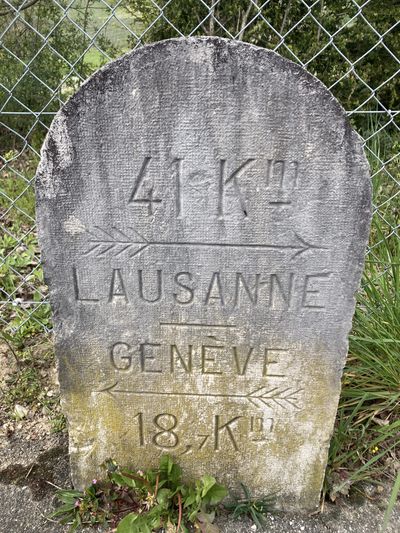 The Curious Step Miscount Due to Walking Sticks — Apr 11, 2023Yesterday I walked with hiking sticks and whereas one watch told me that I had 13,000 steps, or so, the other said I had 9000. It is the second time that I notice such a difference in step count....
 -
The Cult of the Amateur - thoughts on the book — Aug 6, 2007When I heard with what hate one podcaster talked about the Cult Of The Amateur I told myself that I should read this book because it addresses a question that is at least two hundred years old, mainly the difference between high culture and low culture. High culture is seen as everything that has taken research and thought to create whilst popular culture is anything else. High culture might be a painting displayed in a museum whilst popular culture is something that most people could succeed in doing themselves. The book begins with the idea that an infinite amount of monkeys can produce the work of Shakespeare given enough time. The fact they may write Shakespeare is not the problem. Andrew Keen, the author is more worried by all the uninteresting, inaccurate content that is produced and how easily it is spread. He is worried that as websites like myspace and youtube become more popular so the level of the product is degraded. He sees this as having a negative effect on culture. He works from the premise that, back around 1999, when he was part of the first internet boom he had the idea that the World Wide Web would help distribute great works of art and culture, from Tchaikovsky to Stendhal and others. He was disappointed that at a Friend of O’reilly’s meeting people were concentrating on user-generated content rather than high culture. That is one part of the story. Another of his concerns is that people are writing about topics they know little or nothing about and as a result are spreading disinformation. He looks at a few examples in politics and current affairs to show how there are some failings within the new media landscape. This made me think of how important the university would become. If everyone is a writer/editor and publisher so it would make sense that they train to become experts in their chosen field. Anyone can write and share their knowledge but that is no reason for the work to be sloppy. Look at the Roman section of my website. I wrote it ten years ago when I wanted to write down everything I knew about the Romans and within a short time it had been formatted for the web. Over the years people found the site and found that the information was useful therefore they referenced it. As a result of this, I became a resource for school children worldwide. I had no credentials. I was an IGCSE and then IB student as I worked on various parts. Finally, ten years later I’ve graduated, and through learning the academic process the value of the content I produce has improved. I have gained slightly in authority. When I listen to people speak about the media and how it works I have familiarity with two hundred years of technological progress therefore I am familiar with some of the “old media” and how they influenced popular and media culture. As a result of my studies, I found myself disagreeing with one podcaster and how he expressed anger against Andrew Keen and “The cult of The Amateur”. Such views should not be expressed. One aspect that is of particular interest to all those that I have studied with and myself is that of the amateur as a producer of content. When you have six thousand people who are writing about specific themes for free where is the demand for the professional author or content producer. He takes the example of advertising and how because amateurs want their content to be seen, offer this to advertising firms. As a result advertising firms save a lot of money. Personally I believe that this is a trend that is popular because of how cheap the means of production have become but that within a number of years the passion for users generating their own content may disappear. As more and more hobbyists and amateurs produce media content so the role of the professional becomes more uncertain. Why spend years studying at university to be a media producer or journalist if a construction worker is making films in his free time for no money and distributing it to a global audience? It’s an interesting time to work in the media because of how affordable technology has become. I have everything it takes to create and distribute video comfort from the place where I am living in London. As long as I get a good documentary idea I can carry out every stage of the production process without going through the production companies. As a result of this, I have complete editorial control. Andrew Keen is getting us to pay attention to questions that it is essential we answer. Who is our audience, how are they getting our content, how reliable is it and how can we sustain ourselves to continue doing what we enjoy?...
-
The Crosscall Odyssey Plus — Apr 22, 2015The Crosscall Odyssey Plus fills two niches. It is a rugged weather proof phone rated to the IP 68 standard and is equipped with dual sim capability. This makes it ideal for the sports I enjoy, mainly via ferrata as pictured below and hiking. It comes with a smaller carabiner than the one pictured below. I swapped it for one of my own. IP 68 is a code to determine how resistant a device is to both particulate matter and liquids. 6 denotes that the device is dust tight so particulate matter will not make it’s way in. 8 as defined by the manufacturer denotes that this device can be submerged for half an hour at 1m before damage occurs. If you get caught in the rain or have to cross a river the phone should survive. Another interesting feature is the dual sim capability. This phone allows for two microsims to be used at once. In my case I have a Swiss sim card and a french one. Both sims are constantly active so you can select whether to make phone calls from Sim 1 or Sim 2. You can also select which sim card is using the data plan. It runs android 4.3 and works fine with the TomTom app, the ingress and others. I found that battery life is also comfortable. With me as a user the battery lasts for a day. more info...
-
The COVID-19 Dynamic European Restriction Map — Dec 18, 2020COVID-19 rules, restrictions and regulations are dynamic and changing much like drone rules. In Europe before you fly you should visit the local flight rule maps, to see where current restrictions are....
-
The Brogan hundred — Sep 20, 2007Chris Brogan recently wrote a list of one hundred things he would like people to blog about and I would like to make my way through the list. It may take 100 days but it may take fewer. It depends on how busy I get and what interesting things are there to sidetrack me. The first question is about Facebook and how we use it as individuals. In order to answer that question i must describe the four groups of friends I have on the website. The first group is made up of many friends I have met over the last three years. This includes university friends for the most part. Within this group of friends are many complex friendships with many overlaps between networks of friends and there is a true sense of community in the real world sense. We share photographs, videos, events and more. There is a communal history which makes for some insider jokes. Groups such as “The curse of the N18” reflect how this network of friends has grown use to catching a nightbus home after a long night of fun in the centre of London. If you’ve ever taken the bus you’ll understand why the group gets such a name. The second network of friends is made up of friends I’ve known for more than three year but may not have seen for a decade. These are the highschool friends from life in Switzerland. Almost every single one of these friends has been to study at University and completed that phase of life and is now moving into the professional life. They are spread globally although there are the occasional communal group meetings that occur where we all meetup. This group is part of the International community and they are not too hard to identify. The third group of friends are those I know through other social networking websites. This group is about people whom I got to know through websites such as the Flipside back in the days when the Internet and World Wide Web were the realm of anonimity. Everyone had a nickname but through facebook that nickname has disappeared. The last group is that of people I have met only briefly and know relatively little about. This is due to two reasons in particular. The first of these is that “we randomly facebooked each other” or simply that we met and chatted for a few minutes in real life without taking it any further so far. What this means is that Facebook, for the most part, is a network of close friends that I have known for a number of hours in the real world. They are people I have shared adventures and travel with, good nights out and many boring/interesting lectures with. As a result of this keeping up to date with what they are doing allows me to see what we have achieved as a group of friends. In brief I use Facebook almost exclusively to keep up to date with what real life friends are doing thus the reason for which I avoid adding “randoms”....
-
 Switching From MySQL to MariaDB with Infomaniak — Oct 6, 2021Today I tried Switching from MySQL to MariaDB with Infomaniak as a webhost. This morning they sent an e-mail to say that we could switch from MySQL to MariaDB automatically so I tried. For the test I:...
 -
 The Suunto Spartan Wrist HR — Dec 31, 2017Suunto Spartan Wrist HR...
 -
 The SUUNTO SPARTAN SPORT WRIST HR BLUE — Mar 18, 2017I have logged 799 activities with my Suunto devices. This includes hikes, via ferrata, climbing, swimming and scuba diving. I like Suunto devices because their battery life is good enough to last through entire days of hiking and the battery lasts for weeks between charges when used as a simple watch. I like to track my heart rate but I often feel self conscious about putting the heart rate monitor belt on. With the latest Spartan watch I no longer need to worry about the belt. At the same time as I start the activity I will be able to keep track of the heart rate. This is especially good for group activities when you do not want to keep people waiting and in winter when you’re wearing layers of clothing. I like that devices like the Fitbit Charge 2 can be worn at almost all times and track heart rate effortlessly when at the climbing gym and during other activities. I look forward to the same simplicity with a Suunto device. I especially like that Suunto devices survive swims and showers. I like that the Suunto Ambit 3 tracks how many steps I take during the day. It’s a shame that the step count is not logged and visible on Movescount. I like to see how energetic or lazy I have been on a daily, weekly, monthly and yearly basis. It’s not unusual for me to go from a 21,000 step day to a 6000 step day. It depends on weather, work and other factors. If you go for a bike ride your step count will not be high. I will wait to see whether they apply this technology to the Suunto Ambit watch collection. If they come out with the Suunto Ambit 4 Wrist HR then I will be tempted to upgrade. With 799 tracked activities I believe Suunto devices have demonstrated that they are reliable....
 -
Suunto are filling the gap that mobile phone manufacturers are leaving open. — Jun 1, 2013For a period of time I would buy new mobile phones every six months. This was to test new hardware, new operating systems and new versions. Recently mobile phone development has hit a development wall. http://www.engadget.com/2013/05/31/white-nexus-4-available/ of a phone is excellent, if that’s the reason you chose one phone or another. That’s not how I select my phones. Battery life is. For the last two years I have looked at mobile phones and battery life and it has not improved. I like to use my phones as GPS during via ferrata trips, walks and other outdoor activities. Within an hour you are usually down to half a battery or less and by the time you arrive home the phone is dead, unless you get an external battery to recharge the device. The fashion to develop phones that are thinner and thinner with bigger screens is only making things worse. I’d love to see manufacturers once again double phone size and triple battery capacity. I’d like something thick that I could use for a day in the mountains. Suunto have provided an alternative: This is a device that you wear as an ordinary watch on your wrist. It has an integrated GPS, pressure sensor and a rechargeable battery. In day to day use the battery loses around 1% of battery charge per day when in normal mode and around 3% per hour of exercise. It takes just a few seconds to get the watch in to activity tracking mode, to pause, tracking, or to stop tracking all together. The data it collects is synced with a computer very easily. If you spend a little extra money you can buy accessories for cycling, for heart rate monitoring, for cadence and more. Satellite acquisition is fast. Every time you sync the watch and charge it Geo-stationary satellite information is downloaded and synchronised with the watch. This speeds up the time it takes to have an accurate location. It takes around 4 seconds when near the location of synching and less than 30 seconds when 1-200 kilometers away. It’s fast. The beauty of such devices is that they encourage physical activity. Online you can share your tracks with friends and you can tailor apps to the types of sports you do or goals you set. There are apps for 10k runs, marathons and many more similar activities. Part of the purpose of this watch is to be a fitness trainer and app developers have made a variety of apps for interval training, distance etc. This watch has replaced my need for a mobile phone app to track the activities I do when outdoors. I can preserve battery life on the mobile phone until I am back on the home cellphone network or using the phone for in car navigation....
-
Suunto and Wear OS — Feb 12, 2020Suunto and Wear OS is a cultural shame. I like Suunto because it’s a European company with a European OS developed in Europe. It’s nice to buy their products because they’re reliable and hardly ever let me down. They’re also great because it’s European tech developers working together to create something interesting and reliable....
-
 Suunto and Sports tracker collaborate. — Jan 22, 2016I have been using sports tracker for years. I first used it on the Nokia N95 8GB several years ago. This was an excellent app that allowed you to track your moves using the mobile phone as a GPS. The limitation of such an app was battery life on mobile phones. The battery usually did not last more than an hour at first and eventually progressed to two hours or more. The first Suunto Device I used was for diving. I used the Suunto D9 dive computer for many months before upgrading. As I satisfied with this device I bought the Suunto Ambit 2 and eventually the Suunto Ambit 3. The reason for buying these watches is battery life. As normal watches they can last for 100 days, losing about one percent a day. If you use them as fitness watches then they easily last for a day or more. When you’re doing via Ferrata, hiking, cycling or doing other sports you want the device you use to track your fitness efforts for as long as you’re going. That’s where Sports trackers and other mobile phones had their weakness. Mobile phone apps sometimes crash. If you’re pushing yourself hard during a workout you do not want to reach the end of a workout with no data. Another frustration I often encountered was with Movescount, Suunto’s social sports app. At the end of quite a few workouts, I was unable to sync my workout data and analyse my progress. At the time, I wanted to see Suunto and Sports tracker combined. They’re both Finnish companies and they both excel at specific tasks. Suunto for the hardware and Sports tracker for the analytics. By combining the two we have the best of both worlds. Communications between Movescount and Sports tracker has been available for several weeks at this point and it works flawlessly. I have hiked, cycled, walked, sailed and climbed and each activity has synced without problems. [gallery ids=“2690,2689,2688”]...
 -
Strolling From Picadilly To Bermondsey On Foot — Jul 4, 2007My latest trip of the day has been a walk from Picadilly Circus after dropping by the bank before going along the bank and getting to Bermondsey. It’s a nice walk and luckily I didn’t have too many people to avoid. As I walked by Greenpark it started to drizzle a little but it didn’t do much so I continued my root. I got towards the Parliament Tesco, bought two cokes, and continued on my journey. The usual sights were there but the street performers lacked an audience. The classical musicians under one arch had no audience. Practice I suppose. The interesting part of the walk is between Tower bridge and Bermondsey because you pass by the Thames walk and it feels less public. You see a small bridge which I think can be raised and upon this bridge a group of friends being photographed by a self-timed camera. I waited for the picture was taken before continuing on my journey. It’s not a bad part of London from what I glimpsed briefly. The sardine express tube carriages were full due to a security alert encouraging delays on the line. I was in no rush so I sat down and watched as train after train filled with people passed. After a while, I got tired of waiting and caught the tube to Green Park and walked a little further. I passed by Covent Garden where Charlie Chaplin the second was performing, getting a child to throw him coloured plastic bricks. I didn’t stay for the rest of the trick. The time I took was useful because by the time I went back down to the tube it was empty once more and I could return home in relative comfort. I’m tired now, and my laptop is apparently in Eindhoven in Holland waiting to be transferred to Switzerland. On the 6th I should have another status report. I really want it now, want to play with DVD studio pro and make a good quality DVD....
-
 Strava Now Has Rock Climbing, Hiking And More — Aug 31, 2016Strava now has rock climbing, hiking and many more sports. Sports tracker, movescount and other applications already allowed you to do this but it is nice to see one more network provide us with this option. [caption id=“attachment_3340” align=“aligncenter”] Strava expanded the number of sports you can track Up until now I had to make sure to go for a bike ride or three per week to keep people updated on what I did. During week days I am likely to go for bike rides. On two to three evenings per week I may go climbing and on the weekend I may go hiking or for a walk. As a result I can track the diversity of my activities. [caption id=“attachment_3341” align=“aligncenter”] Strava has updated the list of sports With rock climbing I would like them to add two or three more fields. I would like them to add an option to add the grade of the climb we did. This would need to use the European and the American systems. It would help us track our progress and even track how hard we worked if we’re wearing a heart monitor as we climb. In effect it could provide us with a way of seeing who else is climbing and whether we match their skill level. In the long run this could contribute to new groups. I have created a group for Swiss Via Ferrata in anticipation of via ferrata practitioners joining the network and sharing their climbs. Until recently I would only track cycling and running. Now that walking, hiking and climbing have been added I can track a number of new sports. It should result in people using the app more frequently. It could be fun to see climbing and hiking heat maps. We will see how they adapt the input section to match the sports....
 -
Strava Now Has Rock Climbing, Hiking And More — Aug 31, 2016David - First of May 2018...
-
Sports tracker on the N95 — Mar 21, 2008It’s fun to walk fast and far, especially in the countryside where there are fewer people to avoid. I often walk for fourty minutes to an hour at the end of the day to think about the day and process all that’s happened. Recently though I realised one of the shorter walks is almost 3000 steps thanks to the N95 pedometer. That’s because with the N95 you have a built in GPS and the ability to download applications. One of these is the sports tracker that allows you to track a number of variables across four to six screens. There’s the map view, map view with relevant details, co-ordinate view, speed view, pedometer and then three or four graphs, some for time in relation to speed, distance over time and height in relation to speed. You can zoom in and out of the graphs as you’re walking. If you do this more than once it creates a series of tracks that you can easily translate to KML and importe to Google Earth so the world can see your walks. Of course keeping your privacy from some people may be desirable. It’s a fun little addition to the n95 although the biggest drawback is you need to have it out in front of you to keep track of the satellites....
-
Sports tracker on the N95 — Mar 21, 2008waveydavey001 - Mar 5, 2008...
-
Sony Professional: NAB 2013 - New Camera systems for Live Sports — Apr 13, 2013Sony Professional: NAB 2013 - New Camera systems for Live Sports from Sony Professional Europe on Vimeo....
-
Sony Professional: NAB 2013 - Introducing the new PMW-400 camcorder — Apr 12, 2013Sony Professional: NAB 2013 - Introducing the new PMW-400 camcorder from Sony Professional Europe on Vimeo....
-
Sony and Crosscall Mobile phone advertising — Sep 11, 2015The Sony Xperia Z5 compact is for women who blog about fashion and the Sony Xperia M5 is for baristas who dream of owning a sports car but can’t quite pay for it yet. These adverts will never hook me in to wanting their products. I’m the type of person who lives in the countryside and spends his weekends in the mountains on adventures. I want the Sony Xperia Z5 because of it’s fast autofocus, it’s new technology and it’s 4k recording technology and new image sensor. The geek press gave me information about the device and that’s what woke up my interest. Marketing to geeks is all about the specs and the technology. Marketing to normal people is about “This is the lifestyle you have and this device will survive it”. In the land of Sony people live in cities. Now to contrast with crosscall. Crosscall make rugged strong mobile phones and their advertising is more in line with my own lifestyle.In the space of one month I shattered three screens on two phones. Two of those screen shatters were as a result of playing Ingress. In one case I stood up and the phone slipped from my lap on to the floor, bounced and then fell down again. It fell about two metres and the screen became unresponsive. In the second case I tripped on a step and fell with my hand rotated so that the screen took the impact rather than my wrist. I was so disgusted with myself for the incident that I was tempted by the Crosscall Odyssey+. The phone is rugged and would probably survive such a fall. It has excellent battery life but it’s data connection leaves to be desired especially when playing location based games like Ingress. Crosscall advertise their devices as rugged, for the adventurous among us. They use runners, surfers, climbers and snowboarders as brand ambassadors. It’s through one of Xavier De La Rue’s posts on Facebook that I learned of the brand and that my curiousity was peaked. The Crosscall Odyssey+ is a niche device. The Trekker X1 has a better chance of appealing to a broader audience. I love that devices by Sony and Crosscall are being advertised as weatherproof now. As an iphone user I liked that Lifeproof provided me with weatherproofing. I appreciate that brands are making their devices weatherproof by default. Soon it will be possible to throw people in to pools without warning once again… once autumn and winter have left place for next summer, of course....
-
Socialthing aggregating several websites at once. — Mar 22, 2008I’m active on more social networks than I have time to go through in a day and that’s where Socialthing comes in. It allows me to follow news from facebook, twitter, pownce, tumblr, flickr, vimeo and livejournal. What I like about this site is how easy it is to see everything that goes on. Whereas friendfeed is nothing more than a few lines of text this version of a social feed aggregator is the visual aspect. At a glance I can see which social network is giving the content and I can post accordingly. If I see a status update on facebook for example I can view the profile and add a comment. There’s that option with twitter too. I can see everyone’s tweet and I can reply to any friend’s post quickly and easily. As a positive sidenote I can follow what’s going on on pownce without logging in. I’ve often felt that the limitations of that site is the lack of people outside of California using it. At least this way I may find my interest growing. If I’m in a rush or there’s an important message to get out I can simply select to “post” a message to all these social networks at once. That saves a lot of time although as expected this should not be used too frequently as it adds a lot of “noise”. I’m looking forward to more services being included...
-
Social networking and freebase — Aug 24, 2007As you’re painfully aware by now there are hundreds of social networking websites but none of them have a communal database. If you’re on orkut your data stays there, if you’re on yahoo communities your data is there. All these social networking websites are very similar in what they ask of you but different in how they link you. Loudmouthman got me thinking about how you could use a database like freebase to share this data between networks, sort of like openid but with more data. Freebase is a database for volunteers, similar to a wiki but whereas the wiki is a collection of articles this is a database where you write the front end and implement it according to your needs. If you’re interested in video production and television for example you could take the television section of that database and make it accessible within that site. If you encouraged your users to create their profiles within that communal database then details which are not so critical to your persona (whilst being careful not to make phishing to easy) could be used so that you input your data only once. By having a communal database the migration from one social networking website to another would be far smoother, more transparent. You’d have the same user profile in a number of places and you would have more freedom to concentrate on what you feel is important. If one website goes down then that is not as critical since your presence is spread in a number of places therefore there is less opportunity to be in trouble should your main social website go down, as was the case with Facebook and Skype within the past few weeks. RSS feeds are already helping to spread your presence across a number of websites and sites like Jaiku and tumblr help aggregate your daily output to a number of locations. As a result of such practices. In effect you’d have built in redundancy. If one node goes down then five others can be used whilst waiting for your preferred social network to come back online. In summary since we are members of more than one community there is a demand for a communal database from which the sharing of certain types of data would promote the spread of online presence between more than one community at a time. By facilitating the process of setting up a number of communities there is less opportunity for us to be bogged down in content we are uninterested in. Communities, rather than forums could be far more specific to our needs. I would welcome your views on this topic....
-
Social media, loneliness and isolation. — Mar 22, 2015“The pathology of social media is all about loneliness” Social media professionals take the weekend off. Twitter users use hashtags so that their content can be found without being followed. Everything is turned towards discoverability rather than commitment and conversation. Social media practitioners know that people aren’t listening attentively so they repeat and repeat in the hope of a click or two. Hashtags are just a way of pretending that a conversation has had an audience. It doesn’t measure the number of comments and responses. It doesn’t measure how long threads lasted before they stopped. There was a time when people like me would read every tweet from people we followed and we would converse daily. It created a lot of friendships and led to a lot of face to face meetings. In today’s social media landscape I do see loneliness rather than socialising. I see on twitter that people are actively posting only once or twice a day. On Facebook I have seen such a serious decline in participation that there is little reason to stick around. My generation were active in social media for a short amount of time and now they have retreated to “normal” life. Whilst some people have hundreds of likes on their instagram images I have half a dozen to a dozen. Almost every like on Instagram is a person that I have conversed with online for years. There is a chance that I can tell you how long we’ve been chatting online, whether we’ve met in person and at what event and which networks we have shared. Twitter friends were trusted enough to become facebook friends. Facebook and twitter friends followed on instagram etc. Facebook was a very active and social place when we were all at university and having the same social life. Twitter was a very social network when I was looking for work and meeting the London Social Media crowd, the French social media crowd and the Swiss social media individuals. Ingress has presented me with a large group of Swiss people whom I have met many times recently as an active player of Ingress. Many of them are around my age. We use Google hangouts to talk and plan missions and are in constant communication. Glocals was good for finding people to explore new activities and locations with but the connection lasted only as long as the activities. There was little to no follow up socialising online. The Glocals Scuba diving group is the one I got along with best and the group with which I did the most activities. It’s a shame that this was an activity for people a decade older than me. When I think of the social journey both online and offline I see that loneliness is not the pathology of social media. I joined Twitter because I love to try new things. Facebook was a network of university friends whom I saw every day. Seesmic was a network of people whom I developed strong friendships with that last to this day and Glocals was probably the only network I joined out of solitude and a need to do things on weekends. I like the irony that the network I joined to avoid solitude is the one that resulted in the deepest feeling of it. Eventually every social network becomes lonely but we would say the same about the city from which our friends have gone, of the bars and more. Geneva is referred to as an airport hub. People come to the city for a year or two and then leave. As a result the refreshing of friendships is very high and it takes a certain personality to cope. Modern transportation; planes, cars, and trains create a pathology of loneliness and social media are part of the solution for as long as the social networks are frequented....
-
Social media and Interactivity — Apr 1, 2007I have been studying and discussing media tech and society. I have also been listening to the podcasts from the SXSW event on interactivity and my view of technology and daily life has changed. That’s reflected by what I was going to post as an answer to a comment on flickr. The iphone will sell because it’s what people want. People have accounts on flickr, they’re part of myspace and they’re on facebook. There friends are as well. Recently I’ve been going out with a camera and taking up to 180 pictures in one night. I upload them to facebook, controlling who can see them and they’re popular. People get round to requesting more pictures so I need to take more. With my mobile phone comes a one gig mini sd card therefore I can store thousands of pictures. I show people the pictures and if they want to see them online then at least I’ve got a practical way of getting people to approve them. What was SXSW about? Interactivity. Why? because social networking websites encourage the free sharing of all the media you’re creating....
-
Social conversations and the social media — May 1, 2015If you read “How to Win Friends and Influence People” you see how important it is to take notice of other people, to be positive and to be interested in what they are doing. That can be a challenge for everyone. We all have different priorities so putting other people first is a challenge. The World Wide Web is a place where we can listen and talk at the same time. We listen to a conversation and then we comment. We can start our own conversation and wait for others to see it and respond. As a result we are both engaging with others and letting others engage with us. There is a bilateral trade which leaves both parties feeling good. Social media, today a misnomer, was a conversation place. Everyone talked with everyone and everyone became familiar with everyone else. The Global Village that Marshall McLuhan wrote about looked like it would become a reality. At the time when this reality looked the most feasible was the time before mobile phones and proper data plans. At this time we used computers from a fixed location, either at home, an office, university or other places. With Wifi we had some freedom but nowhere the freedom that smart phones and data plans have provided us with. That’s why people’s feeling that mobile phones are disconnecting people is such a ridiculous notion. In my vision of the world, in the adoption cycle that I observe the mobile phone is the great connector. We meet people online, we appreciate them, we meet them in person. Seesmic and the early days of twitter were very good tools for this lifestyle. As data plans included more and more data so it would follow that social media websites would be about individual to individual conversation. It would logically follow that people would feel more at ease conversing online as their friends adopt the technology and have chats. Facebook, twitter and Google Plus should be social web forums where people are interested in the people they follow. What I see, as data plans and smartphone adoption rises is the opposite. People share links and promote rather than converse. Social media should be rebranded as Ego Media, brand media or advertising media. The platforms that should have made us conversational have been overtaken by advertising. It’s a good time to continue blogging. It’s a monologue until you contribute a comment. The World Wide Web is a de-centralised conversation tool and we move from platform to platform looking for the places where the personal connections are strongest. As the social media days fade in to history now is the time for each of us to blog, to write about what we feel passionate about....
-
Slow data transfers and self satisfaction — Sep 5, 2007Playing with technology is a great way of learning new skills but occasionaly you are let down by it. This happened to me tonight when I wanted to do episode four of twittervox. The entire day I had an excellent connection and things were downloading at a good speed. Wait until it’s time for twitter vox and the connection crashed down to just 500 bytes per second up and 1.5 kilobytes per second up. That’s hardly enough to do text chat. There are two reasons why this problem may occur. The first of these is that someone is downloading torrents and this is eating up all the bandwidth. The second option is that because this home is using a cable rather than adsl connection the speed ebbs and flows according to how many people are using the connection. Tomorrow at some point during the day I will record some answers to the various points in such a manner that I will have participated even if it’s with a lag of several hours. If I can’t use the technology when I want then there is so much redundancy that I will use other methods....
-
Slightly Ahead Of Their Comfort Zone — Jun 16, 2007Today I went to film some friends playing a gig by the lakeside in Nyon and it was a great occasion. The sun was shining, the air temperature was good and many people that I had not seen in many years were present. The shoot involved two cameras. One was at the back as a safety shot whilst I got the fun camera at the front. There was one electric guitar, one acoustic, and one bass. There was also a drum kit and a synthesizer. The music was good but I forgot my hearing protection so I had a slight ringing by the end of the event… all in a day’s work. I managed to get the whole concert filmed without getting tired which is great. I’ve been using the camera I used for the past 7 years so it’s normal I’m so comfortable with it. I watched the footage and I’m happy with it. It’s good, a nice variety of shots, switches at the right moment from the key instrument to the next. Bart Simpson was sitting on the drum kit and then got to dance with a girl who was meant to sing, the only problem is the sound engineer didn’t make her mic loud enough. It’s normal since they didn’t take enough time to prepare everything before having the gig go live. I’ve captured all the video footage and it’s ready to be compressed and uploaded to Facebook. I’ve actually annoyed them and got a “You recently uploaded a video to Facebook, and it could not be processed because it was too long.” message. hehe, that’s normal for me. I’m uploading those videos to the video section of my website and they’ll be available on the RSS feed within the next few days. I need to count about two hours of processing per video clip unfortunately. With the Macbookpro I’m waiting for it should be faster. Today was in some respects a perfect day and I’d like more of them to be like this....
-
A book on Sleep and Sleep Tracking Apps — Jan 9, 2018Why We Sleep...
-
Sharing Videos With Facebook — Jun 18, 2007Through technology such as that available on Facebook, video sharing has become quite a bit easier. Whereas on a website like youtube where you share video footage with the world on Facebook you select who you share your videos with. There are three settings, share with everyone on your network, including all friends, share with everyone who is tagged in the videos and their friends, or simply restrict it to your friends. I particularly like the option to share between your friends and the friends of tagged friends because it’s so flexible. we don’t have the same friends so it’s a good method by which to distribute videos, best of all it’s free. Another feature that’s interesting is key frames. You can cycle through up to ten screenshots of your video and find the frame you feel is best suited to illustrate the video. It’s as easy to select a frame as to when you’re sharing a website with your network. I have run into a number of limitations. The video must be under ten minutes in duration and 200 megabytes in size. Keep in mind that the video will be converted to the FLV format which can be read on almost all browsers. I’ve uploaded seven videos already and so far the interface has behaved well. I managed to upload a 50+ megabyte video but due to its length being too long the software complained. I also tried to upload an iPod format video and it complained as well so that’s something I think they should work on. It’s not going to replace the broadcast machine interface I’ve installed on my website but it’s a good method by which to share amateur videos between friends and for those who would like to do it professionally to showcase some of their better work. Two additional video options are uploading by mobile phone and recording from your webcam. The recording from webcam is a feature that’s interesting if you’re in a public place with your laptop and you’re uploading video of specific events. I’ll try uploading video from the mobile phone at a future date. As I see it this is yet another strong feature that has been added to Facebook and unlike the fortune cookies, I like software and others this is something that helps promote the imagined and real communities I discussed in a recent essay. (That essay will be uploaded once it’s been moderated properly). I’m going to take some time to convert and upload quite a few more videos to Facebook over the coming weeks and months....
-
Self Driving Cars will teach us How to Drive — Apr 22, 2016I am impatient to try a self driving car. I am impatient for the day when the car will know where we’re meant to be and at what time. That is when cars will be autonomous. In this future I envision that self driving cars will teach us how to drive. For the moment learning to drive a car is problematic because you need fuel, you need a car and you need someone trusting enough to put their life and car in your hands. You also need to find enough money to pay for a driving instructor to teach you how to drive. These are seen as barriers. People say that they would like to learn but that lessons are too expensive. Self driving cars that teach us to drive are the solution. Cars are driving themselves around California and self driving truck convoys are driving around Europe. As these cars drive and provide data for algorithms, and as exceptions are found so the algorithm is tweaked. We remember the story of the Google car confused by a track standing cyclist and by the Google car that was crashed in to by a human driven bus. When the bugs have been ironed out, when the challenges have been overcome I visualise a future in which we will choose whether we want to use our phones to read the news or socialise or whether we want to drive the car. In this future the car will be advanced enough to teach its passenger/driver to drive. Cars already provide drivers with a lot of assistance. Breaking assist, automatic windscreen wipers, parking sensors, automatic gear box, cruise control, parking assist and speed limiters are already familiar. The car is “teaching” us to be better drivers, or at least assisting. The next step is for cars to teach us to steer and situate the car on the road. It could warn us if we are too far to the left, too far to the right, if we are below the speed limit and creating a traffic jam or driving too fast for the road conditions ahead. At a roundabout it could remind us to indicate our intentions both when entering and leaving. It could also assist with parallel parking, backing in to a parking and more. Once the basics have been learned we could also envision cars teaching us to drive with a trailer or caravan. Software could be written to help people negotiate bends properly, place the caravan properly in a parking and more. Driving assist can be as complete or as passive as we want. I would like to see how self driving cars would cope with mountain roads. It would be fun to get them to go up narrow roads with traffic and teach them to get around easily. It would also be interesting to develop a behaviour which the car knows will minimise motion sickness for people not used to mountain roads. Weather and climate affect driving ease. Cars have sensors that are optimised for driving in good weather. When cars meet, rain, snow or other conditions they may get confused by reflections or obscured road signs. Humans should be able to take over in these conditions. We have to see whether cars or people are better suited to drive in fog. In theory cars have technology that should help them see through fog so it should be safer handing control to the machine. When autonomous cars are ubiquitous and self reliant the shift will move away from humans teaching machines how to drive. Machines will teach humans how to drive instead. In theory there should be no need for humans to drive cars anymore. Redundancy is good....
-
SeesmicAIR and mobility — Jan 16, 2008Last night at Four AM I got an alpha release of SeesmicAIR from Critter and I started to play with it. My initial response was good. It’s fast, intuitive and it doesn’t a browser. Today as I had lunch I went mobile with my laptop, relying on battery. Those who follow my blog know that I’m using a macbook pro and those that follow my tweets know that I was happy about something. Usually when i seesmic I go into the user interface and I get told that my battery will last about an hour and a half to an hour as I seesmic. Today though I had almost three hours of battery life whilst being able to keep an eye on seesmic. That’s because SeesmicAIR is running off Adobe and rather than use most of the CPU to work it’s running with far fewer resources. As a result I can lurk on seesmic without killing the battery or running a hot machine. I saw that both Loic Lemeur and Johann are on the Eurostar and I was able to comment on seesmic and keep an eye on reactions. Vinvin answered my question and it’s good. I love the fact that I don’t need to worry about battery life anymore. I’ve had time to prepare lunch, have lunch and then still have an hour and a half of battery life to write this post. I really enjoy having the ability to do this. It means that I can do something in the background. In brief SeesmicAIR is just as useful as I thought it would be. It’s still a little buggy but that’s normal when dealing with Alpha....
-
Satellite Broadcasting and Broadband — Aug 7, 2007Satellite broadcasting has been part of daily life for me for over a decade and a half by now. As a result of this, I have watched a vast amount of programs before they were released in the country where I was living. One effect of this has been that rather than watching American and English series on swiss tv months after they were produced I would catch them on satellite. The appeal of watching an American series dubbed in French is low....
-
Running Joost — Jun 8, 2007Finally I’m home to a pc, linux and mac environment and I’m running joost. It’s not bad. At the moment it’s just filler content but nonetheless it’s interesting to see it work and interact with it. For a few days I can offer invites to anyone that wants one. Just put a comment and I’ll get back to you....
-
Rome's Lost Empire — Jan 1, 2015Documentaries have been a passion of mine for as long as I can remember. This year I started with the Documentary Rome’s Lost Empire narrated by Dan Snow. With Sarah, an associate professor they travel from Rome to Transylvania, to Petra and to Tunisia to uncover the Roman Frontier. Using a mixture of both satellite and Lidar imagery they are able to identify archeological sites before going to them in person. The documentary provided me with a greater understanding of how technology helps archeologists today to do their job and to provide me with information about aspects of Roman Civilisation that I had not spent too much time thinking about. For this reason I recommend that you watch the documentary....
-
 Rock Climbing in Virtual Reality — May 13, 2016Rock Climbing in Virtual Reality has an interesting future because some people are afraid of heights, others don’t have the muscle tone to climb and yet more live too far away from climbing locations to enjoy the sport. Virtual reality is a great way of enabling people to get some of the sensations of rock climbing without the safety concerns. As I watched this video I was curious to see whether it was a passive experience and then noticed the playstation controller. That’s a nice enough way to go "rock climbing but it it was up to me then I would pair this with the HTC Vive and it’s related controllers. Ideally I would go a step further. I would develop a conveyor belt system, place it vertically and program it to put handholds where the climber has somewhere to grip. As he or she climbs they would place their weight on the hand hold and it would slide down as the person climbs. We have seen demonstrations of equipment that can emulate 3d shapes and textures. The challenge would be to take this from being flat on a table to being vertical and strong enough to hold someone’s weight. Tests should be carried out on near vertical and vertical “climbing routes” before being rotated to allow for the climbing of overhanging routes. You would definitely get a workout from such a configuration. Gamers would go from their current physiognomy to being toned and healthy. The next generation of gamers are going to be fit thanks to Virtual reality workouts. This could also be attempted for sports like Via Ferrata, via cordata and others. Via Ferrata is a simplified form of rock climbing and via cordata is walking around a nice landscape where safety gear is available to keep you safe in case of a slip or fall whilst hiking. I really look forward to when this gaming/fitness training experience comes of age....
 -
 Mental Health and Social media — May 23, 2017There is a lot of discussion about Mental Health and social media because most people are not social media natives. They are either Luddites who do not appreciate playing with technology. They see themselves as users rather than participants and then there are extroverts and other people who see Social Media as a threat to their way of life. We live in societies built for extroverts rather than textroverts. As a textroverts social media is a place for me to have full conversations without having to compete with extroverts who often hijack conversations through charisma and the superficiality of what they have to say. The Royal Society for public health wrote a [paper on the topic](file:///Users/richard/Downloads/RSPH-YHM%20Social%20Media%20&%20Mental%20Health%20Report.pdf) [caption id=“attachment_3508” align=“aligncenter”] Instagram is bad ;-) It’s amusing that Instagram is theoretically the worst social app because if people use it like me then they would share their hikes, their climbs and their adventures. These would lead to FoMO and a feeling of solitude if people were motivated to do the same activities as me but unable to. Anxiety, body image, depression and bullying are all consequences of how marketers have encouraged people to use instagram. When brands and social media “personalities” post certain images and when brands promote certain behaviours then they encourage people to idealise the wrong things. They encourage superficiality rather than genuine interactions. It should be highlighted that a lot of people use Instagram for selfies and this leads people to compare themselves to others. If they photograph food, sports, mountains, seasides and more the negative aspects highlighted above would vanish. [caption id=“attachment_3509” align=“aligncenter”] Ranking social media It’s amusing that Youtube is the highest and most positively ranked social medium because it is the one that my generation see as having the most negative comments. We often joke that youtube is fine until you read the comments. It’s good that people like Twitter and Facebook because twitter is great for getting to know people and Facebook is a useful way of staying in touch with friends when we travel and move around for work and university. The Royal Society for Public Health came out with a few recommendations:...
 -
 Rest and Recovery Apps — Dec 31, 2022Either you can buy a collection of casios that each have different functions or you can download apps that have a niche purpose. I have been playing with Gentler Streak and Training day. One looks at heart rate and training. The second looks at resting heart rate and heart rate recovery....
 -
 Removable Batteries are coming back — Jun 23, 2023By a large majority the European Union has voted to bring back user replaceable batteries to mobile phones. This is fantastic for one reason, over all others. I keep my phones for years, not seasons. Over that time the battery health degrades. As it degrades the battery life goes from lasting an entire day, to lasting a shorter and shorter amount of time....
 -
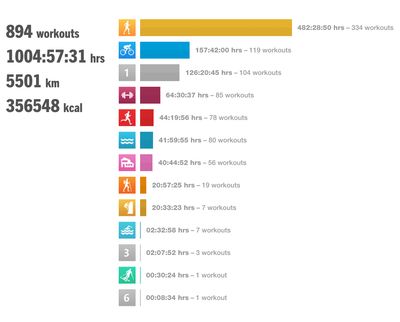 Sports tracker: 1004 hours tracked across multiple devices over the years. — Apr 4, 2016For years now I have been tracking my sports activities with sports tracker on a variety of mobile phones, dive computers and sports tracking watches. I have gone canyoning, hiking, swimming, skiing, snowboarding, climbing, to do via ferrata, explored caves and trained indoors. In that time I have not had too many injuries and I have taken hundreds, if not thousands of photographs. [caption id=“attachment_2809” align=“aligncenter”] I have tracked more than 1000 hours These activities have been in France, Spain, Switzerland, Italy, England, Poland and maybe in or two countries that I have forgotten about. Sports tracking has progressed enormously since I started tracking activities. In the beginning I was using the N95 8gb and the battery lasted for about an hour. I then switched to various iphones and android devices before deciding that mobile phones were crap. That’s when I moved over to the Suunto Ambit 2 and later Suunto Ambit 3 devices. Since then I have been very happy tracking my physical activities. One key step was when Suunto and Sports tracker decided to share data between their services. At this moment I could track with the Suunto Ambit 3 and share to Sports tracker without four or six steps per activity. Since then the service has been reliable....
 -
 Prompt Engineering and chatGPT — May 20, 2023If you follow chatGPT and AI courses you will often come across the term “Prompt Engineering”. Prompt Engineering is the art and science of writing instructions so that AI understands what you would like to do. With time and practice you can be as specific as you like. You can fine tune your request until you get precisely what you are looking for....
 -
Print advertising and google — Nov 19, 2007The way we’re consuming information has changed completely. i see the freesheets as doomed and look forward to the day when more and more people have ipod touch like devices. I want to see a world where you select the news and information you consume as you’re on the room rather than before setting off. Already I’ve got a taste of the future (although to the occasional few it’s the present). Apparently google is looking at an advertising model that would see kiosks print out magazines with adverts tailored specifically to the reader’s needs. Personally I don’t see the interest anymore as this seems like an old media strategy within a social media future. Most of the media I consume is in portable form, whether it’s a podcast, video content or other. It’s fed to me via RSS for processing at my own speed. Where is the relevance of such a patent when print is becoming less and less relevant?...
-
Pride and media consumption — Mar 29, 2015I enjoyed reading the Unbearable Lightness of Being so much that I read every book by Milan Kundera. I also read every book by Albert Camus because I enjoyed reading La Peste so much. Laura M. Holson wrote an article about “Unplugging without FOMO” which I skimmed after someone on twitter commented on twitter that and I strongly disagree with this person’s view. It brings us to the conversation about high and low culture. I take the view that media consumption should be focused on high culture. For my dissertation I watched hundreds of documentaries. I watched every David Attenborough documentary, every Jacques Yves Cousteau documentary. I read many books and articles on the topic of the documentary genre and as a result I take pride in the knowledge that I have acquired in the process. When I skimmed through the article I saw that the discussions were about low culture, about tabloid topics. They speak about things that I would never discuss as they are of no importance or interest. These are things that have no effect on my quality of life. At the same time I do feel the usual regret. Mid to late adopters came to social media, made it tabloid and then complain about the stream which they and their friends generated. In my childhood I read encyclopedia articles during breakfast, as a teen I spent hours in computer rooms learning about webmastering and search engine optimisation before others were interested. I was experimenting with video compression tools in the late 1990s and gained a deep understanding of the tools that would lead from new media to social media. The conversations were about culture and people took a constructive attitude. From 2009 onwards I saw the shift away from personal conversations between friends to the hunt for followers and the loss of the personal connection and I blogged about it. As I went back to read the article about unplugging so I see a reaction to what I have been saying for years now. Articles are being written for people with no staying power. Social networks are becoming broadcast rather than exchange and the superficiality of the web is driving people away. I am happy that social media and microblogging are beyond their sell by date because it means that I can give time up to blogging once again. I can once again discuss topics that interest me in long form. It means that we will spend more time reading, more time learning once again. That is the beauty of the shift away from social media. In reality I have nothing to gain from participating in the Meme media. Même media, the Same media. The media where people use hashtags to be certain that they are in the flock, the flock of hashtag users rather than conversationalists. If I can’t converse I will have a monologue and people who are like minded will find me and we shall converse away from the madding crowd. Someday I will read that book. I love to read and I love to write. Today I am doing both as it’s raining outside....
-
Pride and media consumption — Mar 29, 2015Documentally - Apr 3, 2015...
-
Practice with the Canon XH A1 — Mar 7, 2008With a screen resolution of 1920*1080 interlaced this is one of the higher resolution cameras currently on the market at the moment. It’s beautifuly designed for camera men rather than engineers (unlike the red). I already wrote about earlier.The light wasn’t so interesting but here are 11 seconds of footage. (92 megs) Right click to save the footage as this will not behave properly in browser...
-
Podcasts and Bandwidth — Apr 20, 2007There have been a lot of discussions between podcasters and the amount of bandwidth that is needed to serve these files. Successful podcasters shift several gigabytes of data with each episode of their podcast and since everything is automated everyone requests and receives the file at this time. This means there’s a massive peak. I’m interested in the reception side though. I’m on a university network and I’ve used it when you would get a throughput of at least 400 kilobytes a second. That’s quite fast and pleasant. It’s changed since then. Digital village, part of Catalyst has throttled our bandwidth, offering 8 gigs a month paid for by the university but limiting to 500 megabytes a day. What this means is simple. Anytime I leave iTunes unattended up to a gigabyte of podcasts may be downloaded at once. No problem, when you’re at home with 2 megabits per second or within uni but a big problem. I’m constantly watching over the files and their size in order to stay below the bandwidth limit. It’s frustrating. Last night I went to have a little fun since I was having a denial of service from Digital Village as they were refreshing the database at the end of the “service month” as I will refer to it. For 8hrs they cut off my service. In the meantime, I’m only 5 minutes’ walk from the uni library and it’s open 24hrs a day. This university has good download speeds. Using the wifi connection I downloaded 2 gigabytes worth of podcasts and videos within about one hour. The connection speed for university fiber is fast. It’s at least 600KB/s sustained. That’s a 40 meg file within 4-6 minutes when you’re downloading three at once. It’s a great feeling. In halls, it’s disappointing and frustrating. I don’t like Catalyst. They’re behind the times. They provide a sub-standard service and I feel that people should know about it. I’ve spent at least 11 years online now. I know what to expect from an ISP. Digital village doesn’t provide it....
-
Podcast listening and more — Jun 20, 2007Since I finished my dissertation my biggest time sink has been listening to podcasts. For some reason, I download the entire series of podcasts and work through them one at a time until there are no more. It’s a way of relaxing. It’s also a way of getting information quite easily. In London, I hardly ever leave home without the iPod whilst in Switzerland due to my driving I can’t listen to podcasts when traveling by car. When it’s on foot however I can. I found a loop that I do that’s about an hour’s walk and if I chose to I can make that loop last a shorter or longer amount of time depending on which paths through the fields I’ve chosen. Over the past few walks, the rain started falling onto me but it was warm enough and the rain so weak so as not to inconvenience me. During this podcast listening, I’ve learned a lot about technology and the opinions of a team of people. I’ve seen the evolution in attitude between various podcasters. We see the evolution from being fairly new at certain podcast programs to being quite weathered in by the entire process. As a result, the content is more relaxed and feels more familiar. It’s more familiar to me as well. I know these individuals now, as they’ve talked over time. It’s not quite as remote anymore. As I listen to podcasts I’ve started to think that they’re not that innovative. They’re doing what radio did years ago but rather than concentrate on music and other such topics they concentrate on technology and those behind the scenes. In so doing there’s been a shift from a celebrity culture of films and music to one of the bloggers, web developers, and more. We’re in a time when being online is so easy and so normal that everyone is there. Within the past 8 months, Facebook has gone from having two or three of my friends there to over 200. That’s quite a big shift, quite a change. The online world is no longer the realm of the geek. In fact, it would seem that being online is no longer a geeky pastime. I was also thinking about how social networking websites have become the new portals. Remember yahoo, Altavista and others attempting to become portals, the starting point for most people’s web experiences. Now Facebook, at least within my real-life circle of friends, seems to be the most important. Everyone seems to be there now, or almost. How long will Facebook remain popular?...
-
Playing with Vim and Laravel — Nov 27, 2022I love using Atom because it’s light and fast, even on a six year old machine like mine. Github is soon going to archive atom. I will lose my favourite editor. That’s why I played with VS Code, Sublime Text and other solutions. Vim is the winner for now....
-
 Playing with StatsHunters — Apr 24, 2023Today I saw a link to Stats Hunters on the Google App so I clicked through on a laptop, once I was sitting at a computer. This is an app that looks at Strava data and gives you a summary of how many activities you’ve done as well as how far you have travelled....
 -
 Playing with Fire(fox Developer Edition) — Oct 15, 2020Google Chrome was misbehaving recently so I started to explore other browsers. By explore I mean try browsers that I had used plenty of times in the past. As I did this I came across Firefox Developer Edition....
 -
Playing With Angular — May 17, 2021I have been playing with Angular again over the last few days. I was playing with the Angular.io Tour of Heroes Tutorial. The course is simple to follow. For a while I was stuck on one problem but was able to find an answer using search engines. I then got stuck with a separate issue. The advantage of getting stuck is that it encourages reading around the subject. It gets us to make sure that we understand what we are working on....
-
Playing Ingress and Pokemon Go in parallel — Jul 30, 2016People are playing Ingress and Pokemon Go in Parallel. Both games use the same geo-located points and walk the same routes. They have the same places to farm and combat. I started playing Ingress again, but only a few minutes here and there. As I play I see new faces and new people at Ingress portals. They are no longer my age or older. They are much younger, in their teens. Yesterday as the neighbours were having a party I decided to take advantage of the excuse to go out and play Ingress. I went to the four or five portals in my village. At the village church I saw a youth drive up to it on a scooter, farm via the Pokemon Go layer and then leave. Nothing changed on the Ingress layer. No damaged resonators, no upgrades. I like that people can play two entirely different games at the same location. I see this as the future of geo-located games. I see this as the next wave. The physical world provides the location and then the layer (or game) provides the user interface, the virtual world we interact with. With imagination more and more layers can be added. This will provide people with choice. The next step is smartwatches and augmented reality goggles. Those who have played Ingress intensively know where all the portals are so they can put their phone away when walking from point to point. The same is probably true of Pokemon Go players. One person wrote that he uses his smartwatch to farm when walking around. Imagine if Google Glass had come out now. If it had come out now, with the Pokemon Go craze people would buy them. At the moment to play pokemon Go and Ingress you walk in a position, that given time, will turn us in to hunchbacks. Rather than being from manual work in a field or a coal mine it will be from walking staring at a phone. I write this with a certain sense of humour. The market for Augmented reality goggles is ripe. Device manufacturers should grab this opportunity while it lasts....
-
Planning A New Section For My Website. — Jun 25, 2007Today I’ve spent time looking at the website earnings and I’ve seen that with just a few minutes of work I’ve doubled the earnings from my website. I’m not going into the details at the moment but since I seem to be doing nothing productive I’m going to re-work my website to increase my earnings. Four hundred and sixty visitors passthrough this website with about a million six hundred hits of which most visitors, through search engines get straight to the page they want. What I need to do over the next few days is making sure that there is advertising on most of the pages. in so doing I increase the opportunity for people to click through and find more relevant content on someone else’s web page. I need to write more articles, rather than blog posts. Blog posts are a lazy method of web mastering because they require no real effort. Find an idea, write about it, post it. At least when you create a page you think about the content. I’ll start by writing a section about a variety of podcasts I’ve enjoyed over the past two years and hope that what I write will be appreciated by others. Through this process I will be targeting a specific audience, trying to create relevant content and as a result get more visitors. When working on the Roman section of this website I ran out of knowledge, therefore, the speed at which I added content plummeted. There is one page that I’m proud of from the time. It’s the one on Slavery. I spent several hours doing research, writing notes, and then uploading this page to the website. As a result of the quality of content universities and a number of other reputable websites linked to my own. That’s what I plan to do with the new sections I will add on podcasts I enjoy listening to and why. It’s going to take a few days to generate this new section but since I’m between studies and work it’s one way of attempting to get a small secondary income. We’ll see how it goes....
-
PHP from the Command Line — Sep 24, 2022Recently I learned that PHP has a built in server. You don’t need xampp or any of the other solutions. All you need is terminal open, have the current directory be the one with the PHP files you want to serve and type: “php -S localhost:8000”...
-
People From The Past — Jul 9, 2007Since I started using the world wide web one thing has become clear over the past year. The web has become personal. We have seen a migration from a worldwide web of strangers where everyone is hiding behind an avatar to a worldwide web where no one is hiding behind an avatar, where everyone wants to be seen. In the early days of the world wide web when no one was sure what the world wide web was about many people created websites and web rings and such were formed. Webrings were an early form of tagging whereby a list of websites on a particular subject would be put together to help promotion between websites. Over time this disintegrated. Another difference is the mentality of webmastering. Whereas before a website was designed to provide text-based information within the smallest amount of data (due to network limitations) it has gone the other way. From HTML pages to Flash-based video players. The Web has become a far more important tool now that broadband is so popular. At the same time, broadband and “always-on” connections have meant that whenever you turn on the computer you’re online. In the early days, I had a friendship with a Swedish girl, via e-mail. The friendship was an interesting one because it was one thousand word e-mails one to two times a day for an entire month before it ceased completely. That’s a lot of communication between two countries at a time when social networking was in its infancy, at least online. Remember the Geocities chatrooms, those that were text-based were a popular question was A/S/L… Those days were more interesting. In those days you’d chat with someone and try to keep them interested and establish a friendship which would result in getting an e-mail address to stay in contact. Profiles and logins became more advanced and chatrooms are now designed so that everything about you is clearly visible (that you choose to make public) therefore some of the more basic questions are no longer needed. I have been a member of many online forums and I have seen how they have changed from being fairly simple places for people to share ideas a post at a time to massively complex social networking websites such as myspace, Facebook and others. This brings me to the idea of portals. I remember when companies like yahoo attempted to give you as much information as possible on their main page and the most activities to enjoy were numerous so that you would stay there. A few years later and one of the top social networking websites is Facebook where not only do you have all your friends as members of the network but additionally they may choose how much they share with others. It’s become a central node for the web-based user experience. In this time those networks have demonstrated one thing, the ability to re-establish links. On Facebook it’s getting back in contact with school friends I haven’t seen for more than a decade whilst in other situations, it’s about people we met during vacations in another country. It’s a way for friendships to be created and to remain alive thanks to the virtual communities that have formed. I wonder how long it’ll be before my friends use Twitter, Jaiku, Pownce or other SMS enabled social networking communities online. In America, with Facebook, this is already a reality. For other countries with patience, it will be a reality as well and we will be truly connected. I’m already experimenting with that idea via twitter....
-
Pay-to-win Futility. — Mar 17, 2016[caption id=“attachment_2795” align=“aligncenter”] Pay to Win games make casual gaming futile Several years ago a friend told me about Clash of Clans and I began to play the game. The game is an enjoyable distraction for when you have a minute or two three. You perform a few actions and then you get on with your other tasks. When you play for free patience is an asset. You have to wait to get enough gold, elixir or gems before you can complete certain actions. The game is designed in such a way that you can play for years and still progress. I like to joke that the Pay to Win model is both encouraging and training people to bribe their way through life. If you’re impatient you pay a little supplement and you complete the action. Instead of taking a week for an action to be completed it takes seconds. Supercell has made millions this way as individuals spend more than a thousand euros. Those who are willing to pay get to the top of the leaderboard....
-
Patent Misuse — Aug 7, 2007A recent blog post is bringing people’s attention to a group who want to sue Facebook for patent infringement. The problem with this patent is that it is so broad in it’s language that it would include almost all social networking websites....
-
Operator 11, Your Own Television Show — Aug 13, 2007Operator 11 has taken video sharing and webcasting to the next level. Whereas websites such as youtube, google video, myspace, and Facebook all allow you to upload and share videos this one allows you two additional features....
-
Ingress Operation Apache, Covering Geneva in Blue. — May 3, 2015Operation Apache...
-
 Online communities and socialising in person — Jul 31, 2016Online communities and socialising in person can be a challenge for people. Either they are shy, lacking the courage to meet with strangers and start a conversation or they are introverts, interested in being in a group but not necessarily to participate in the conversations. The question was “how to go to a glocals meeting when you are really shy ?”. This applies to couchsurfing hangouts, Google+ events, Pokemon Go meetups, slow ups, critical mass and more....
 -
 One Year With The Garmin Instinct Solar — Dec 12, 2022I bought the Garmin Instinct Solar because I was interested to see how the Solar option works. As with most watches the solar panels take several hours to recharge the watch, even during summer heatwaves. The Solar part is great, if you’re in Spain and leave your watch to recharge in the sun while you do something else....
 -
On Trendio My Portfolio Is Doing Well — May 7, 2007If you love reading the news and seeing what’s going on around the world then Trendio is an interesting site for you. I looked at the events that are going to take place and whether Trendio already has them listed. If it does then I decided to buy some stock for those words and as their quantity increases so it means I will get some income. Knowing that the French elections would take place I bought stock in two of the key elements to see by how much they would increase. As you see the increase isn’t that bad. I also saw some other events in the news so bought those. Overall it’s about understanding the news cycle, what stories have a long life, which ones are going to be short lived and which ones will generate the most hype. If you buy words before a key event when they’re low and wait for the event then you can make a lot of trendilions within a short amount of time. It’s an interesting distraction and I’d recommend people take a look at it. Trendio.com...
-
On Trendio My Portfolio Is Doing Well — May 7, 2007Mariuca - May 5, 2007...
-
 On The Value of Not Being Anonymous on Social Media — May 29, 2023For years I felt comfortable tweeting as myself for two reasons. The fist reason is that we met up so often than tweeting under my actual name made sense. The second reason is that it was a network of friends of friends and we were seldom, if ever trolled. That changed during the pandemic so I chose to tweet under one pseudonym, before another, and then another. The reason is that I felt that I was going to be attacked by people online, if they knew who I was....
 -
On the Pleasure of Small Machines/Laptops — May 6, 2022For a while I had a mac book air and I used it for everything. I saw the mac book air as the machine to use for everything except for video editing. That’s what the mac book pro was for. Eventually I sold the Mac Book Air and then I took the MBP to an event and it was stolen and I found myself without a machine....
-
On the Importance of understanding what you are writing about — Nov 27, 2007Nick O’Neill needs to do more research. Most of what he writes is speculative based on two or three months of research rather than sociological research. He goes after trends and gut feelings. As a result whilst his content is interesting to keep a track of it’s not relevant to the type of content I am looking for. Podcasters and social media people need to take a more academic approach to their writing. I’ve found myself angry with what Leo laporte and other podcasters have said. Some of them are really pro certain technologies and boasting about their advantages without taking a media tech and society view. What I mean by this is that technology and communication are cyclical. What was really common in older media is going to become common in new media as more people come to use it. Radio and letter writing are what podcasting and e-mail are to their contemporary period. It’s the same with the iphones being bricked. There was such an outcry within the early adopter crowd that you’d think technology has never evolved. We all know that more apps would be created for the Ipod touch and iphone for example. It’s interesting to see how things are evolving and how by looking at previous technological trends we can see how the future will take place. Those who write about technology need to have a media studies background for a proper, well based understanding of their topic of conversation. If you want historical information you want to find professors and their PhD thesis, the same should be true about technological writing....
-
On the importance of observation in Social Media marketing. — Mar 22, 2008However, many purported Social Media experts are merely engaging in cultural voyeurism at best. They look from afar and roam the perimeters of online societies without ever becoming a true member of any society. This means, they don’t truly understand what, where, or why they’re "participating," only jumping in because they have something to say and have access to the tools that will carry it into play. This is unfortunately a representation of the greater landscape of Social Media Marketing and it’s time to take a step back and study the sociology of Social Media in order to keep communities intact and unaffected by outsiders....
-
 On The Desire To Change Career — Feb 7, 2022If I had been smart I would have changed career path around 2006-2007 when I was in London surrounded by entrepreneurs and web developers, rather than now during a pandemic. Normally I struggle to find new contracts because of two things. The first is that for camera and editing work there are very few opportunities per year, and the opportunities that do arise have hundreds, if not thousands of candidates so the probability of success is low. The other issue is that because there are few jobs, if you fail you may have to wait months for an opportunity to appear....
 -
On the challenge of being brief. — Aug 27, 2007Back in 2000 I arrived in the South West of England as an 18 year old who was used to watching 24 minute documentaries on a range of subjects and I wanted to do the same thing. For the course I was doing when I was told that I had to do one minute pieces I was dissapointed because I thought I would never get through what I wanted to say in that amount of time. It took a lot of effort and thought during those two years on that course but eventually I understood the importance of briefness. I understood that you can get the same idea in twenty words as you can in 2000. As a result of this when I arrived in London to study for the BA in media and television studies I had the one sentence one point mentality and when i was told to make a ten minute documentary I saw this as more of a challenge than when I was told to make short documentaries. The reason for this, precision. There are a number of bloggers, used to the written word, who are moving over to video to deliver their message and as they do so their inefficiency with getting the point across gets in the way of the quality content they have to offer. On a number of occasions people tend to record ten to twenty minute interviews without cutting anything out. As a result the signal to noise ratio goes down. As a video producer one of your most important tasks is to find the key points that someone makes in their argument and get them across to your viewer within the shortest amount of time possible. If you think that a news item is between one minute 30 to 2 minutes these are the timings you should work for. There is far too much content on the world wide web for me to waste a quarter of an hour listening to someone who cannot be conscice in the way he expresses himself. It’s a shame because what is said may be of interest but I’m not ready to spend 15 minutes on one video clip unless it is a highly and well produced piece of documentary making with a range of interviews and analysis....
-
On television accuracy within this "New Media" landscape — Sep 26, 2007Since I had some free time I went over to the Old Theatre of the London school of economics and what we found out from that conversation is that people don’t trust television. According to one of the chairs this was at a ratio of 4:3. This is an interesting situation since the question of trust is one that as academics we all worry about. Any student, whether a primary school child, an undergrad or a grad knows one thing. Get as many sources as you can and from the information you find work out what the reality of the situation is. If you’re starting a research project then find out who’s written about it and compile this information. This is important whether it’s from books, magazine articles or documentaries. That’s the purpose of academic writing; to become an expert in a specific field. Now I want to ask why it is that people don’t trust television. There have been a spate of fake phone ins, some miss-information and more but what does this really mean. Does this mean that program makers are untrustworthy? In reality most of these problems had two things in common. The first of these is that they’re phone in’s for the most part. In other words their aim is to generate some form of income and to promote audience participation. The second is ratings. With the Queengate, as some call it, the problem was a little error in editing which meant that they woul have to apologise for the editing. At the same time it’s attracted a lot of media interest therefore the promoters may have acheived their aim. Part of the discussion also focused around the idea of training. If everyone is allowed to apply for media jobs yet none of them need to display their credentials vis-a-vis the ability to research and document their programmes properly then there is a disparity between the standards that are expected between broadcaster and audience. This aspect of the conversation was interesting because there are so many runner jobs where the aim is to prepare coffee, tea, get tapes and more yet how many of these running jobs promote the academic riguour you’d expect from university students within the realm of programme making? As someone who is currently looking for opportunities to work within certain production companies I liked the comment that people should be taking into internships and properly trained to be good researchers and accurate content creators. It seems logical that for those who want to create quality factual programming they should be trained more about accuracy. Maybe there are certain fields of study that take this far more seriously than others. It was interesting to listen to Roger Graef at this event. I had heard and read about him for so many years that when I saw he was one of the guests it was a great moment to see in person one of these personalities of documentary history. He was asked about noddygate among other things. When asked his opinions on noddies he did say that they’re part of the conventions but that when noddy is used to fake one person being in location when they are not that is misleading to the audience. One speaker later on commented, quite rightly that the noddy is lazy programme making since there are a number of other ways of transitioning from one topic to another. MTV have their own style, they take two video cameras, one is a random shot of the room and the other is framed on the interviewee that way there are constant cut aways. That’s a luxury (although mediocre in itself) for the aquiring and use of cut aways. In thinking about this topic I’m wondering what people mean when they say that television can’t be trusted. Do they mean that it’s a more devious medium than other mediums? If so then why is this. Should television, like the printed press show it’s bias. We know Fox News’s bias but with a body such as the BBC we expect it to be neutral, a great feat in itself. Impartiality is hard to come by and there are documentaries that are so well researched it’s amazing. In some cases I have watched documentaries that may easily have had more than thirty to fourty interviews with well known and respected views on the topics they are discussing and as such provide a great insight into the topic. If you’re watching Panorama do you trust what you see after they have worked on each programme for extended periods of time. Do you trust programs like Hard Talk or Meet the Press. There are a lot of programmes that have high production value but most people do not have the time or inclination to watch the well researched sources of programmes because they are “long and boring” yet they complain because something is over simplified and innacurate. The audience needs to think about how it consumes the media before it complains about issues of fairness and accuracy. If you can’t sit through heavily fact driven documentaries because you prefer a one minute summary every hour then the complaint is void. In the same way you don’t read the Sun for an informed view of the world so you should not tune into a sensationalist tabloid news source. My final point takes a look at accuracy on television in contrast to that of bloggers and user generated content. As more and more people may produce and distribute content so some of them will have high production values, making sure to get many points of view across and get an accurate and complete image of what is taking place whilst others will take whatever view is most comfortable and speak about that. There is a great deal of accountability on the web and one of the great things about research on the web is the hyperlink. With every statement you make you may take the time to source that comment and so the audience will understand what bias is relevant to that quote. In so doing there is a great, and practical, method by which to assess how accurate the content you are viewing is. Over the next few months and years we shall see many more arguments of accuracy and as the audience becomes more media literate so the debate may finally slow down and a new media landscape will be the norm once again....
-
On studying what you love — Mar 27, 2007I love technology, especially in the form of online communities. I’ve been part of so many online communities I have some degree of expertise. I’ve seen the birth of the chatroom and it’s evolution, the popularisation of instant messaging and through flipside and nochicktrix I’ve seen the forming of virtual communities. More recently I’ve seen the increase from virtual communities to real communities. Over the past two years, almost everyone I know has created a myspace account and for a while, this was the best place for people to be. More recently though people have moved to Facebook. Having more than 140 friends, of which only three I do not know, is a sign of how times have changed. It’s actually fashionable to be part of an online/offline community. All the parties I’ve recently been to have been advertised on Facebook among other places and it’s become the social networking site of choice. If you’re not there you don’t know what’s going on anymore. It’s a great shift. It’s also replacing e-mail. Why e-mail people when all your friends are on Facebook. Why not take advantage of unlimited photo uploads to Facebook to add all those past nights for everyone to enjoy. I love the way technology is going. It’s sociable....
-
On studying what you love — Mar 27, 2007Claire - Apr 1, 2007...
-
On social determinism and the media — Jan 30, 2007My week started at 10 this morning and was over by 1300 this afternoon. It was a lecture and a seminar about Brian Winston and social determinism in relation to the media. It’s a theory which is exploring whether social factors affect the technology that we use. I was taking notes during that lecture but not with pen and paper and without a laptop. Instead I was using the O2 XDA minis. It’s a really nice device and I’ve had it for over two months now. What I love about it is it’s size, being about the size of my palm it’s large for a fun but tiny for a laptop. It’s got a big display and a sign out keyboard. It’s also got a good scribling interface which makes handwriting notes just as easy as typing. It’s a friend that played with this feature and I’m quite impressed. The reason I love it is that it’s got all the features you’d expect from the i-phone but in the windows operating system and for a European market. The fact it’s got a keyboard makes it ideal for fast typing of sms. I often find myself writing over 200 characters because it’s so simple. Checking e-mail is a doddle. Simply download the gmail interface and connect to the web. The download of messages is easy and intuitive. It’s a shame that data transfer over gprs is still expensive otherwise it’d be perfect. I’ve made a skype call with it and it’s worked well. I was able to make a phone call to a mobile phone and talk and hear myself at the same time. Being alone that’s complicated but I know it works. I bought a program and that makes the synchronisation extremely straight forward. I have contacts, pictures and some word documents synced on the ibook and the mobile phone this way. It’s perfect for students and I really enjoy using the device. I’m speaking as someone who’s owned at least 5-10 mobile phones over the past few years....
-
On meeting Robert Scoble at the London Geek Dinner — Dec 8, 2007This afternoon Nik Butler, Loudmouthman sent me a text message asking whether I was free to go to the London Geek Dinner where Robert Scoble would appear. Of course I was free so I decided to go to the event and met a number of people. The first person I met was Robert Scoble for this particular event. He was standing at the door and as I came up he welcomed me into the room, we shook hands and I got his business card. That was quite unexpected, so approachable. I spent some time talking with Loudmouthman, Michael Beddows, Liz Strauss and Giles Thomas. The London Photowalk itself saw us walk from The Geekdinner venue down towards Southbank and the film cafe. It’s the first time I went to the bar and I’ve been living in London for over three years now. It’s amusing to see how many photographs were taken and videos recorded. It was the photographer photographing the photographer. Scoble interviewed people as we were walking down the street and others were filming the filming. I enjoyed the evening and meeting Scoble. For a while I nicked his video camera and filmed some shots of London for him. One of those shots was the Midnight ring of Big Ben. That’s about it for tonight. Video 1 Video 2 Video 3...
-
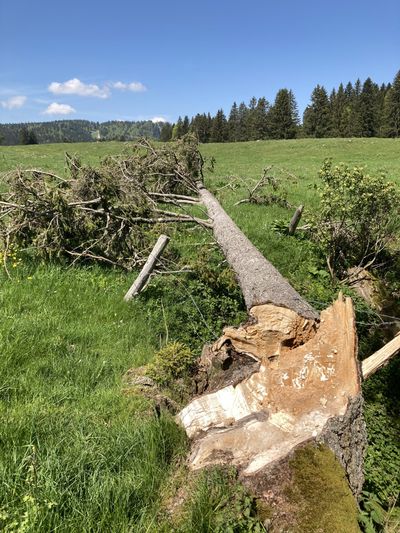 On Being Told Not to Fear AI — Jun 14, 2023They love to say “Don’t fear AI”. They all say “AI is meant to help people with their work”, “AI is meant to be a personal assistant” and more. It’s not AI we fear. It is stakeholders, governing boards and accountants. They are the people we fear. Throw in Inhuman resources for good measure. We “fear” AI because they, all the groups mentioned above, want to use AI as an excuse to fire human beings because computers are theoretically, and only theoretically, cheaper....
 -
Of live video streams and Paleo — Jul 27, 2008I really enjoyed what Nicholas of K had to say in the interview we did last night for Musicorama.tv. He spoke about projects and how we can achieve anything we want as long as our mind is in the right place. I’ll let you know when that interview is online. This year Paleo has been a different experience from previous years because I went as a “radio/TV” person as opposed to a collaborator (work for free, get free food and free non alcoholic drinks as well as invites for friends), in the latter case you sleep so little it’s not unusual to take a week to recover. I enjoyed myself. I enjoyed seeing all the live acts and I streamed quite a few events, from Iam, The Justice, The goose, Massive Attack and more. We also had interviews with BB Brunes, K, The DO, The Dodoz, Marvin, Girls in Hawai and Caribou if I remember all of them. Here are some of the Live streams Listen as the people realise what song it is. listen to the crowd roar :-) Tikan Jah Fakoly was good too. Nice relaxed evening. He was playing before Manu Chao Manu Chao played for over two hours but I had work the next day so I left early....
-
Of live video streams and Paleo — Jul 27, 2008[Pages tagged “caribou”](http://www.blogbookmarker.com/tags/caribou —) - Jul 2, 2008...
-
 Of Casio, Suunto, Garmin and Apple — Feb 28, 2023These four brands create watches. Casio creates rugged watches with batteries that last for a decade or more, and pair with mobile phones to track walks and more. Suunto and Garmin have fitness/sports trackers that measure activities, whether sailing, climbing, running, walking, cycling, scuba diving or more. Apple in contrast creates fragile, mediocre watches that cost as much as mid to high range watches and yet their battery lasts for one day, if you’re lucky. I even heard that Apple watches with 4g last half a day between charges. Charging a watch twice a day is unacceptable....
 -
Of Casio and Smart Watches — Dec 2, 2022Over the last five and a half years I have tracked every walk that I have been on, and I have tracked about five and a half million steps per year. That’s a lot of steps and a lot of going around in clrcles. Going around in clrcles makes tracking walks with smart watches/gps watches less interesting. That’s probably why I have been distracted by Casio watches....
-
Of AirPods - useful and simple — Mar 9, 2020What do you have to say about AirPods? I see them as useful and simple. I have tried earphones, headphones, and Bluetooth variants. With some earphones, I found that they hurt my ears. With others, I found that they slipped out too easily. With yet more, I found that the noise cancellation feature was unpleasant. All in all, AirPods are still the earphones that I prefer....
-
Nucking Futters — Jun 18, 2007Internet addiction and e-mail addiction should have gone the way of the polaroid years ago. Why are there several news sources claiming that people are addicted to e-mail? That’s like claiming that people are addicted to toilet paper or using a pen when writing on paper. It’s a question of practicality and it’s already an out of date claim. Who still writes e-mails when you can send a pm, write on someone’s wall or send out bulletins. Most of those reading this post will understand what I mean. When’s the last time you sent an e-mail? Hotmail has been replaced by Facebook and myspace. Why would you use old fashioned technology like e-mail when Facebook and myspace are more practical. There’s no spam, there’s no spending twenty minutes looking for the names and addresses. It’s a pointless article that demonstrates a lack of understanding of the new online communication channels. There are so many to be used, whether for photo, audio, video, or other. As an afterthought, it’s a bunch of statisticians having fun with numbers. Why don’t they do polls like the one I did, why don’t they give some theory behind the article? I haven’t even read the article, skimming was enough for my prejudice for such an article to form. Get the early adopters to write and explain the relevance of such statements, not the computer illiterate. I want the skills I have learned through my media tech and society module to be used. “Science sans conscience n’est que ruine de l’ame” or in this context, “stats without analysis are no more than a waste of time”. ;)...
-
A Nonverbal Autism Video Interview — Jul 19, 2016I saw Horyou share a link to Speechless with Carly Fleischmann. This is a Nonverbal Autism Video Interview carried out via typed words on a tablet. The text is read out electronically. The interview is warm and convivial. It stands out because it does not use a fast talking or energetic host. The interviewer does not talk, in the conventional sense. They could easily have inter-titles rather than synthesised voice. It is because they show the challenge of this interview that it is interesting. It shows that charismatic fast talkers are not the only people with an opportunity to interview artists. It shows that given the right circumstances anyone can interview artists and that desire and interest are required but that solutions can be found for other challenges. It opens up the world to a diversity of people. Imagine video interviews in sign language for example. There is no reason for a specialist channel not to take on this challenge, to fill this niche. Three things make this possible: Video production costs have gone down so it is easy to find the budget to record such an interview, technology makes communication for nonverbal people much simpler and finally Youtube makes content distribution to an audience easy. This video has three and a half million views. I will find more videos like this. I believe that they play an important role in modern society where we believe that everyone should be treated equally, to have equal opportunities. It is too easy to idealise the charismatic radio presenter who has a way with words and forget that charisma can be found in people’s intellect. You see it through the laughter in the interview, you see it in the way the interviewee is so relaxed. It’s a shame that there is just one interview. Imagine it as a weekly show....
-
New Site of Interest and Old Site To Avoid For A Few Days — Aug 1, 2007Once more facebook is down due to site maintenance and it’s making me think that it’s time to move onto another site for a number of days until they sort everything out. That’s where Tubemogul comes in, a video sharing website....
-
Networking around Pokemon Go — Jul 29, 2016Networking around Pokemon Go is less interesting now that everyone plays the game. I have heard non geeks talk about Pokemon Go. They spoke about the large crowds that are staring at their phones in places like Ouchy. The value of social movements is to be part of a small, passionate group of players where the community is large enough to be fun but not so large as to become mundane. With a game like Ingress players were more sparsely distributed. When we met other players there was an immediate connection because we were few and far between. You would walk around certain cities and villages and you would not spot other players for hours of game play. When you met another player you wanted to meet, you wanted to interact. Communities are fun when they are small. Pokemon Go has risen in popularity at such a rate that old social networks may be privilieged over new ones. I was at the Chateau de Prangins a few days ago playing ingress for a short period of time raising the level of Ingress portals. During this time I saw at least 5-10 adolescent boys playing Pokemon Go, walking and running around the park. Pokemon Go is like alcohol or snowboarding. As everyone plays the game the opportunity to create new social groups is reduced. Why mix with new people when your core group of friends is already playing? The Facebook, telegram, slack and Google Hangout groups are alive and well this summer so people are connecting with new people. Although a new network of people is forming around this game I feel that it is hindered by the popularity of the game. Introverts can connect online via these groups, Meeting new people face to face may not be as comfortable due to the large crowds. It’s great that a location based game is encouraging people to run around while staring at their phones. [Phone screen replacement](https://www.amazon.com/gp/search/ref=as_li_qf_sp_sr_il_tl?ie=UTF8&tag=mainvision-20&keywords=phone screen replacement&index=aps&camp=1789&creative=9325&linkCode=xm2&linkId=1c111358728211918c4a817124a0e3d0) companies are very happy with the increase in demand for their skills and external battery sales are going up. Prices are going to go down and innovation is going to go up. If you’re an introvert, bad at small talk, then Pokemon Go has reached its peak usefulness and you can revert to other less popular activities. You can skip the craze....
-
Netflix provides a better opportunity for documentary content distribution than Discovery — Aug 24, 2015In the 1990s when satellite distribution of television content was in it’s infancy we got a satellite dish and I would watch the Discovery Channel from the start of the broadcast day to when the programmes were played for the second time that day. By watching so many documentaries I learned a lot about the world. I watched Mythbusters, Lonely Planet, Modern Marvels and many many other documentaries. It is only ten years later that I stopped watching Discovery. By that time I was no longer in the family home and so documentary viewing was more restrictive. Whilst at the University of Bournemouth and the University of Westminster I did take advantage to watch as many documentaries as I could find. The dissertation I wrote during my third year of studies was about the documentary genre. I had an academic reason to watch these documentaries. It was no longer a hobby. Aside from the selection of Discovery channels and University VHS tapes documentaries can also be found on national and European channels. I am thinking of Temps Present, Passe Moi Les Jumelles and other factual programmes and current affairs content. These documentaries fit within a specific format to be broadcast at the same times every week. We then have artistic documentaries like those broadcast on Arte, shown at independent cinemas, festivals and more. These documentaries are not adapted for mainstream viewing. They fill a niche. They are sometimes hard to watch and other times so niche that aside from those with that passion or interest no one will ever watch them. The Discovery Channel network broadcasts set documentaries at set times on set channels for a set number of hours per day. Viewers can either watch documentaries as they are broadcast or on demand. As PVR arrived viewers could shape their viewing habits around their lifestyle rather than the other way around. Discovery channel documentaries have two serious flaws, that as a documentary professional cannot stand. The first of these is commercial breaks. When I watch content I want to watch it from start to finish. I don’t want it to be interrupted because it means that for two or three minutes I have to find something else to do. This could be a serious trigger to people having a laptop or tablet with them when watching TV. The second very big flaw with Discovery TV documentaries is sensationalism and repetition. I found that when watching hour long documentaries on Discovery television channels more than half of the time is spent repeating what has happened and what will happen with very little content left over. You will spend an hour watching a show that could have been over in just 24 minutes. This is an excellent way to lose viewers. Netflix is a video on demand platform. This platform makes available all of the content it has licensed to it’s customers. This content is ready to play within seconds and has no adverts. This is great for content creators. It means that they can spend more time moving the story forward. There is no need to worry about viewers starting to watch a show half way through. It means that if you have a 42 minute slot you can spend 52 minutes telling the story. This is great for content creators. The flaw of Discovery Channel documentaries and commercial television in general is that they make mediocre content and then add adverts every few minutes. This means that a mediocre programme will be watched from one commercial to another before the channel is changed. They live under the misconception that sensationalism and excited narration will keep viewers. It has the opposite effect, at least on me. Netflix allows you to watch the BBC Blue Planet and Planet Earth documentaries with no adverts. This gives documentary makers an advantage. Imagine watching Planet Earth documentary episodes that are 52 minutes long with an extra 15 minutes or more of adverts thrown in. For this reason Netflix is an excellent documentary distribution platform....
-
 Netflix - Browse By Language — Apr 16, 2023Recently Netflix added a Browse by Language option which means that you can browse for content by original language. Yesterday I saw that I can browse for content in French, Italian, Polish, Korean, German and many more languages. I could list more but that’s dull. Instead I want to focus on the opportunities it opens up....
 -
Net Neutrality and The United Kingdom — Aug 13, 2007Slashdot today quoted Small fries as saying that the Net Neutrality Debate crosses the Atlantic....
-
Myshake - Earthquake app for Android — Feb 13, 2016Myshake is an android app developed by UC Berkeley to use mobile phone sensors as earthquake detection and measurement devices....
-
My thoughts on the Iphone 3g — Jul 12, 2008Today I played with the Iphone 3g and was left indifferent. That’s because aside from having the same design as both the ipod touch and the 1st generation iphones it doesn’t offer anything innovative. What really interests me is the idea of more data. Last month i did quite a bit of data streaming. 100 megabytes inclusive of my current setup. I also used quite a bit of extra data. With the Iphone 3g Plan I’d get 1 gigabyte of data per month, ten times more at relatively little extra. When I can get the Natel Liberty Grande paired with the Nokia N95 then I’ll be happy. Until then I’ll feel that they could do better....
-
My thoughts on "If we are all amateurs, there are no experts." — Jun 6, 2007Andrew Keen’s new book, The Cult of the Amateur is the latest addition to the Newsnight book club. In it, the author expresses his concern for the profligacy of online amateurism, spawned by the digital revolution. This, he feels, has had a destructive impact on our culture, economy, and values. Web 2.0 is a state of play by which anyone generating content can share it with an audience of hundreds of thousands or even millions depending on its mass appeal. As a result, the quality of media content that certain generations are taking in has gone down. Whilst the occasional work on youtube may be good there are hundreds of thousands of clips that are absolute crap. They’re long takes with no editing, just letting things happen. One of these such videos is of a pack of buffalo by a stream. A pride of lions captures the young before a crocodile attempts to get its share of the kill. Unfortunately, it fails and the lions finally think their meal is ready. They didn’t plan on the herd coming back. The clip ends with the young buffalo rejoining its herd once more and the predators are still hungry. What is annoying about these two clips are the duration and the window size. An editor would do his best to find the key moments. In taking the key moments and making a one minute subject the audience would have gained far more. It would also have saved us time. In HD I’m sure it’d be beautiful but as a small window on a browser, it’s disappointing. That’s the issue with online material. Everyone believes that they can do what they want when they want and then share it with the world. One of the last twitters I received is from Ijustine which read “Just got yelled at for wearing ‘a webcam’” because she’s decided to do the same as Justin from justin.tv. What’s the point of this. I understand the appeal of something like twitter but the live streaming of video seems to be taking it too far. Why are so many people flooding the world wide web with such extraneous content? I don’t want to watch Ijustine sitting at her computer at 3 am as she’s doing as I type this. Where is the media literacy training that should come with this new generation of web users? Who is to decide what is socially acceptable or not. Is it acceptable to strap a camera to your head and film everything that is going on around you or is that a breach of confidence? Is it worthwhile? Who’s going to make sense of this new media landscape. Current TV is supposed to be one of the new waves of user-generated content but does it achieve this. How can you boast about creating a user-generated channel when it’s scrambled so that only through payment can you watch the channel. It’s contradictory. There is a group of podcasters who do a good job of creating web content. The TWIT podcasts are one of these, Mobuzz TV is another to a lesser degree. NPR’s On The media is fascinating. These are examples of how technology can be used to provide high-quality content for a lesser price. In summary, technology has made it easy for anyone with an idea for a program to distribute it widely over the world wide web. Most of it is absolutely terrible and no one would be interested in the content whilst other elements are brilliant. Whilst everyone is seeing this as a new form of communication there is a lot of material that will never appeal to a mass audience. We must simply wait for a new model to emerge whereby the flood of crap will decrease greatly. I’m looking forward to the end of this transition period...
-
 My Lack Of Interest In the Apple Watch Ultra — Feb 7, 2023I see people are training for ultrarunning events, scuba diving and more with the Apple Watch Ulta, but I feel no interest in such a watch. The first reason for my lack of interest is that the watch is stupidly expensive for something that lasts just 30 hours on a single charge. I would expect a watch to last at least three or four weeks between charges, and at least a week with daily use. The Ultra does neither....
 -
 My AI Teacher — Jun 24, 2023Today I want to discuss something different. I want to discuss using AI as a teacher, rather than as a tool to replace us. For a few days I have been playing with the Instagram json file that I got when I requested my archive. With this json file I thought about things to do, and in so doing asked chatGPT for help, and it provided answers....
 -
MTV and international oversight — Sep 11, 2007When the VMA are advertised everywhere and where there is easy access to information about everything that is going on around the world MTV appears short sighted. If you’ve got an award ceremony that you’re telling the world about then you’d better give the world access to all the footage for the simple reason that you’re missing a good advertising opportunity. By restricting access to the footage two things are happening. You’re frustrating the users that have heard bad things about the performance and how bad it was and you’re missing the hype wagon that would follow behind such an event taking place. Those in charge of such channels should take the time to take advantage of the global reach especially with a medium such as a world wide web page....
-
Mouse trap videos — Oct 2, 2018When I lived by the seaside in England I was told by one of my flat mates that they had seen a rat go into my room and I don’t remember how I felt about it. Rat traps were soon placed to catch them. A few years later I saw a flat mate have the comic book reaction of fear upon seeing a mouse and I found it deeply amusing. I was also surprised by how ugly that mouse was....
-
 The Moléson VF with the Narrative Clip 2 — Jul 6, 2016The Narrative Clip 2 is a specialist camera that can be programmed to take photos at regular intervals whilst you enjoy activities. This is sometimes referred to as life logging. The idea is that you wear the camera either on clothing or place it somewhere where it can capture the passage of time. [gallery columns=“4” ids=“3063,3064,3065,3066,3067,3068,3069,3071,3072,3073,3075,3076”] For this event the camera was worn around my neck and took pictures throughout the activity. As you can see from the last image I had the Ricoh Theta S on a monopod and the Sony Xperia Z5 compact for other pictures. You do not see that I had a fourth camera with a 30 times optical zoom. The camera took over four hundred images during this event and I chose just a few. I avoid sharing images of people unless I have their informed consent. I share the images that best represent the pleasant moments. If I took the time I could rotate this camera to be horizontal and I could capture daily timelapses. Every time I go for a bike ride or a hike it would capture regular images. The camera has enough battery power and you can keep the camera in your pocket until you want to start logging the event. When the event is finished you can place the camera back in to your pocket and head home for example. An improvement which I have recently noticed is that when you put the camera to charge it can automatically upload the day’s images to the narrativeapp website and you can then select what you want to share. As cameras get smaller and more portable and as they become more specialised so we have an opportunity to get different types of images. One is for time lapses, the other has a powerful zoom, the third allows us to capture spherical images and the fourth is practical for sharing to social media....
 -
Mobile video streaming and the future of video sharing — Jun 16, 2008Two years ago we had the World cup and with that came hundreds of videos shot in cities around the world of people celebrating soccer (or football as a sport). At the time everyone would go out with their video camera, record the footage, wait till they got home, capture it and share via a number of sharing sites. The problem with this is that it’s both slow and tedious. It takes too much time and organisation to do. That’s where a new generation of mobile video streaming devices come in. Some applications like Qik and Bambuser are limited to people with cheap data rates via their mobile operators. As a result their services are not so interesting. What was missing from the market place were mobile video streaming services that would allow the content creator to backup the video to their mobile device before sharing it either over the air via 3g networks or wifi. Three services allow for this Kyte, which Scoble has talked about recenty, Flixwagon which I have talked about recently and then Livecast. Each of these video services allows you to save the video as you’re streaming. Kyte is interesting because it allows for you to share pictures, video, polls and audio from one application. Flixwagon is interesting because it allows you to compile all the metadata you want to have included with the video before you stream. It allows you to categorise it within set niches, then add keywords to make finding the video easier. Livecast is the most recent one I’ve tested (just a few minutes ago) and this one allows you to choose how much bandwidth you want to use, from just 24kb to 160kb. It gives you a stream limit of 2 gigabytes and storage of 100 megabytes… (if I remember right.) It differentiates itself with the stream from file option. You can record a number of videos on your phone and choose to send them at another time. It works well enough Video streaming is an easy way of sharing video with your friends without the need for a computer. As a result we should expect quite a bit more coverage of live events from the audience’s point of view, not just big budget broadcasters. This is a little rambling but it’s fun to see what’s available....
-
Mobile spending — Jun 24, 2008Important for global marketers, mobile handsets are the dominant way people access the Web in many emerging markets, as it is far cheaper, says John Gauntt, senior analyst at digital ad tracker eMarketer. With a computer, “The cost of entry to get Internet access is about $1,200 for the PC and broadband; a mobile is less than half the cost.”...
-
 Mobile Phone Games — Apr 3, 2023Our mobile phones are almost always near us, or on us. The only time we don’t have our phone with us is when we’re scuba diving, driving, unless we count Waze as a game. When I am home alone I usually don’t play mobile phone games because I’m distracted by other things....
 -
McLuhan's Thoughts And How They May Relate To Twitter — Aug 15, 2007“The simultaneity of electric communication, also characteristic of our nervous system, makes each of us present and accessible to every other person in the world. To a large degree, our co-presence everywhere at once in the electric age is a fact of passive, rather than active, experience. Actively we are more likely to have this awareness when reading the newspaper or watching a tv show.”...
-
Map Your Friends - Facebook Api — Jul 29, 2007As I was looking through the applications I found an application that helps to map your friends according to the geolocation details they added to their profile. As your social network is more global so you will find that your friends are more spread around the world. As you’ll see for me there’s a lot of clustering around London where most of the people I know on Facebook are living....
-
 Manu Chao At Paléo — Jul 24, 2017The Manu Chao Concert...
 -
Looking Out From The Other Side of the Internet Tunnel — Sep 27, 2020Today I started reading “What the Internet Is Doing To Our Brains, The Shallows” and I feel that I am on the other side of the experience. I have been through the passion for new content, the passion to constantly write the new things that people write, and the need to be connected....
-
Listening to podcasts with the Apple Watch — Sep 30, 2018This morning I was listening to podcasts with the Apple Watch I have. I like that I can listen to podcasts that play straight from the watch because more often than not I have the watch on my wrist almost all the time. This means that I no longer need to keep the phone in the same room as I am in but it also means that I can leave the phone to charge in one room while roaming around....
-
Life Cycle by Northcube AB — Feb 3, 2017Life Cycle by NorthCube AB is a life tracking application available on iphone. It allows you to keep track of your sports activities, time spent at work, sleeping, shopping, socialising and more. At first it knows nothing about it. It learns of your home location, your work location, where you go climbing and do other activities and then automatically logs the time spent doing various activities. At the end of the day you can see how much time you spent at work, at home and running errands. If you go for a walk, a bike ride or a run it detects the difference in cadence and will log that sport. I did get false positives when riding the scooter. It logged this as cycling. It also keeps track of the time you spend in transportation as well as the time you spend commuting to and from work. They are separated so that you can see how much of your day is devoted to commuting as opposed to travelling between locations for other activities. If you practice sports such as swimming or climbing you can tell it that at this location you practice that sport. From this moment on every time you go to this location it will log it as being for that sport. This is valid for socialising, coffee, the cinema and more. At the end of the day you can see a summary of how long you spent doing each activity. At the end of the week you can see how much time you spent on each activity. The bigger the donut slice the more time you spent on an activity. Assessing whether you spend too much time commuting, at work or socialising is simpler. As a freelancer working in a number of locations you could mark the locations where you worked and at the end of the week log your hours to double check that they are correct. This app is simple and intuitive to use. Unlike Foursquare/Swarm and other apps it requires minimal interaction. This app is a natural progression from apps such as Google Latitude....
-
Lensational - Empowering Women through Photography. — Oct 26, 2015From Friday to Sunday this week SIGEF2015 took place at the Batiment des Forces Motrices in Geneva Switzerland. This event was organised by Horyou, a social network for social good, where people were connecting and networking, discussing how best to help people with various projects around the world. Living in the Western World we hear and see selfies of friends and many images of food, autumn and things they find appealing to look at. Lensational is a project to bring photographic equipment and photography skills to people around the world. They recycle cameras, resell cameras, conduct photography training and sell photographs. They are looking for camera donations from both private individuals and corporations so that they can resell these cameras at an affordable price to those who would otherwise not have access to digital cameras. Women are then taught by NGOs and photographers about photography and this is seen as a means by which to empower women. Some of these images are then sold internationally to provide these women with additional income from stock photographs. Photographs by Marginalised Women. Photography is a pleasant and enjoyable way of understanding daily life. It provides us with moments or instants from people’s lives. In these images we can see how people live and how they have fun. It is a window in to their world and now that technology makes it possible sharing our day to day lives has become easy. We no longer require National Geographic, GEO and other publications to show us how other cultures live. We can now gain access directly with these people. It also gives marginalised women an opportunity to represent themselves....
-
 Learning To Code By Building CMSs — Aug 2, 2020It’s easy to use Facebook or other CMS every day without thinking about how the code works. This summer I have coded two CMS using Linkedin Learning. One of these CMS was running with PHP and MySQL and the other was running with Ruby On Rails and MySQL....
 -
Learning about Tiny Houses — Dec 5, 2016Learning about Tiny Houses is interesting. There are a number of features/documentaries online where people build their own tinyhouses either from shipping containers, trailers or other structures. The aim of these tinyhouses is to maximise space and reduce costs. Some of these homes are entirely off the grid. They collect rain water and solar panels provide power. The bedroom is often built above the kitchen and climbing wall holds are used instead of ladders or conventional stairs. One home folds out from a truck to become a castle. One tower serves as a toilet and the second one serves as a shower. The space above even features a bath. Another Tiny home is designed as a tree house providing a beautiful 360° panoramic view of the landscape around. This tiny home is interesting because it’s built out of half a shipping container. For a change the bed is below and the living room is above. The kitchen and office are next to it and there is a shower from which to watch birds. I have seen a lot of people speak about minimalist living, living off the grid and living out of cars, campers and other vehicles. By watching videos about tiny houses you begin to understand that there are certain basics that you need to have and that these basics fit in to small spaces. If you have a van, a caravan or other vehicle then you can live as comfortably as these people. This last video would make for a perfect summer home for recent university graduates or high school graduates. It’s small, light and mobile. You’re self sufficient to a great extent and as long as it’s warm you have your own space. It’s amusing that in at least three videos we hear about people learning to be neater through living in such small spaces. As a scuba diver, rock climber, cyclist and geek the biggest challenge for someone like me would be to find a place where I could store my diving gear and especially the scuba tanks. They’re bulky. Diving gear also needs to dry properly to avoid the smell of the lake (as I used to dive weekly in the lake). My view of living in a tinyhouse has changed through the watching of these documentaries. It shows you that what you want is functionality rather than size. You want “gadgets” as these maximise how you use available space....
-
 Learning Node.JS and Bullet Journaling — Sep 6, 2021For a while I have wanted to learn Angular, Laravel and other frameworks but I felt overwhelmed so I decided to learn JavaScript but then I found that I had gaps in my knowledge too, so I went over to Node.js. Now I feel that I am starting to understand more. I understand the context better. I understand the underlying code better. I have spent enough time studying around the subject that I have gained the contextual understanding not to be completely lost....
 -
 Learning By Writing despite GPT — Jan 30, 2023I am old enough to remember a teacher writing on a board or piece of plastic for an overhead projector. "Why don’t you just give us photocopies of what you’re writing instead of asking us to copy down what you’re writing. “Because you will remember it better if you write it down.”...
 -
Learning and Consolidation — Dec 10, 2022Learning and Consolidation are important to me. Over a year ago I wanted to learn Laravel and Angular but when I started to study them I felt lost. I felt that I didn’t understand the topics well enough. I went back to the basics. I followed several courses about JavaScript and how it works. I typed out all of the lesson codes, and debugged it until it worked. Some bugs took three or four hours to fix, but eventually I got there...
-
Last time I went to the cinema my name was in the credits — Dec 5, 2007Last time I went to the cinema I was in Paris and my name was in the credits. This time I was at the 20th Century Fox offices on Soho Square in London as a guest, along with Loudmouthman, Suzymiller, Danacea, Rupert Howe, Sizemore and many other social media participants. We were invited to preview the film Juno, which will be out in British cinemas around the 8th of February 2008. It’s nice to be two months ahead of the crowd. It’s also nice to be in a private cinema. I enjoyed the leather seats along with the press package and the fact that when you lean back the seat tilts back at the same time. It was also amusing to see all these faces. It’s a funny thing to be part of the social media mainly because you recognise and feel that people are familiar although you’ve never met them in real life. What makes this particularly appealing is the fact that it’s not someone saying “oh I’ve heard something about you”. They’ve actually looked at, and appreciated your work, or at least we hope so. I enjoyed the film and so did the rest of the crowd. Frequent laughter could be heard from around the room quite frequently. I did enjoy quite a bit of the dialogue and the story is a nice one although the end is typical of American films. Aside from the film and the crowds we did get to interview the organisers of the event as well as Danacea of Forbidden planet, Rupert Howe, vlogger and Robert… whose last name eludes me. It’s 1am and I’m tired. The Twittervox video should be up by tomorrow evening at the latest. More concise information on those interviewed will of course, appear accordingly...
-
Last night's Social Media Club event — Nov 16, 2007Last night Hill & Knowlton organised a Social Media club event in central London to discuss a number of aspects surrounding blogging, marketing and PR. The Event started with a quick introduction to how certain bloggers have voiced their intense dislike of being pitched to by PR companies whilst others are more relaxed about the whole thing. A number of conversations took place as sub groups were split to discuss specific topics. The group I was in discussed Pull factors and how to encourage them to come to see your message, how to generate interest and take advantage of the social media and what they’re good at. A few case examples were given and discussed by this group. People from a variety of PR firms joined in the conversation. Two key things that were talked about in the debrief to the whole group found that no one knows how to deal with the social media and that at this moment in time it is about experimentation to find what is most effective and with whom. Blogging and social media were seen as a hard thing to quantify because conversations don’t have any concrete measurable effects until later. This led on to the point that at this moment in time it’s a challenge to value how you are attempting to raise awareness of what the company would like people to know about. It was an interesting event and i hope to go many more of this type....
-
The Kendra Party - Networking Event and Party — Oct 13, 2007Last night I went to the Kendra event not knowing what to expect from the event. It started at 6pm and ended by 9pm and i had the opportunity to meet with a few people of which Brendon Kenny of VK media and the Jummp project....
-
The Kendra Party - Networking Event and Party — Oct 13, 2007Piotr - Oct 6, 2007...
-
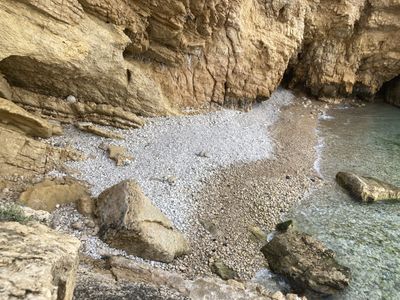 Laravel and Context — Jan 24, 2023There is value in studying Laravel and context. By this I mean that over a year ago I wanted to study Angular but after feeling lost in Javascript I decided to take a step back, to study JavaScript. I studied two or more courses over a period of months. I could have followed a single course and claimed that I knew and understood JavaScript but that would have been misleading....
 -
Lake Parade streaming fun — Jul 13, 2008Whilst a friend was filming with a high speed camera i was streaming the event live from my phone via Qik. I noticed they improved a couple of important things. The first is that video files are now saved and readable without conversion. The second fact is that you now have an RSS feed, makes aggregation easier. I’ve added two or three of those feeds to itunes so the content can be accessed more easily. And there are a few more on Qik which I’ll let you get to yourself....
-
Lake Parade streaming fun — Jul 13, 2008[Bookmarks about Streaming](http://www.remmrit.com/streaming —) - Oct 4, 2008...
-
Jonathan Ive speaks about design — Aug 9, 2013The importance of design, also an opportunity to see macbook air components before they are all assembled....
-
Jaiku — Apr 10, 2007Jaiku is a Finnish software that makes conversing with people easy. It’s an advanced form of chatroom and I love it. It works on the same principle as twitter with the added bonus of having feed reading and integration as a bonus. If I’m going out for the day but I want people to know where I am at any given point in time I can send messages to twitter because it’s the price of a local phone call rather than international, as with Jaiku where the message is sent to Finland. I added my blog therefore a summary of blog posts will automatically be added to my jaiku feed. I could add flickr, my video feeds and other feeds if I so desire and it should work. On Jaiku I love how conversations can take place based around posts about what someone is doing. One person talked about only having 5 gigs left on their hard drive and a short conversation followed on from that post. Leo Laporte commented on his twitter identity being ussurped recently and this encouraged a flurry of activity. It’s like many of the Web forums I’ve visited. People join a community and select their friends so that they get updates whenever someone posts. The difference is that there is a migration away from the desktop and laptop to the mobile phone. It’s becoming an integral part of people’s lives. Of course at the moment it’s for early adopters rather than anyone but over time when it becomes more socialy acceptable we should find a progression whereby information workers are no longer tied to their desks....
-
I've been joost(ed) — Apr 12, 2007Twitter informed me that a friend got his Joost invite whilst I was in the library. I was looking for some books that had been recommended to me by someone I had interviewed for my dissertation so I did not pay much attention to this at the time. When I got home I saw that I too had not escaped the invite. Great, time to download and try it out, I thought, I was wrong. I installed it and went to run it, twittered that I had launched it for the first time, wrong, wrong processor- All that anticipation indifference I was left indifferent. Why create a product that a lot of users can’t use? Joost came into being too late and too narrow. Why would people want a full-screen application for the live streaming of video content when bandwidth in some of the luckier nations, Sweden and Japan, for example, offer 100 Megabits per second. I love downloading podcasts that I can watch anytime, anywhere, anyplace, and on any device. I love the high mobility aspect of new technology. I love that I can check my e-mail from my mobile phone, chat with a community via text and that I can visit Facebook and see what events are on today without ever touching a computer. That’s what technology is about for me. Same for all those at Jaiku, Nokia, Justin TV, and others to name a few. People are tired of laptops and desktops, they want portable web-enabled devices. I do too....
-
I've been joost(ed) — Apr 12, 2007pyrhana - Apr 5, 2007...
-
It's A Nice Upgrade — Jun 14, 2007Today I passed an order through the online apple store and within a number of weeks I should get one of the top of the range machines and I’m really looking forward to it. The Ram isn’t maxed out but that’s because I’m going to upgrade that from an other distributor from whom I can get it cheaper. I’m also getting final cut studio 2 and that should be a great convenience for learning how to use all the software I need for professional purposes. I’m impatient for it now but it’s going to take time to come so I have to be patient… need to find something to distract me for a period. I’ve had an editing system at home which started with Adobe premiere 4.5 and the miro dc30+ and a hi8 camera, upgraded to a PC7 camera for a trip to Tanzania in 2000. That’s when I was editing on the DHR 1000 editing deck where I learned a great deal about tape to tape editing. From there I upgraded to Premiere 5.0, 5.1 and on before giving up on Windows editing. In 2003-4 I upgraded to the Ibook with FCP which worked far better than anticipated. Now I’m waiting for my most recent editing system. Over the years I’ve seen a great change in equipment and the price. As I was at school working on Hi8 it took several years before I was able to edit the footage I had shot. Editing systems could cost thirty thousand swiss francs per BetaSP decks. Now it’s gone down in price and people get a nice home setup. I’m looking forward to it....
-
Invisible without a website — Oct 8, 2007Having a website is essential in today’s media landscape for one simple reason. You don’t exist until I can hyperlink to a website containing examples of your work and describing what you do. This is particularly true in today’s new media landscape. For the minimalist among you a facebook or myspace page is the bare minimum. For those of you that take your work seriously though a website is more efficient. There are a number of reasons for which having a website is essential. The first of these is visibility. If you’re going to an event and you take hundreds of pictures then no one will notice them unless you share them publicly. You don’t need to be published to get your big break. That’s the point of viral marketing. Produce some content. Make it public and then mention it in a few places. If it’s good then others will advertise that work to friends from now on. You are now visible. That’s in an ideal situation. Yesterday when I went to the protest (which event? Describe it in a few words and link to it) I met two friends, one is a well established photographer whilst the other, is, as yet a relatively anonymous face in the crowd. With the established friend it was easy for me to link to his work because he has a high quality site. It’s something concrete, easy to see and assess. For the second person there is not much I can do to demonstrate their worth except mention their name but is of limited value, without a link. Why? Because there is no action to follow a “plug”. The plug is a term used to describe how one person promotes their work through another person’s content, whether it be in website form, podcast or other. As you are talked about more frequently, your visibility increases and, with it, people’s interest in what you do. John C Dvorak of Dvorak.org/blog is the best example. Anytime he can, he will mention his website and, although for the first ten times you may not react, you will go to the website, eventually. He’s got another reader. Whilst you’re surrounded by new media people everyone has a blog, a website, possibly a podcast and more. Leave this group, though, and most people are “invisible”, except, for young people, facebook. Most of them are shown in their bikini, at drunken parties or in other situations that would not reflect well within more traditional work environments. That’s why facebook should be kept private and personal, confined to a group of friends. When you apply for a job online, you’ are one of a thousand applicants. It must be a nightmare reading all those applications. I am taking as an example the work I did for blogwise, a human moderated database of websites. Each day several hundred people would apply for their blog to get through. As you look at the first ten your mind is clear and you’re interested. After several dozen you’re tired and by the time you reach several hundred you skim through. The same happens when you’re applying for work - boredom sets in. When you think about how much time people spend looking for content and entertainment on the web you begin to understand why and how important it is to have something to show. When I worked on my dissertation I looked online and found an interview of Jacques Yves Cousteau a matter of minutes after he won his Oscar for Le Monde Du silence. I needed, for a documentary, a soundbyte of Rupert Murdoch speaking about Myspace - and after several months of searching we found the key clip. That’s also how a documentary maker found my content for use in a documentary that will be on ARTE television in Spring 2008. The point is simple. In the past when you created content and you wanted people to notice you the best method for visibility was to be mentioned in physical examples, whether magazines, DVD or on the air. Today we’re all part of the same media landscape. What this means is that there is unlimited time for content to be shown. But how do you stand out, to get noticed? If there’s an event taking place and you have the time to cover it, then do it - and find where people are actively talking about it. That’s a great way to promote your work. If people see your latest video and want to find out more about you, they can go to your website, if you have one, to see further examples of your work. They read your blog to see your thoughts, they follow your twitter stream to see whether you’re a party animal, they check your linkedin profile to see who you know that they may know and, as a result, they get a better idea of what kind of person you are. You’ve just increased your chances of being noticed - and hired....
-
 The Insta360 Nano and Air - A climbing test — Jun 5, 2017The Insta 360 Nano and Air are two affordable cameras. The first is designed to work with the new iPhone shape as well as a stand alone device. The Insta360 Air works only when it is plugged into an Android device. Both are good for specific uses....
 -
Initial Thoughts on the DJI Mini SE — Feb 19, 2022Today I went for my first flight with the DJI Mini SE and it feels very familiar, after flying a spark so frequently, until I crashed that drone. I would have replaced the spark but I didn’t because it would either cost two thirds to replace the old one, or cost a lot to buy a new drone, with batteries and the rest of the gear. I waited. I didn’t wait for four weeks, four months, or four seasons. I waited for two years, until I saw the DJI Mini SE was about to come out....
-
Initial Thoughts on the Crosscall Core-S4 — Jan 7, 2022Not for FB or Twitter...
-
Ingress and the Sony Xperia Z3 — Dec 14, 2014Ingress is a game that requires a data connection, GPS data and the screen to be on. As a result of this battery consumption is high. Earlier today I took the Sony Xperia Z3 out in the rain and played for two solid hours non stop walking from portal to portal and the battery was at 50 percent. This is excellent compared to other devices. The phone is also waterproof to a depth of one meter therefore the rain we had this afternoon was no hindrance to game play. Every so often I had to wipe the screen as the touch screen stopped functioning as well as it should due to the signals it was getting from the rain....
-
Indoor Training With The Elite Qubo Fluid — Sep 1, 2018The Elite Qubo fluid is a home trainer using a viscous fluid to provide resistance when you’re cycling with your road bike indoors. It is easy to assemble and within minutes you can start using it....
-
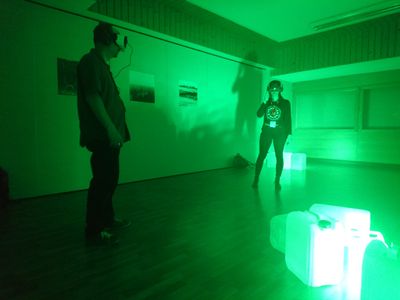 The Immersive Video Experience — May 9, 2016I was at the World Virtual Reality Forum in Crans Montana this weekend as a volunteer. During this time I was able to try many of the demonstrations and get a real feel for the potential of 360° and immersive videos. I was also able to listen to people comment on what they appreciated about the experiences and what they did not like....
 -
I'm going to play with Flixwagon — Mar 26, 2008[...
-
I'm A Martial Artist Typist. — May 9, 2007Sometimes you hear about writers and how they fall in love with their machines. I think I’ve begun to love my laptop. I’ve just spent an extraordinary amount of time writing so many words over such a period that the laptop has use marks. If you look at the trackpad you see that the right side is smoother. If you look at the keys they’re also smooth with use. The space bar has smoothed out where I always press with my thumb. There’s a dark mark where I rest both my hands when I’m typing. The monitor shows signs of degradation. The repetitive motion of the fingers has developed muscle reflexes that mean that as I sit in one place from which I see people walk by I can observe people and continue writing at the same time. In effect I’ve been touch typing for a year and every computer develops a certain amount of time for the reflex to be perfect. I’m a martial artist at the art of typing ;) Laptops are great because they become such a big part of your life. You use them every day, from the bad times to the good times, from nice locations to some of the worst. They’re there whatever the weather. They’ve got all your music, all your photographs, possibly some of your video projects and more. They’ve also got all the software you need from day to day work practices. They’re reflective of the person that uses them....
-
Ijustine and the Fake Steve Jobs — Aug 18, 2007The fake Steve Jobs linked to this video before writing a short commentary. _ “Phone Bill Girl and one of her fellow Ph.D. candidates are discussing the work of Roland Barthes and narrative theory in the context of Derrida and Chomsky, with a deftly handled digression into the recurring sexism of Norman Mailer’s work” _ I have no idea where the inspiration for the video came from but the little remark is amusing. Fake Steve’s comment is about citizen journalism and by referencing Ijustine’s video he brings a satirical look at the question. In effect we hear so much about problems with accuracy and mis-information that this video is a nice break. it’s satirizing the idea of citizen journalism. _“Somewhere in heaven, Marshall McLuhan is weeping. Either that or laughing his ass off.” _ This comment is particularly relevant to the quote I used two or three days ago. _…makes each of us present and accessible to every other person in the world. To a large degree our co-presence everywhere at once in the electric age is a fact of passive, rather than active, experience. _ Marshall McLuhan wrote that last comment fourty three years ago and today it’s a reality, but not as he envisaged it. The video of Justine having a little fun with a friend is a perfect representation of what the Web has become. Having spent some time researching the Operator 11 movement I have been surprised to find that people are video chatting to each other in a public place. Some of them are without shirts, others have a glass or a bottle next to them and yet more are falling asleep. People are living their lives online. They’re going out to meet friends but they’re also social from the comfort of home. Looking at what several people have done on operatr 11 I found myself thinking that this is beavis and butthead web 2.0. The reason behind this thought is the nature of the programs. Users like Rubberbangirl start a “show” and users connect to the stream and comment both in video and through the text chat. As they do so we get a sense of community and well being. Anyone anywhere in the world can participate at any time of day and McLuhan’s thoughts are getting more concrete with every day that passes. At this moment in time Justine and other participants of Justin.tv are walking with the cameras life casting their lives. At the same time hundreds of people are sitting behind their computer screens at home watching as a number of lives occur in real life. Within a few months I expect that we’ll see these streams straight to mobile phones so that as one person lives and broadcasts their life so someone else is living their life as they watch another. We’re living in the digital/electric age where everyone can talk to everyone else. Whilst Fake Steve is having fun in his way so we see a little snippet of how Justine has her own fun. Neither of them is write or wrong. They’re reflections of trends that are active. The only difference is that whereas Fake Steve and Justine have a high profile so most users are still relatively anonymous....
-
Ijustine and Laporte have demonstrated how to use twitter — Apr 25, 2007Karina Stenquist of Mobuzz tv is confused by the notion of twitter as anything other than a means by which to distribute brainfarts, a term used by a few people. Do you remember Swatch and Swatch time? The idea was to create a universal timekeeping format which would be the same around the world. If something would happen at 128 then this would be a universal time and everyone would turn up. It’s a number of years later and now twitter is on the scene. As those who spend far too much time online, such as myself, have found it is the problem of knowing at what time something is going to happen. Let’s say that there’s a radio show at 9:30 pm GMT. Everyone not on GMT has to calculate at what time this would be for them. Through twitter, there’s no need. Just tell people “I’ll twitter you when I’m on” and that’s when you know to log on and follow the program. Leo Laporte and Ijustine have already been doing this. There’s another element of interest. When you enjoy what someone is writing you have a tendency always to check their website, seeing whether anything has updated. Most of the time it hasn’t. With twitter, the person writing may send a tweet (Twitter message) and you’ll know that there’s a new piece of writing to be read and that’s great. It means that you’re not stuck at your desk waiting for new things to appear because you’re permanently kept informed. Some news sites are using this service but it’s too much information to process therefore it may be better simply to check these when you’re at your computer rather than via text. It’s undercutting certain mobile operators extra features but that’s another story....
-
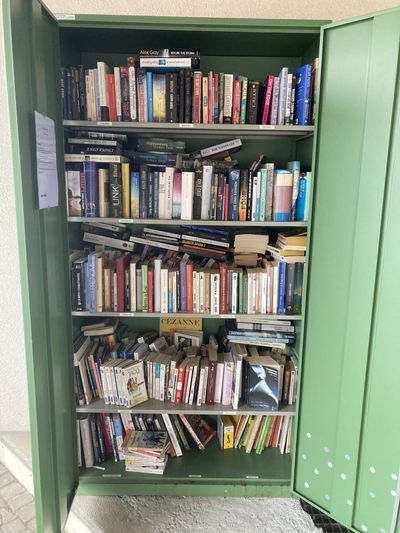 I Want to Dump WordPress for Laravel — Jan 31, 2023For at least a year I have been annoyed with WordPress, not because it went from the classic editor to Guthenburg but because it now uses React and I hate the idea of using React because it was a FaceBook project. I don’t trust Facebook and I don’t want to use anything related to them....
 -
I like Joost and I like the Wii — Jun 8, 2007Tonight was a tech-filled night. I finally had the possibility of downloading and testing out Joost and I enjoyed the experience. Joost Joost is a peer to peer video sharing website that is based on the concept of channels but unlike other channels, each video is available on demand. What this means is that if you go to the Redbull channel, for example, you can watch a series of documentaries about various Redbull events whether parapente, aerobatics, or other. Another advantage is that its full screen with two forms of messaging. The first of these is the ability to use either Gmail or jabber to talk with friends you’ve known for years and the second is with the channel chat. At the time when i tried the channel chat there were only five people so the experience was not that special. As more users join this will improve. It’s better than youtube because this is quality content on demand. I decided that I’d flick through the music channels before ending on a documentary about divers going down to a deep wreck whilst a freediver would attempt to beat her record. The image was high quality and the video streamed properly almost the entire time. With more users, experience can only get better. Finally, the commercials, 4 per hour were only one commercial long which is not that bad, just providing a short toilet break. **Wii ** I really enjoyed playing with the WII playing a few of the games. From a friend’s bedroom I played tennis, bowling, boxed with him (and this was highly exertional so it’s a good work out) before being a world war II ace trying to protect Dunkirk but not succeeding due to my lack of familiarity with the controls. Both of these technologies are fun and I want to play far more when I get the opportunity....
-
I hope he doesn't succeed — Jun 30, 2007There is an individual from Wembley who wants to sue google for search results apparently defaming him. The content was posted by anonymous sources and due to this fact, it is time-consuming to find who was the source of these allegations. There is a problem with the complaint. The worldwide web generates several hundreds of thousands of words a day in a multitude of languages and anyone can read the articles. It is malleable and ever-changing. If your reputation is put into question on the world wide web there is only one thing you can do. Write a response on your own website to demonstrate that these allegations are false. If you’re going to attempt to sue a search engine for making search results visible then that is going against what the world wide web, i.e. the free flow of information. When an anonymous source prints something that is incorrect then it is up to the reader of the source to evaluate whether he will take this source seriously or not. It is up to the user to take this content and look in a number of trusted resources to form a proper opinion. Can you imagine the millions of hours it would take to investigate and verify all the content on the web? It’d make the world wide web far slower and less responsive to news and information. One of the great things about the world wide web is that it encourages people to do research from the comfort of their own home. If you want to buy a new laptop you can find information easily from a number of sources, the same as with travel destinations and more. When someone writes something then the creator of the content, rather than the search engine, should be held accountable for the content they make available, not the search engine. If you want to control what search engines link to then you are slowing down the world wide web and you are hindering its progression. What makes the world wide web so powerful is it’s size. It is dealt with on a daily basis by millions of people, some being experts and others being more impulsive. What this means is that content on the world wide web should not work you up so far as to attempt to sue a company. He’s got increased visibility, by writing something negative more people find out about the company. As they find out about the company they may be more interested in what the company has to say. If it does not address the issue then it is missing a PR opportunity. It seems rather stupid to sue Google for something like this....
-
I Haven't Had a Proper Night's Sleep in 85 Days — May 17, 2007Since I left Switzerland after doing some work on the 21st of February I haven’t had a proper night’s sleep for 85 days. That’s a long time. I wish there was a soundproof chamber into which I could go. What if I designed and built a soundproof bed? Wouldn’t be that complicated....
-
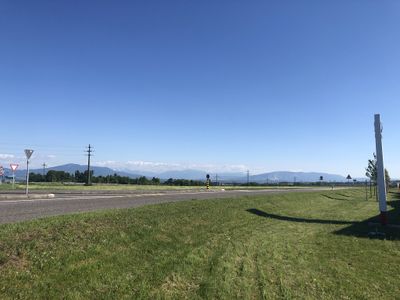 I Completed the Apple May Activity Challenge Yesterday — May 28, 2020I completed the Apple May Activity Challenge yesterday. The goal was to walk or run 349 kilometres within one month. I finished this challenge two days early....
 -
How Using a Laptop for Client Led Video Editing Work Helps The Environment (Blog Action Day) — Oct 15, 2007When I started video editing it required a powerful desktop computer and moving it around was hard. Now I’m working on a laptop. This is great for the environment and here’s why....
-
How Using a Laptop for Client Led Video Editing Work Helps The Environment (Blog Action Day) — Oct 15, 2007Documentally - Oct 1, 2007...
-
How To Block Twitter and Facebook Using The Hosts File On A Mac. — Oct 21, 2020If we’re not learning every day then we’re wasting our time. If we’re not up to mischief every day then we’re likely to become unhappy. In light of both of these things let me give you a quick tip for blocking Twitter and Facebook....
-
How is the word dissertation progressing through the blogopshere — Apr 26, 2007Here’s the result when looking up three terms for dissertation on blogpulse[](/content/images/2007/04/disso.png "disso.png)...
-
How I played with Flixwagon at the Caribana. — Jun 8, 2008Streaming video from mopile devices is the future and I burned through 90 megabytes of data in just two nights of music festival. As a result of this the third night required a different approach. I used Flixwagon. Flixwagon is in the same family as Qik and Bambuser but with many additional features. You can select the category of content, add a title and keywords to the stream before recording. The advantage of this service in contrast to the two other examples is that this one buffers the data stream in such a way that if you lose the connection you can still continue streaming once you find the data stream. In this particular situation I added the concert access point and went to film a number of concerts like Mademosielle K and Maroon 5. In both these cases I recorded the concert and during the break from one to the other I could let the software automatically push the content to the server.As a result I saved 2CHF per megabyte and uploaded about thirty megabytes within a short amount of time. Arrivals to the Caribana As people arrive ONEFM presenters Waiting for Mademoiselle K Mademoiselle K, first two songs Two more songs...
-
Hit the ground running (waking up in Web 2.0) — Oct 5, 2007There was a time when you would wake up and it’s only half an hour later that the world around you would be clearly visible. In today’s web 2.0 world you wake up and twenty other people are wishing each other good morning. Many are celebrating that it’ Friday and others have pathetic status messages about 40 days of celibacy, about being overworked and all those other messages. Of course everyone has the right to their feelings and to their own experiences but as certain individuals spend more and more time online they notice these status messages and trends and get really tired. Look at the level of media saturation about the McCann story. I muted a podcast for mentioning the story. Careless parents lost their daughter, end of story. It’s not worth as much airtime as it’s been given. Then there’s the “back from the dead media coverage” that gets just as tiring. If a royal driving a car doesn’t wear her seat belt and dies as a result of a crash then she should not be idolised in the way people have done. It should have been an opportunity to promote the use of seatbelts to avoid repeat deaths in such a manner. Then there’s the enthusiast’s oversaturation of the media. In particular I’m thinking of the Iphone. Of course it’s a beautiful new interface, of course it’s ushered in the fully screen tactile device but for anyone outside the US the media saturation has become too much. If you’re an active consumer of new media news then there’s a good chance you would have read several thousand articles boasting about how great it was. As a result a lot of people got media burn out from the story. It’s only as a result of getting an ipod touch that I can tolerate those stories once more. The 30 minute news round up in the evening preceeded by the daily newspaper has been followed by an era of instant access to news stories once they have been written. What this means is that for ardent consumers of new media it is easy to reach a burn out/saturation point. we, as new media consumers must be careful not to read about single topics so much that we are unable to hear about specific topics anymore....
-
Clean Water for Hikes and cycling, without the weight — Jun 26, 2017Clean water is important to have when you’re cycling, hiking or climbing in summer but the issue is that it is heavy. When I go cycling I go with just one flask and I fill up the water bottle when I get to fountains that are marked as safe to drink from. When I go hiking or climbing I usually do not go with more than one and a half litres of water although I have gone with up to three litres for a hot summer day’s activities when the temperature is above 32°c. In Switzerland, France and Italy you theoretically do not need to walk with that much water because you cross streams, fountains, rivers and lakes. If you had a water filtration system you could theoretically purify the water from these sources and continue hiking. Yesterday I came across Katadyn and two solutions for water filtration....
-
The High Tech World is not making us weak and weird. — Apr 25, 2016The High Tech world is not making us weak and weird. I believe that the opposite is true. According to Patrick Mustain in his article “Welcome to the Devolution: The High-Tech World Is Making Us Weak and Weird” for The Daily Beast he worries that modern technology and conveniences have taken the physical aspects out of our daily routine. We don’t need to clean clothes by beating them against a rock and we no longer need to clean dishes manually. We take the car from point A to point B and we take a lift to go up a floor or two....
-
Headline rating app to encourage useful headline writing. — Mar 23, 2015In future I would like an application or social network that allows me to rate headlines according to whether they are sensationalist, informative, emotional informative or other. The aim of this network or app would be to discourage article writers from re-using the same phrases over and over. It would encourage writers rather than marketers to provide headlines that article readers want to follow. I often see articles that I would find interesting but because of the way the headline is written I avoid it. I don’t want to give marketers a victory for condescending to their audience. I also worry about the article’s informative value. Will the article provide me with some new information or is it so general that I already know this. Articles need to provide me with a return on investment. I want to be informed, educated and entertained....
-
Half a Million Visitors — Jul 29, 2007Over the past year, over half a million visits have been counted to this website. Over the past five months over fifty thousand visits, a month took place. For the period in question, there have been almost two million hits and 58 gigabytes of data transfer....
-
Guided by the Nüvi 250 — Mar 5, 2008Finding your way around London is hard and after seven or more hours of driving across France from Geneva it can be a little daunting. That’s why I decided to use the Garmin Nüvi 250 to help me. It’s a small pocketable driving GPS that’s easy and intuitive to use. That’s important when you’re on the road. It’s got a small display and there are two main functions. Where do you want to go and the map. The map is either 3d or 2d depending on your preference. With the unit I bought you have 22 European countries including France, England and Switzerland. Those are the three countries I would travel through. The navigation is easy to setup. Select your destination and it will quickly trace a route of where to go. You have the ability to review the points one by one or trust the GPS to get you where you want to go. It’s got a battery life of 5hrs but included with the unit is the car adaptor so that you can power it during the trip.Easy to use and a great driving aid. It made driving through London a relaxed, stress free experience, at least on the way in. On the way out there were traffic jams which this unit did not warn me about. It’s a nice unit, not too expensive but frees up your mind for other things than trying to find your way. It’s a great little help....
-
 GPS Accuracy Contrast Between the 45s and Instinct — Feb 25, 2023Yesterday afternoon I was looking at the GPS track for a run I did with the 45s and I was struck by how wide of the mark it was, compared to the same run with the Garmin Instinct. With the Garmin instinct the GPS track fits like a rail to the satellite and road map. With the Garmin Forerunner 45s it is quite a way out....
 -
Google Latitude and Automatic stalking for only your closest friends — Jul 1, 2010Google latitude is the perfect tool for anyone that works and has a life where logging into locations would be an unsightly thing to do. By that I mean that you can’t arrive at work and log into the location. It gives colleagues the impression you are not serious about your work. Now take this same situation in a social context. You go hiking and the people around you are not necessarily as passionate about technology. They’re walking around with paper maps after all. That’s where Google latitude comes into it’s own. Location is tracked 24 hours a day, 7 days a week every single day that your device is on. Why am I doing this? Am I not mad? Do I not have this location information to hide, and no shame? Well of course I have things to hide and shame but with this network only your closest friends can see where you are. And they only know your current location, not your previous locations. That’s where the service differs from foursquare, gowalla, yelp and all the others. Your location history is private. Only you have access to it. Then why use it in the first place? Well that’s simple. It’s a lifelog that’s not broadcast. You can keep track of how much time you’ve spent at home, at work and out socialising. Once a week I get to find out whether I was at work for more than fifty hours, whether I was at home for too many hours. More importantly i get to see whether I should not be a little more active in going out, from a personal life point of view. That’s where I’m lacking at the moment. Google latitude’s dashboard will help change that. Now, how could it improve? First of all automatic location check in. If I’m by starbucks in Geneva airport log me in if I’m seeing that network more than ten minutes. If I’m at the apple store for that amount of time log me in there. If I’m at a bar and I lose signal in that region due to poor network coverage then assume I’m in that bar. By being automatic and private location information could be quite a bit more interesting. More to the point that data is being collected anyway by mobile operators so why not take advantage of this? I believe this to be the future of mobile geo-location. With more android phones out there and more devices capable of multitasking this could easily become the norm....
-
Google Arts & Culture — Jun 13, 2017Google Arts & Culture App...
-
GMdesk as a fun Air App — Aug 25, 2008Gmail, google Calendar and google maps are part of our daily workflow. As a result of this we have them running in two or three tabs at all times. Switching between tabs within a browser can be time consuming but not between applications. That’s where Adobe Air and GMDesk come in. Adobe Air is a multiplatform solution to make running the same app on multiple machines easy. GMDesk is an application that allows you to use the applications I have mentioned above easily. Work in your web browser, alt tab and you’re in GMdesk. Those are the short cut keys to save on time when switching from one google app to another. It’s an interesting idea and we should be seeing many more applications such as this in the near future....
-
 Garmin Expedition Challenges — Mar 16, 2023Garmin have had challenges for years. Most of them have been about distance, or vertical climbing. Now they have new Expedition challenges. Each expedition is named after an expedition or adventure by the same name....
 -
 Garmin Connect and the Daily Step Goal — Feb 19, 2019Yesterday I took over 16,000 steps. Some of those steps were during a short run from Eysins to Nyon and the rest were during the walk around Nyon and back to Eysins. By the end of the day I had manage to accumulate the step goal of 15300 steps....
 -
From One Culture To Another Through Podcasting — Apr 22, 2007At the moment I’m listening to a lot of podcasts. Probably 5-10 a day on average. I go through one collection of podcasts and once that one is finished I move onto another. As a result of this, the culture of those I am listening to is sinking through. Yesterday I listened to four or five of NBC’s meet the press and I found them interesting. I wasn’t always paying attention to what they were saying but it did make a change. I recently listened to the whole of the Net@night series and the previous series on the RSS feed as well. As a result, I’ve learned quite a bit about new technology. It’s been fun. It’s about web 2.0 and how everything is “innovative” although ten years ago people were doing the same it was called differently. It’s all O’reilly’s(sp?) fault. Today I listened to something quite interesting. It’s the Mac break weekly recorded in Dolby headphone surround or some similar tech. It’s interesting because it does paint an auditory landscape. Leo Laporte was in front whilst the girls on that podcast, Justine and Kendra were to the right, and the guests, whilst two others were to the left. Walking to the shops with that sound was a little disorienting at first but I grew used to it and it’s more fun. I want to hear more podcasts recorded with that technology. I am going through a phase of cultural assimilation. I watch and listen to all these podcasts that are coming from the US and as a result, I’m starting to absorb the culture. I’m telling myself that I should move to SFO where municipal wifi is a reality rather than a dream. We’ll see what I do once university is finished and I have the rest of my life in front of me. We may find that the work experience module teaches me to think more creatively about getting a job. If it does then it’s truly worth writing up tomorrow when I get up. I’m rambling so I’ll leave you to wait for the next post. Ciao ciao...
-
From Mobile to train station display live. — May 3, 2008If this isn’t a hoax then this is pretty fun. A guy claims to have hacked into the video display at a train station and is streaming live....
-
France leads the way with Freebox HD — Aug 23, 2007For those who are interested in community video French operator Free is providing one of the most interesting services around at the moment. They are offering you a user generated television channel and the technology to broadcast content live from the comfort of you own home. All you need is a subscription to ADSL 2 and the Freebox HD box. The idea behind this service is to bring community video straight to the user. Youtube gives people the chance to upload poorly produced content so that the masses may view them. Current TV provides a website where users submit content and hope that it works it’s way up to being broadcast. Blogtv allows people to chat and is interesting for live events. Operator 11 is currently my little favourite thanks to it’s ability to switch from one webcam to another with participants from around the world. It’s great and offers you the ability to plug in a dv camera but is let down by picture quality. Free are revolutionising the process. They are providing the user with break out boxes that take the video content, either via s-video or another method and encode the content within the box. From this point on there are two options. The first of these is to provide the content live at a lesser quality level or share it differed, in other words once the data has been transferred from one point to another. According to SVM the compressed video is around 1,4 gigabytes for an hour. Normal DV streams would be 12 gigabytes per hour but with the correct encoding they’ve saved on space. If you want to find out more about this service then the SVM article can be found here. It includes a video. The content is only in French though....
-
Four Years With The Apple Watch Series Four — Dec 11, 2022I have spent four years with the Apple Watch Series Four. Although I should feel the opposite I have found that for most of its life I have loved to hate the watch. The first thing I hate about the Apple Watches is that they’re fragile. I had a series three and I broke the screen while climbing indoors. Watches should never break whilst your climbing indoors. There’s nothing for them to smash against....
-
Four Reasons to be Happy — Jul 6, 2007There are four reasons to be happy today. The first of these is that my MBP is finally in Geneva therefore it is a short matter of days before I get it into my hands and start playing with the computer and the new software. The laptop will be used for all video editing and multimedia work I have whilst the iBook will be used for daily tasks such as surfing the web, mobility, and more. I’m going to have two apple laptops capable of video editing at my disposal which is quite a luxury. The second reason I should be happy is that google Adsense, over the past week has doubled in income, meaning that I should get my next check twice as fast as the last one. I added a few more AdSense adverts on sections where advertising had not been and as a result, many more eyes are seeing and clicking on the advert. I’m still a long way from earning enough money to live off my website but any income is good. The third reason is that my website is being migrated to Drupal, a database-driven CMS solution for web mastering rather than the outdated HTML pages that it has been over the past decade. The advantage of the Content Management System (CMS) is that the layout is the same for every page whilst the content is held within a database. As a result, when you want to change something on multiple pages all you need to do is move blocks around. Blocks, when applied to drupal are how modules are manipulated to space them in specific areas on the website. As a result, whenever a website is re-worked it takes a matter of minutes rather than hours to change. As a side note, I’ve also updated both the PHP and MySQL database to version 5 and it’s working smoothly for the time being. The final reason to be happy is that a friend has received the edited DVD that I worked on a few weeks ago and finalised within the past few days. As a result, I’ve managed to finish what I had to do a matter of days rather than hours before it was due....
-
Forums Are The Sandbox Of The Web — Aug 15, 2007The concept of community is an old one, coming from an evolutionary need for more than one pair of eyes to watch out for predators and other threats. over time the sense of community has evolved and become as great as it is today. There are however pockets of social discord. I believe that forums are the sandboxes of the World Wide Web. In chatrooms, there are always three or four people who chat together in the public space, whilst all around people ask A(ge), S(ex), L(ocation) - or at least they did. Today, everyone has a profile and the question is now redundant. When individuals stir up trouble the room will resolve this problem. Just two nights ago whilst on operator11.com, I saw a little skirmish that was quickly resolved and I realised that even when people are in an audiovisual medium online there can be moments of tension. \\nof Apple products or part of the scientific community. They are built as a\\nplace where conversations and debates can take place. They can help you resolve\\ncomputer problems or advertise the work you've done. They are great because\\nwhilst they require participants to spend a lot of time over a period of weeks,\\nthey are relatively\\u003cbr\\>\\neasy to interact with. If you want to write a long post you can, and if you\\njust want to say that you agree or disagree, you can say so in just one line.\\u003cbr\\>\\n\\u003cbr\\>\\nSome of these groups have become tight knit, like villages or year grades\\u003cbr\\>\\nwithin a school. Everyone knows everyone else and so a "gang\\nmentality", for\\u003cbr\\>\\nlack of a better term, arises. They all send each other private messages,\\nthey've met and they've chatted. They've been friends for years. They're\\nisolated hence my use of the word sandbox. As you spend more and more time in a\\ncommunity so it feels like your home and feels like a place where strangers are\\nno longer welcome. I've been a member of many forums and I've been known to\\npost heavily within these\\u003cbr\\>\\ncommunities, but only when I am accepted. For a long time I was a member of two\\ncommunities and I would spend hours in both. \\u003cspan style\\u003d\\"background:yellow none repeat scroll 0%\\"\\>\\nI wrote about them so if you do a little research you can\\neasily find out which ones they were.\\u003c/span\\>\\u003c/span\\>\\u003cspan\\>\\u003cfont size\\u003d\\"1\\"\\>\\u003cspan style\\u003d\\"font-size:8pt\\" lang\\u003d\\"EN-US\\"\\>\\u003ca href\\u003d\\"#11465b58cd9c2969\_\_msocom\_3\\" language\\u003d\\"JavaScript\\" name\\u003d\\"11465b58cd9c2969\_\_msoanchor\_3\\"\\>\\n\[PA3\]\\u003c/a\\>\\u003cspan\\>\\u003cspan\\> \\u003c/span\\>\\u003c/span\\>\\u003c/span\\>\\u003c/font\\>\\u003c/span\\>\\u003cspan lang\\u003d\\"EN-GB\\"\\>\\u003cbr\\>\\n\\u003cbr\\>\\nToday for the first time in months I joined a forum and decided to\\u003cbr\\>\\nintroduce myself, after seeing that someone on Facebook had\\u003cbr\\>\\nrecommended the site. I wrote my post and looked at other websites for\\u003cbr\\>\\nsome time before returning to the site. I read one comment and it was\\u003cbr\\>\\npositive but the second one was offensive. It's common knowledge on\\u003cbr\\>\\nthe world wide web that 80% of communication is non verbal therefore",1\] ); //--> That’s on a medium that’s fleeting. You write your comment, then someone else does and you have a conversation which will disappear whilst the ideas remain. Forums are another social beast. They take a lot of time to create and require a number of elements. First, they need people who spend a lot of time online. They can belong to communities of artists, fans of Apple products, or part of the scientific community. They are built as a place where conversations and debates can take place. They can help you resolve computer problems or advertise the work you’ve done. They are great because whilst they require participants to spend a lot of time over a period of weeks, they are relatively easy to interact with. If you want to write a long post you can, and if you just want to say that you agree or disagree, you can say so in just one line. Some of these groups have become tight-knit, like villages or year grades within a school. Everyone knows everyone else and so a “gang mentality”, for lack of a better term, arises. They all send each other private messages, they’ve met and they’ve chatted. They’ve been friends for years. They’re isolated hence my use of the word sandbox. As you spend more and more time in a community so it feels like your home and feels like a place where strangers are no longer welcome. I’ve been a member of many forums and I’ve been known to post heavily within these communities, but only when I am accepted. For a long time, I was a member of two communities and I would spend hours in both. I wrote about them so if you do a little research you may find which ones I am talking about. Today for the first time in months I joined a forum (which I will not identify) and decided to introduce myself, after seeing that someone on Facebook had recommended the site. I wrote my post and looked at other websites for some time before returning to the site. I read one comment and it was positive but the second one was offensive. It’s common knowledge on the world wide web that 80% of communication is nonverbal therefore if you write something be aware that it may be misunderstood. If it’s written and it’s within a forum then beware of the gang mentality because they will attack you. I wrote a response to the message I received and asked what that person thought should be the second line of the introduction, rather than the one I had written. That’s when one member and then another, and then a third began attacking me, dissecting and ripping apart any simple mistake, as if they were piranha on a lamb’s leg. They had a field day, really enjoying the destruction of my persona. I was hurt. I thought that this was going to be a professional website where I could have an intelligent conversation and advice on how to get work but instead they showed a complete disregard for social civility on a web forum. You don’t use caps lock and you don’t use bold characters to make your point. You write in one font and make sure that you’ve understood what was intended by the post. They didn’t. I’m reminded of the reason why I am no longer part of any forums (although I still have my logins.) Why be part of something small when you can part of something bigger, on a global scale. The blogosphere and web 2.0 are based on the idea that you’re part of a global interactive community. Anyone can become part of it and you prove himself by the quality of his writing and logic. There are groups of friends, but these are healthy. They look outwards and have no boundaries. It is for this reason that a new generation of social groups has formed on the World Wide Web. These are based around communities in the physical world. \\nmake sure I know how to be a better member of the community but they\\u003cbr\\>\\nwon't attempt to destroy me. If there is a problem they will help me\\u003cbr\\>\\nand show compassion. They will show each other this.\\u003cbr\\>\\n\\u003cbr\\>\\nWhen I went to the Twitter meet up I met some great people. I met people who\\nshare my in technology - the conversation was easy. They all write and expressthemselves\\nin public forums. They have blogs, audio podcasts and video programs and\\nthey're interacting in an open system, where you know their names. It's\\nwelcoming. It's the mature web. It's web 2.0. It's filled with ideas and\\ndynamism. Goodbye grumpy, rude flamers - stay in your rat hole of a forum.\\u003c/span\\>\\u003c/p\\>\\n\\n\\u003cdiv\\>\\n\\n\\u003chr align\\u003d\\"left\\" size\\u003d\\"1\\" width\\u003d\\"33%\\"\\>\\n\\n\\n\\n\\u003cdiv\\>\\n\\n\\u003cdiv language\\u003d\\"JavaScript\\"\\>\\u003cspan\\>\\u003ca name\\u003d\\"11465b58cd9c2969\_\_msocom\_1\\"\\>\\u003c/a\\>\\u003c/span\\>\\n\\n\\u003cp\\>\\u003cspan\\>\\u003cfont face\\u003d\\"Times New Roman\\" size\\u003d\\"1\\"\\>\\u003cspan style\\u003d\\"font-size:8pt\\" lang\\u003d\\"EN-US\\"\\>\\u003cspan\\> \\u003ca href\\u003d\\"#11465b58cd9c2969\_\_msoanchor\_1\\"\\>\[PA1\]\\u003c/a\\>\\u003c/span\\>\\u003c/span\\>\\n\\u003c/font\\>\\u003c/span\\>\\u003cspan lang\\u003d\\"EN-US\\"\\>What's ASL? Explain\\u003c/span\\>\\u003c/p\\>\\n\\n\\u003c/div\\>\\n\\n\\u003c/div\\>\\n\\n\\u003cdiv\\>\\n\\n\\u003cdiv language\\u003d\\"JavaScript\\"\\>\\u003cspan\\>\\u003ca name\\u003d\\"11465b58cd9c2969\_\_msocom\_2\\"\\>\\u003c/a\\>\\u003c/span\\>\\n\\n\\u003cp\\>\\u003cspan\\>\\u003cfont face\\u003d\\"Times New Roman\\" size\\u003d\\"1\\"\\>\\u003cspan style\\u003d\\"font-size:8pt\\" lang\\u003d\\"EN-US\\"\\>\\u003cspan\\> \\u003ca href\\u003d\\"#11465b58cd9c2969\_\_msoanchor\_2\\"\\>\[PA2\]\\u003c/a\\>\\u003c/span\\>\\u003c/span\\>\\n\\u003c/font\\>\\u003c/span\\>\\u003cspan lang\\u003d\\"EN-US\\"\\>What do you mean? Convoluted\\u003c/span\\>\\u003c/p\\>\\n\\n\\u003c/div\\>\\n\\n\\u003c/div\\>\\n\\n\\u003cdiv\\>\\n\\n\\u003cdiv language\\u003d\\"JavaScript\\"\\>\\u003cspan\\>\\u003ca name\\u003d\\"11465b58cd9c2969\_\_msocom\_3\\"\\>\\u003c/a\\>\\u003c/span\\>\\n\\n\\u003cp\\>\\u003cspan\\>\\u003cfont face\\u003d\\"Times New Roman\\" size\\u003d\\"1\\"\\>\\u003cspan style\\u003d\\"font-size:8pt\\" lang\\u003d\\"EN-US\\"\\>\\u003cspan\\> \\u003ca href\\u003d\\"#11465b58cd9c2969\_\_msoanchor\_3\\"\\>\[PA3\]\\u003c/a\\>\\u003c/span\\>\\u003c/span\\>\\n\\u003c/font\\>\\u003c/span\\>\\u003cspan lang\\u003d\\"EN-US\\"\\>Explain\\u003c/span\\>\\u003c/p\\>\\n\\n\\u003c/div\\>\\n\\n\\u003c/div\\>\\n\\n\\u003c/div\\>\\n\\n",0\] ); //--> That’s where Facebook, MySpace, and Twitter come in. These three social networking websites work on one simple principle. These are friends that you know in real life, people you have shared dinners with, worked with, played with, and grown up with. Everyone knows each other and behaves himself. If I say something out of line five others will make sure I know how to be a better member of the community but they won’t attempt to destroy me. If there is a problem they will help me and show compassion. They will show each other this. When I went to the Twitter meet up I met some great people. I met people who share my interest in technology - the conversation was easy. They all write and express themselves in public. They have blogs, audio podcasts, and video programs and they’re interacting in an open system, where you know their names. It’s welcoming. It’s the mature web. It’s web 2.0. It’s filled with ideas and dynamism. A little later in the day I checked the website URL and found out that this was a free forum that was part of a larger domain. Good forums are all paid for by the community leader. As a result, the conversations and sense of community are far more welcoming and that’s what people look for before joining....
-
Flickr users and video — Apr 19, 2008Isn’t it amusing to see what you can find on flickr video? Now to add some music and get a laugh out of people....
-
Flickr users and video — Apr 19, 2008Rebecca - Apr 1, 2008...
-
 Five Years With The Suunto Spartan — Jan 25, 2023I have had the Suunto Spartan for around five years, the Apple watch Series Four for Four and the Instinct since November 2021 and I find myself gravitating back towards the Suunto Spartan watch again. I pivoted away from the watch and Suunto because it moved towards WearOS and smartwatches, rather than sticking to fitness tracking....
 -
first post from the touch — Nov 21, 2007this is a post typed from the iPod touch to see how easy it isto use. Aside from not having a proper keyboard it seems to work fine. Great for blogging on the move....
-
First London Twitter Meetup In a Week — Aug 2, 2007In a week’s time the first London twitter meetup will take place at Ishtar. For more information go here. Twitter is a text-based discussion that takes place 140 characters at a time via messenger, web, mobile phones, and browsers. It’s better simply to try twitter and see how people are using it....
-
Facebook Is Down — Jul 31, 2007Social networking websites should never be down because their success comes from three factors; ease of use, accessibility, and reliability. With a good layout and good interaction, the website attracts the novice as well as the weather-beaten web surfer that’s seen it all. Accessibility is about it being easy to use on all browsers, whether mobile phones, laptops, or desktops. The third one is the key....
-
Facebook Disappointment — Apr 11, 2007What makes a professional camera professional? Direct access to all of the functions without going through ten sub-menus simply to adjust the sound level or open up the iris. What was great about Facebook. Everything was available on sight, not hidden away in sub-menu. They decided overnight to “simplify” the look but what they’ve done is forced me to think about the logical place for something to be and hoping I’m right. I wish they hadn’t changed something that was working so well for me. Facebook, why change something that works so well. Why this obsession with sub-menus?...
-
Facebook And Technological Determinism - A Case Study — Apr 23, 2007What’s the worst thing about being a student. The stress never disappears. What’s the best thing about being a media student? As long as you can find the theoretical background that goes with an activity you love you can justify doing a case study on the topic. I’m fresh back from the library where I went through looking for some books about the internet and society, the virtual community, reading digital culture, The World Wide Web and contemporary cultural theory, and finally the social shaping of Technology. I’m not going to read every single page but rather going to explore the notion of community and how it affects contemporary life. I know that the World Wide Web has progressed from such a point that being online is no longer the domain of geeks but rather the empire of all those with interesting lives. Look at musicians and sites like Myspace for example. Look at the FIBA website during the FIBA 2006 world Championship. Look at everyone posting pictures of cats on various websites. It’s part of the digital lifestyle. The premise of my case study is simple. Whereas five years ago being online was seen as something that only the least socially apt of people would do the opposite is now true, as demonstrated by the popularity of Myspace for a while, Facebook at the moment and then Virb for the near future. Those who saw the death of society because of how technology is getting people to stay at home without conversing with anyone in their physical world is a thing of the past. Twitter, Jaiku, Facebook (the mobile version) MSN messenger - the mobile version all ensure that we’re wired whether we’re sitting in a bedroom on a beautiful sunny day or standing outside under the torrential rain. Of course, there’s no rain but the point remains the same. A world where people can only be online from behind a computer is gone hence greater sociability. Let’s see how I manage to integrate that notion into my case study ;)...
-
Facebook, a personal rather than social network — Aug 28, 2007Ten years ago if you met someone and they gave you their visit card you’d put it away somewhere and eventually you might have come back to it but the information would need updating. Over the years social networking tools on the web have evolved from simple mail clients to web forums and finally to Myspace and Facebook. With Facebook we find what I think of as an enhanced phonebook. When you meet someone at a party today there’s a good chance that this individual has a facebook presence. As a result when you go home they may add you as a friend and in so doing you are brought into their lives. You can see where they’ve worked, for how long and what they were doing. you can see whom they associate with and how they tend to meet people. Facebook has become a daily feature of contemporary life. Facebook does not limit your interactions to the people you’ve met during your time at parties, events and more. It also allows you to join groups, some are based on occupation, others on passions and yet some more on soemthing that may be relevant to only ten to twenty people. As these groups multiply so you decide to associate through these people through forums and the likes. For a time I was part of the Lecture napping appreciation society whilst others were part of the “curse of the N18” amongst other groups. Today a friend joined a group which I would never join for the simple and good reason (simple et bonne raison) that reflects the views for which I avoid the place. I’m living between London, a city of up to twelve million (depending on the demographics you chose) and a village of no more than 2000. I love the contrast between the two and as a result feel no need to visit the place that the group boasts about. The point is that as a medium becomes more commonplace and as more people feel comfortable with the technology so their personalities are reflected in a variety of ways which give a great wealth and diversity of character to the medium they are using. It is precisely because of those differences in interests that we gain as a social group. We, the international internet users, have a great wealth of opinions and views available within a few keystrokes and we should constantly aim to promote those interests that most effectively reflect our character, things that friends may take years to notice but that can be made obvious online. Facebook, in my opinion, is a personal, rather than social network where you promote the interaction between friends you’ve had for years and friends you’ve only just met. There are other networks that are great for making new online friends but Facebook should be kept for those people whom you have met face to face....
-
Experiments With Time Machine — Nov 16, 2020Recently I was using a one terabyte drive to backup a half terabyte drive and it would take four and a half hours to backup and I think I may have figured out why the software was taking so long. It’s because it was never designed to be used as I am using it....
-
Excitement for live streaming from mobile phones — Aug 19, 2008Live video streaming from the mobile phone is normal for me. Yesterday for example I was streaming from the boat as the Croisière de l’espoir came back into port....
-
Excitement for live streaming from mobile phones — Aug 19, 2008richard - Mar 5, 2009...
-
European Identity and Free Roaming — Jun 15, 2017European Identity will benefit greatly from free-roaming. Today roaming fees between European countries have been scrapped. This means that your mobile phone is the same whatever country you go to. It means that you will have the same access to minutes and data. When you travel you will no longer need to change app permissions to reduce data cost. It also means that your images keep backing up via your data plan....
-
Estimated Delivery Date 03 Jul 2007 — Jul 3, 2007If that’s true then my MBP is waiting for me in Switzerland but I’m stuck in London for another week before i can go back and get it. Tonight I’ll find out whether a note was left by the delivery company and soon I’ll start up the computer for the first time. I’m looking forward to that. Once it’s home it’s home and the suspense is no longer there....
-
Eric Powell Sarajevo Story — Apr 8, 2013An interesting look back in to the past. I remember seeing this conflict on television. I know people who covered the story and I’ve heard about how a colleague gave one person a gameboy when he left Sarajevo. That person called and asked about the individual and that’s how I knew of a personal story. One or two segments in this video show the tape to tape editing process. I learned how to edit this way but by the time I worked as an editor everything had moved to non linear editing systems. I’m sure this will bring back memories for a few people....
-
Editgrid is a spreadsheet website for the iphone — Oct 4, 2007Whilst listening to Macbreak weekly I heard about Editgrid, a web based spreadsheet that resembles many others with a difference. It’s optimised for the Iphone if you go to iphone.editgrid.com. It’s an interesting implementation which can as easily be edited online as offline. This is great for those that may need quick access to a spreadsheet without the weight of a laptop at the same time. It’s a simple to use application which doesn’t take a long time to sign up to and gives you flexibility. There is one major disadvantage. It’s hard to select a cell to add data and inputing date by hunt and peck is very slow. I’d therefore recommend using it as a tool for referencing rather than data entry. See if your views differ from mine....
-
 Ecosia - Planting trees with a search engine — May 29, 2017Ecosia is an environmental search engine for those who want to do social good through their web browsing habits. The principle is simple. You go to the Ecosia main page and type in your search engine query. For every search engine query that you do ad revenue is generated. This ad revenue is then invested into tree growing projects in a number of countries. [caption id=“attachment_3527” align=“aligncenter”] At the time of writing, Ecosia earned enough to plant 8.2 million trees. Deforestation is a threat faced around the world because as trees are removed so the environment of certain species is destroyed and this can lead to the extinction of species. The other consequences of deforestation are that the soil runs off of the land and clogs rivers. It also means that the humidity that was kept around by the trees and plants is now gone. When I worked as a video archivist I watched news items about refugees and how they were planting trees in their camps. They planted them as an investment in the future. Ecosia produced a video with a similar message which you can see above. They currently have projects in Peru, Madagascar, Burkina Faso, Tanzania and Indonesia. These projects cover a number of needs. They help to reforest areas where excessive logging has taken place such as in Peru. In Madagascar they are hiring villagers to replant the forests to help preserve biodiversity. In Burkina Faso they are planting trees to try to stop the desert from encroaching on the areas where people live. In Tanzania we find another conservation of biodiversity effort. In Indonesia they are planting ten tree species to stop the spread of Palm oil farming and to save the natural habitat of Orang Utangs. Europe, North America and other parts of the world were once covered in forests that were thick and full of life. With population growth and development forests were cut down for firewood and to provide space for fields and more. It is nice to know that today there are projects like Ecosia that aim to reforest areas around the world so that future generations may still play and enjoy forested landscapes. Either install the Chrome plugin or bookmark the website....
 -
E-mail security — May 4, 1998Many people have e-mail accounts and enjoy writing to their friends every day, but little do they know about the dangers of hackers or people who have too much time on their hands. A few weeks ago while I was on the computers it struck me how simple it might be to enter someone’s account. I therefore wondered what methods there were of finding passwords....
-
 E-bikes, autumn and the changing seasons. — Sep 15, 2015One evening this week I was walking in the countryside at the foot of the Jura enjoying the evening when I walked by a couple. They were sitting on a bench looking across some fields towards the Mont Blanc, the Alps and of course the Lac Léman. Leaning against the bench were two e-bikes with good suspension. It made me think about retirement and free time. It encouraged me to think about the freedom and pleasure of exploring the landscape on a bike without having to make the same effort as if you were on a conventional bike. I thought of the range it would offer and the gradients you could climb. It would in essence give you the freedom of a car with the practicality of a bike. Of course there is a barrier to enjoying this pass time and that is the price of these bikes. In Switzerland they cost as much as a scooter. They lack the range and flexibility though. Electric bikes, in relation to road bikes are in fact cheap. [caption id=“attachment_2551” align=“aligncenter”] Enjoy some freedom, swap your car for a bike for two weeks I already alternate between a car, a scooter and a bike and with the change in weather I prefer the comfort of the car or the speed of a scooter. If it’s raining then I would much prefer to use the car. It is a shame that they have this promotion at the end of the pleasant season. If they had this promotion at the beginning of summer then I would have taken advantage of it. I will take this option if they offer it next year....
 -
Dziga Vertov, the Kino Glaz and Web 2.0 — Apr 2, 2007How many of you have a digital photo camera and how many of you have uploaded pictures you’ve taken to the web? How many of you have browsed through thousand of stranger’s photographs? I was in a lecture a few days ago and we were discussing jennycam and how it was something new, something that would lead to BigBrother. Apparently she was creating something new, something that had never thought of before. That is only partially true and here’s the reason why. Dziga Vertov lived in Russia at the beginning of the last century and at the time he worked in radio. His name, Dziga Vertov translated means spinning top. He began his work as a revolutionary when Lenin was still around. He was known for the programs he created. Within a short of time, he progressed onto the Agit trains and into film. The Agit trains were developed to carry information around the Soviet Union, in order to make sure that people all around this vast country would have a sense of belonging. He developed a theory which was based around the Kino Glaz, the all-seeing eye, Kino is cinema, glaz, is glass. In other words the cinema glass. The idea which he developed, the vision he had was to get the video cameras everywhere and capture life unawares as he called them. In other words, he wanted to film ordinary people going about their ordinary lives without them acting for the camera. This was a revolutionary concept that got him labeled by Sergei Eisenstein as a"film hooligan". Keep in time Eisenstein’s famous sequences. Massive shadows on walls, vast skies, and highly staged video sequences. He created the theorie du montage(theory of construction - my translation) after all. In other words, he believed everything was staged. If you’ve heard of “The Man With the Movie Camera” then you have seen “an experiment in six reels”. What Dziga Vertov did pre 1929 was do what Jean Rouch would do with André Coutant’s handheld cameras almost half a decade later. What Dziga Vertov did first showed the theatre room, the seats animated to go down, the arc light to be set to produce a bright spark, and for the film to begin. He then proceeded to show the city waking up and continued from there. He juxtaposed the shots of the eyelids fluttering and the shutters, he got a person waking up from a bench and the city to start it’ daily activities. He was in effect not using narration in any strict sense of the term. It was nothing more than a collection of shots. Aside from the shots, he showed his wife editing frame. It begins with nothing more than one frame, then a strip, then a person looking at one shot, another and we see it being assembled into a sequence. We see the camera move into a glass, move of its own accord, and more. He was playing and he was setting the stage for something that would become increasingly important over time. Leni Riefenstahl in Triumph of the Will uses hundreds of cameras given to the audience to document the events (and spent three years editing the material) whilst the European Broadcasting Union had the first International broadcast in 1956. It was a moment in life seen from various capital cities in Europe. Each national audience could see that of many other countries. Vertov’s vision has just expanded. As the technology evolved so people began to film everyday life, 16mm, VHS, Hi8, DV, and digital. They’re all mediums that allow for the capturing of life unawares. It’s the all-seeing eye. In the past five years, there’s been an explosion. Everyone has a digital camera, whether a crappy phone camera or a 12megapixel single-lens reflex. People are uploading these images to Flickr, to Zoomr, to Facebook. Everywhere. As a result of The kino glaz, all-seeing eye Vertov talked about is now mature. The most recent event though has to be justin.tv, a San Franciscan who has decided to document his everyday life with a camera strapped to his head. No longer is the apartment enough. Now the world is seeing the daily life of a San Franciscan. Remember timecode? It’s like that but one person and live. There is no editing, no staging. I must admit there are some pranksters. I listened to an interview he did for television where he spoke of people calling in a bust on his apartment, ordering pizza for him, and more. Quite amusing, far better than big brother. To conclude I think that we’ve come to the All-seeing eye that Dziga Vertov was talking about almost a century ago and I find that it’s great. I love the idea that every aspect of life is being documented extensively....
-
Dziga Vertov, the Kino Glaz and Web 2.0 — Apr 2, 2007richard - Apr 5, 2007...
-
Does the World Wide Web Dumb us Down too Much to Read — Sep 17, 2019Does the World Wide Web dumb is down to much to read is an article exploring the idea that we have too many distractions and that as a result we are unable to focus. Yesterday I wrote about blogging rather than writing twitter threads and this article goes some way to exploring the same theme....
-
Dissertation Results — Jun 28, 2007Today is a great day for a number of reasons. The first of these is that I woke up early, which means I slept enough. The second of these is that I dropped into university and was sad to see all those empty bedrooms, which shows there are some good memories from halls. The key to today was getting my dissertation grade. That’s the reason I dropped by the uni. Tired of the anxiety and worry of grade results I heard from a friend that the results were there. I went and checked my grade and in the process saw quite a few others. One friend I traveled with got a 70 so I’m really happy for him, this being the top grade out of those I looked at. I found that I was in agreement with the feedback I got, mainly that I should have concentrated more on the socio-economic side. Part of the reason I didn’t was that it was hard to find data on this topic. If I did the exercise again I would work harder on doing better. Another good piece of news is the following. My MacBook Pro and the software I ordered have been shipped and they should arrive around the 11th of June. I’m really happy and looking forward to this. It means I have a new toy professional tool to play study with. I dropped by the apple store and took advantage of the wifi at the apple store for a few instants and did the geek thing, watching a mediocre presentation of Imovie. I think I’ll try to get to one or two more advanced shows, see what secrets I can pick up in the process....
-
Discussing NewBcamp introduced a new point of view — Nov 4, 2007Twittervox is back on the air and there will be an episode at some point this afternoon, probably around 4pm GMT. During the most recent episode we were discussing Podcamp Boston 2 and one of the people that joined the conversation was Sara Steeler of Pygmae and NewBcamp. Her ideas are interesting because she wants to involve more people into using current technology on a daily basis rather than produce content for people to hear, read or watch. What makes the NewBcamp interesting is that it’s about creating an event where non creatives can meet and learn about the possibilities of new technology. She describes it as NewBCamp… I am designing it especially for people new to technology, I welcome people to suggest topics they would like to hear presentations on, as well as presentations they feel qualified to give. It differs from podcamp and barcamp events because it’s goal is to get more people to take advantage of all the content that is being provided. I want to get other people involved, people like the students in my classes, like my mom, like random people I know who have a thirst to know about how to do computer stuff. One of the things that frustrated me as a university student is that radio students, of all people, did not understand the purpose of podcasting. They want to do radio and to be on the well known broadcasters. They do student radio but how many of them took advantage of creating podcast friendly content. How many of them would create content that could be put on an RSS feed and downloaded for convenient listening? For a short period they had podcasts but that stopped quite quickly. It’s a shame because whilst I love the idea of listening to a friend’s content whilst on the move I hate the idea of having to be by the computer listening to a live stream, especially when it’s non time sensitive audio discussions. NewBcamp could help change that attitude, help develop awareness of what podcasts are and what you can do with them. It’s also about awareness. What podcasts are out there and what audience would find them interesting. At the moment we find technology geeks, current affairs and more but what about other programs. I’ve seen a few snowboarding podcasts, a few history podcasts, several environmental shows but the problem is that their audience lacks familiarity with the medium. There are a few universitites that have audio podcasts, there are a few radio stations that offer additional content. Through projects such as NewBcamp I hope that a new audience will discover and enjoy the pleasure of listening to a new form of distributing content and that the will experiment with it. I’d like to see a diversification in the type of content offered whilst including a broadening of topics covered. If you have some thoughts on the topic then don’t hesitate to come up with suggestions and participate in the conversation....
-
Discussing NewBcamp introduced a new point of view — Nov 4, 2007dannyObanny - Dec 2, 2007...
-
Digitalshadowcaster (TM) — Jan 25, 2008As the rate of creation of content increases so does the challenge of following what was done by whom and that’s where digitalshadowcaster ™. The idea is interesting to content producers. Thus, the life cycle of an object may "Cast" a "Digital Shadow" (DS) that captures real time key information events and actions. A given DS allows for the ordered delivery of proprietary services managed over a predictable and transparent network of Object Based Representations in Object to Object (O2O) relationships derived form Actions and Events performed on the objects by agents with specified Roles. In plain English they’re going to make it so that a central server keeps track of the changes you apply to media files are tracked and easier to deal with. It would track events, rights managment, object search, stats, billing and more. The flow was described as Create, adapt, product, distribute. In other words this technology would be part of every step of the process and here’s an example of it’s implementation. If you’re a content producer and you’re making a documentary your budget isn’t high therefore it would make sense that you want well established people to help you. As a result of a personality liking what you are up to they may give you access to some footage or music. For this project it’s cheap but as your reputation grows so the managment of those rights and the relationship can change, both in billing and in terms of restrictions. It makes the use of media more flexible. With more content appearing so the tracking issues become more complicated, hence the need for a new system of tracking to keep everything in order....
-
Day 61 of Self-Isolation in Switzerland – World Community Grids Pandemic work units. — May 15, 2020World Community Grids OpenPandemic work units are now ready. With your laptop or desktop, you can help find a cure for COVID-19....
-
David Pogue's Style — Aug 3, 2007Too many video podcasts are badly produced and that is why David Pogue’s most recent episode was enjoyable to watch. He has a distinctive style. Whilst most video podcasters are content simply using a fixed camera at a desk he takes the time to create entertaining demonstrations of how the tech he is discussing is interesting....
-
Current Affairs in Podcast Form — Oct 19, 2007There is an increasing number of professional outfits now offering their content in podcast form, from Euronews to the BBC, from Reuters to The Guardian and others. As a result there are a number of great resources for news content....
-
 Cropping an activity on Strava — Feb 14, 2019When you’re hiking, cycling, climbing or doing other sporting activities it is easy to forget to stop tracking an activity. When you’re at home or static this is less critical. When you get into a car after a hike or other activity that mistake will screw up your average speed and other data....
 -
 Cosmic Trip - Physical Video gaming - Throw it like a frisbee — Jun 21, 2016Physical Video Gaming...
 -
Connecting - documentary — Jan 27, 2013Connecting (Full Film) from Bassett & Partners on Vimeo....
-
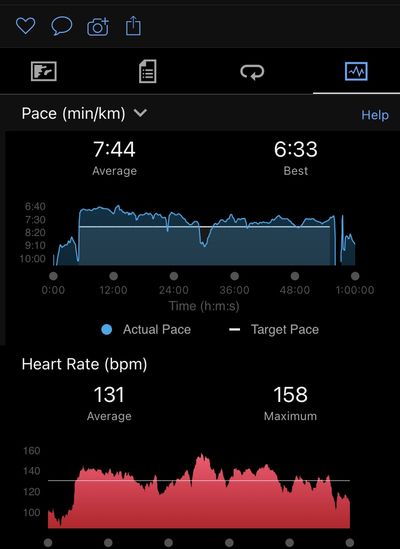 Connected Watches and Psychological Profiles — Apr 4, 2023Connected watches know everything about us. In theory they listen to us 24 hours a day for years in a row. My Apple watch has been on my wrist for over four years, every single day. It has been for swims, runs, rock climbing, via ferrata, office work and more....
 -
Comment on "The BBC is under threat because its success challenges market ideology" — Jun 30, 2015Imagine for a moment that television did what other industries did. Imagine for a minute that every program you watched was so good you wanted to pay money for it. If people want to pay money to watch it then your content is valid and worthwhile. Commercial peak time television is rubbish placed to fill the space between adverts. As a result when people say “TV rots your brain” and “Television is a waste of time” and “Television makes you dumb” they are for the most part right. I’m thinking of those endless copycat programs. There is little program diversity on commercial television. I love specific BBC content. I enjoyed watching DR WHO which is rather low brow. I also love the output by the BBC natural history unit, so much so that I have bought all of these documentaries. I used my dissertation exploring Cousteau and Attenborough documentaries as an excuse. The BBC is a cultural icon of what Great Britain stands for. It produces thousands of hours of radio and television content. As the article points out people listen to 18hrs a week of content. I used to like listening to the From Our Own Correspondent podcast/radio program but have lost the habit as I have changed from one mobile phone operating system to another. I also listen to more audio books instead....
-
Cheapening the user experience — Aug 24, 2007There are a great diversity of websites out there and each one has it’s own strengths. As a result of this it is not unusual for me to visit twenty to thirty websites on a daily basis, from the likes of twitter, my own website, news sites and more. What this means is that I find the tools that are best for what I want to do on a variety of websites. To each website it’s own purpose. That’s why I’m so dissapointed with what facebook has become at the moment. In the good old days of e-mail use you would start with a clean account and every e-mail you received you wanted. As a result you might get one or two e-mails every few days but they were of interest. Over time spammers started sending their junk and this personal space was less personal space. At around the same time friends began sending chainmail, participating on “which character are you most like” and other activities. As a result of this there was a lot of static which meant more time would be wasted processing the influx of information. This problem then came to social networking websites. One of the weaknesses of myspace was that everyone could put megabytes of junk on their pages and the website would slow down and crash certain browsers. In other situations people spam you via the bulletin boards in such way that you start to ignore them. I thought that facebook was different. I used to view facebook as a mature online community that was about people keeping in touch with their friends. The sharing of personal images, personal videos and personal work was great. That is, until the api came along. A I look at the daily requests on facebook I have zombies biting me, I have several application requests that do the same thing for music and more. The “questions for friends” api is one of those useless api that makes you sign into a service you don’t want to use so that you can read the question a friend wants to ask you. The “compare me to my friends” api is another annoying one. Yesterday I noticed that I was more likely than someone else to do something and I signed up for the api, unselecting all the elements that would advertise the api to those in my news feed. I wanted to see whom I had been compared to but found out that I had to answer fifty questions before being able to use the api. At this point I removed the api. The beauty of the World Wide Web is the vast amount of specialised websites and tools that allow for the sharing of a variety of elements. If I want friends to know about my travels then I’ve got World66, website I used before going to Poland. If I want to talk about good food and restaurants then I’ll drop by Trusted Places and read what users have written. If I want to play games online then I’d go to Kraland, nainwak, travian and a number of other websites. I see Facebook as the modern version of the phonebook where I can keep up to date with what friends are doing and where they are geographically. I enjoy the ability to see photographs and videos of what they’re doing but hate being spammed with movie trailers and other junk. I want facebook to be about my network of friends and what they’re doing in the real world. If there is too much extraneous content then I shall be looking for a less populist website. The fact that it’s been banned in certain work environments demonstrates it’s declining value as a social networking website....
-
 chatGPT, GPT3 and Reading Time — Jan 20, 2023Time for a new discussion to take place. Reading time. Do you read through articles or do you skim them. Is reading the headline enough or do you read every word of the article? I ask because in the age of chatGPT and GPT3 I would ask the same question as I asked about social media....
 -
CERN, live streaming and the LHC — Sep 10, 2008Relayed live of the LHC and their first beam which travelled at 20 KM/h...
-
CERN, live streaming and the LHC — Sep 10, 2008richard - Sep 4, 2008...
-
CERN gears up to cool LHC down — Dec 17, 2014
-
Casio and Other Watches — Jan 9, 2023If we wear a Suunto, Garmin, Apple watch or Fitbit the device wants us to wear it for sleep, for every step we take, every heart beat and more. At the end of the year we do get fitness summaries but related to what we ran, swam, cycled and possibly walked. That means that for 22 hours a day we are tracking our heart rate and more for nothing....
-
Canyoning and a new camera — Jul 21, 2010On Saturday I went canyoning, or as you Americans would call it Canyoneering and the adventure was fun. You suit up in 30°C heat and walk for fifteen minutes through a mountain path before going down to the river and jumping from pool to pool. The natural cooling effect of the water is welcome. As you go down the river so you get opportunities to jump from a variety of heights, from 7 meters to 11 meters. Land the wrong way and your palms may hurt. That’s not actually the point of this post. The point of this post is to speak about how much fun it is to spend your time going down a river in such a fun and relaxing manner. The drawback is that most cameras are not waterproof. The Nexus one mobile phone for example would be afraid. You may regret bringing it along. That’s why I have a new photo camera. It’s the Olympus Stylus Tough 8010. It’s a small drop proof waterproof camera rated to 10 meters below the surface. That means I can jump from 11 meters with it in my clothing and it should survive for me to take pictures of the next people jumping down. In a little over a week I’ll be playing with this camera during a rafting trip so I’ll upload the pictures at that point, if i don’t end up in the lake before then. I’ll leave you with a test gallery of pictures taken with the new camera. [flickr-gallery mode=“photoset” photoset=“72157624545521618”]...
-
Bragi - self contained in ear audio player — Feb 3, 2016BRAGI - The Dash – Wireless Smart In Ear Headphones from BRAGI on Vimeo. I enjoy cycling, running, climbing and via Ferrata so this type of device is well suited to my needs. The price is not. At 300 USD it is an iPod shuffle replacement at its core. From what I understand The Dash can track steps, heart rate and duration of sports so in theory you can go without a sports watch, sports tracker or mobile phone. In practice, I never leave the house without my phone. I do see it filling a swimming niche. Most mobile phones are not IP68 certified. If this device is IP 68 certified (I could not find information on the website) then I see it being especially interesting for swimmers. According to their website they can be used for four hours in between charges but charge time is two hours. They will last through most workouts. The limitations I see to this device are first and foremost the price. I don’t want to pay 300 USD for something that I am likely to lose. I listen to podcasts and audio books and like to have several on my devices at all times. Both my mobile phone and iPod classic fill these roles with ease. When the price for these devices descends to 200 USD I will be willing to buy a set. I would also like to have either two sets of earphones or a charge time of just an hour rather than two. They say that the app is coming soon. As an audiobook and podcast listener, I want to save my progress and bookmark interesting passages. I would like to see this incorporated to the gestures that control the device....
-
Black Mirror - A television series — Dec 4, 2016Black Mirror - a television series Black Mirror is a television series that was broadcast by Channel 4 a few years ago and made available to Netflix audiences recently. The series explores a variety of topics and issues to do with technology from death to crime and existentialism. It also explores themes like family and friendship. We spend a lot of time thinking about technology and how it has changed our lives. Sometimes it’s fun to watch 80s series to see the world as it was before computers and the internet and sometimes it is fun to watch dystopian essays or short stories exploring facets of modern life. In modern society we see that social media is affecting the discourse that is taking place between politicians and normal people. We see how social media and the lowering of the barriers of entry to the fourth estate have created a golden age for propaganda and disinformation. We see in The Waldo Moment that a CGI bear can mock the political system. It could be directly related to what we have seen happen recently. Be Right Back deals with online identity and how a person can be emulated once they have died. The question is an interesting one. The more active we are on social media the more our character and personality can be understood and reflected back. This is limited. We are not entirely ourselves online. There are some things that we hide from the online world. In Fifteen Million Merits we see a dystopian vision of the world where everyone lives in a small dark room. They get out of this room to go and peddle for a few hours to get Merits. Once they have 15 million merits they can “apply” for a different kind of job via a talent show. Nosedive explores popularity and social networks. Everyone is constantly being rated based on what they share, how they interact with others and more. In such a dystopia people can progress or lose privileges based on reputation. In such a reality people are vulnerable. A vertovian theme is explored in “The Entire history of You”. An implant called the Grain records your entire life and you have the ability to fast forward and rewind moments of your life. In so doing you can analyse what went well, what went badly and more. You can also see more than you were intended to see through other peoples’ recorded experiences. In this episode we see the Kino-Eye, the all seeing eye. Your life is no longer private. I like some of the themes that are explored in this series and I recommend people to watch at least some of the episodes. I feel that they are relevant to our discussion about social media and online lives....
-
Birth of a regulator — Nov 21, 2014Birth of a Regulator - Commercial Film for Apeks from Scarlet View Media on Vimeo....
-
Bill Palmer of Iprong 3c, twittermail3k twittter 3k+ — Oct 15, 2007Today’s news is as follows. Having seen that Bill Palmer of the Iprong podcast and website would add the 300th friend on Facebook I decided I would take this opportunity to add him. His podcast is "for the ipod generation so take the time to listen to it. It’s mainly about iphones and ipods but mixes in quite a few artists in the process. The second event was becoming the 3000th person to use twittermail. I saw someone mention that they were up to three thousand and I decided to be the 3000th. Now that’s done it’s great. It’s twice as great since it helps to emphasise that I have reached over three thousand tweets since becoming a twitter member. The last bit of news is that it’s blog action day tomorrow. The topic is going to be the environment so right anything with an environmental conscience for your blog and share it with the world. That’s it for tonight....
-
 Battery Powered Transportation And Fitness — May 15, 2023Every time you go for a walk, bike ride or run you encounter people being moved along by something using electricity. The most common of these forms of transport are the electric car, the electric bike and the electric foot scooter. People want to be more environmentally friendly in their way of getting around but they use something that has to be recharged....
 -
Bandwidth Upgrade — Oct 15, 2007Those stats are the current upload and download speed test results whilst watching France 24 on Zattoo. In other words I should have enough bandwidth to use operator11 without too many problems now....
-
Audible For Dummies — Apr 26, 2023Recently I noticed that Audible is great for dummies. To be more specific I noticed that if you are an Audible paying subscriber you have access to dozens of Audible For Dummies books available within the subscription....
-
Audible books and Kindle Unlimited — Mar 18, 2015This year I have set myself the goal of reading 30 books. I am currently on track to reaching that goal. Most of my reading material comes from two sources. Audible.com and amazon.de. What I like about reading books via Audible.com is the freedom it gives me to do something at the same time as people are telling me stories. This habit was born from listening to podcasts while I went for hour long walks. Over time podcasts went down in quality and my time was taken up by other activities. As a result of the scarcity of time I moved towards audible books. Audible books provide me with an opportunity to listen to stories and learn whilst I do other things. I can listen to them while I commute, while I go for hikes or while I mow the lawn. As a result of this ability to multitask I have finished many more books than I would finish if I was only reading. I am an audible platinum member and I pay in advance. This gives me the option to buy 23 books a year. Audio books are not cheap when you buy them individually so buying a subscription makes sense. Below a certain price I buy the books and use credit when the value justifies it. For at least two years I have felt justified in keeping the subscription. I am lucky because I like to read on electronic devices. I have used iphones, android phones, iPads, iPad Mini, Tablets and a kindle for reading. As a result of this I always have several books with me at all times. I have a tendency to buy many more books than I have the time to read. This is especially true of books when they cost less than an airport coke. Eventually I will get to read them. Today I took a step which may make conventional book readers envious. I will test Kindle Unlimited for the next month. I can “borrow” up to ten books simultaneously per month. I can be as uncommitted as ever with books. I am working through the James Bond Collection and reading three history volumes at the same time. I “read” the history volumes as audio books and this allows me to enjoy the nice weather we have had. When I am in a fixed location I can read James Bon books on the kindle. At the end of the trial month we will see whether I keep using Kindle unlimited....
-
As featured on Operator 11 — Aug 22, 2007After a long but great day of work I came home to do The Twitter Vox show with Loudmouthman and two guests. We were joined by Goldie Katsu and Malburns. We discussed what it’s like to reach 3000 tweets and the conversation moved towards the advantages of using twitter when part of global communities like Second Life. We had some interesting insights and the conversation progressed well. It’s a good show and can be found here....
-
Arte have a twitter channel for their programs — Jan 15, 2009A few days ago I noticed that twitter was tweeting their programs as they were on in German and this looked like a good idea. I commented it was a shame that they didn’t have the same in French. Within a few days it’s there. This morning I saw Arte’s tweet for one program and so I’m watching a guy play some Chopin on the Piano. I spend quite a bit of time watching the twitter stream so if someone gives me their program details, as an opt in then there’s a good chance that I will tune into the program on the spare of the moment. If I had intended to watch the program at 2038 in three days time I would have forgottten about it. As things are that’s what’s playing on the right side of my screen now....
-
Digg and Mob Rule — May 2, 2007There is a copy and paste culture on the web and I don’t like it. When you go to Digg, to Youtube, to myspace and other websites what you find are short comments. They’re contributing nothing to the debate, in fact they make the online experience online less enjoyable. There has been quite a vocal outcry from certain people about the HD DVD codec and how forcing articles to be pulled down and deleting user accounts was going against their user rights. In fact, there is nothing of the sort. It was nice to see that these users would be held accountable for the content they link to and provide. Adding fuel to the fire Kevin Rose said something in his blog to the effect that since so many people feel so strongly about this issue he would not pull down any more links. I don’t agree with this. There’s a level of mob rule which I think is counterproductive. There’s all this talk about user-generated content and networking. Ok. Where’s the original and innovative content. Simply digging a story and putting a few remarks is not enough. Do some journalism, do some research, learn the topic inside out and then post an informed opinion. I’m not going to be part of sites where accountability is irrelevant. It’s irresponsible for them to publish such information. It’s also given a massive PR boost to Digg....
-
Apple Reading Goals — Feb 23, 2023I am confused by Apple reading goals because they measure how many days you have reached your goal, as well as how much you read for the current day, but once today is yesterday it loses all of that information. It tells you that you have a. streak but you have no way of knowing anything else....
-
Apple phone show 22 is interesting and twitter tracking — Oct 9, 2007Apple Phone Show no. 22 is a particularly good episode. Andy Ihnatko and Scott Bourne discuss how to use the iPhone in real-life situations. It’s a precursor of things to come in the near future. I’ve decided to try Twitter tracking which works by you selecting which words you want to follow. The messages are then sent straight to your phone and you follow any conversations on the topic....
-
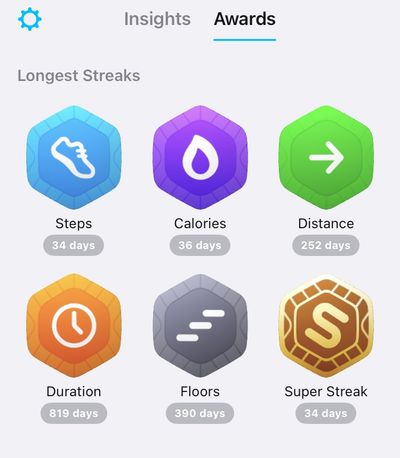 Apple Health Step Data Sources — Jan 15, 2023Yesterday I spent some time looking through Apple Health Data Sources. I see that there are plenty of data sources. These are the Apple watch, the iphone, Alltrails, move, connect, stepsapp, pacer, Suunto, Ingress and three more that are marked as inactive....
 -
Apollo Comms - A Series on YouTube — Mar 4, 2022I have not studied electronics but I have studied the Google IT support course among others so I have some basics of how computers and tech work. This type of documentary series is interesting because it brings history to life, and explains how things work. It is not sensationalist, does not use too much music and more. It just guides you through how technology works....
-
Andrew Keen at the Frontline Club — Sep 17, 2007Content creation and distribution has become far cheaper than it was in the past. Whereas in the past you’d have tons of equipment to create television programs today the barriers to entry are lower as a result of which the cult of the amateur is allowed to flourish. As the technology is adopted by more people those who have never studied the theorie point and shoot. What this means is that there is a huge amount of mediocrity on the web. Some like to say that it’s ninety nine percent crap and they’d be right. Why else use a search engine? The cult of the amateur is a great thing because it encourages those who have no training to produce content for others to enjoy. The problem is that they’ve had no training. As a result they’re sloppy. They don’t shoot b-roll. They don’t edit anything and then they put it on the web. What’s worse is that it’s long. Andrew Keen concentrated on audio and really wanted it to promote the sharing of great works and high culture. Instead there has been a steady rise in low culture. This is a debate that goes back to the days of Adorno when public literacy for all became a hot topic. Over time the general level of knowledge increased and so the natural balance returned. Professional journalists are investigative, going out and doing their own research before digesting this information out and writing their pieces. They have an in-depth knowledge of their topic and rather than go off on tangents they are going to backup everything they say with facts. I listened to a woman present her theories about one topic a few days ago and she always said “I did this” and “I did that”, a few days letter I listened to journalists, ambassadors and other professionals speak about how “we did these things” and “we did those things”. They often looked at creating a sense of a community or group of people working on an idea. The point is that whilst everyone has opinions which they want to share not all of them have the credentials to provide the content. Whilst as individuals our knowledge is not detailed enough to be of value if all of us work together towards a common goal then that work is of a greater value, hence the reason behind wikipedia’s success as a resource. During the Andrew Keen conversation talent was discussed and whether it is natural or whether it takes years to aquire. The discussion focused on the gatekeepers and how they were there to find talent, polish it and then commercialise it. He saw the value of transparency for trust. Both evidence and backing up the information help make resources more reliable. As a student you learn that there is no point in writing something down until you have found someone to backup your sentiment with research. Andrew Keen, to get a definite rise out of the crowd referred to bloggers as a mob and who can blame him. Whilst Journalists go out and interview people and do a lot of background research before writing about their topic of interest bloggers tend to go on what others have written. Whilst listening to this it brought up thoughts about how blogging would be better for content analysis since it is easier to read a collection of articles and write about them than to go out and get access to all those of interest. Andrew Keen made the remark that many blogs do not have original content, recycling what they found on a variety of resources. At one point Keen did accept that his book was written tongue in cheek and that whilst the book had a lot of success in Canada and England the Americans did not understand his point of view. He went on to say that he knew who he was writing it against rather than who he was writing it for. He said that it was a response to digital eutopians. At this point he made clear that he was not a technological determinist but a social one. In other words he believes that people, rather than technology determine the type of life and interaction we have with our environment. Towards the end of his conversation he spoke about web 3.0 as the rediscovery of expertise and professionalism, point which agrees with one of my earlier posts. He wanted the information economy to be about distributed trusted content. He also wanted it to be given a solid backbone. During the Q&A one person asked him whether he was a troll searching to annoy people through the writing of his book. He answered humourously that bloggers don’t read books. It was a clear and deliberate provocation but it was clear that he meant this as a joke rather than a direct attack. I don’t agree with all of the points made by Andrew Keen but he does make some interesting and valid points about the future of the media. it’s something that we must all think about. Culture production is an important aspect of our lives and it would be a shame, after centuries of hard work, to promote works of mediocrity. Finally if you would like to listen to the speech in person it can be found at this address...
-
Andrew Keen And The Scarcity of Choice — May 7, 2023I recently noticed that I had Andrew Keen’s The Cult of the Amateur book as an audiobook on Apple Books. I have had the book for at least a decade but have only got around to reading it recently. Over the last week I have listened to him speak about the closing of Tower Records and it encouraged me to write more about the scarcity of choice, that comes with online browsing and shopping....
-
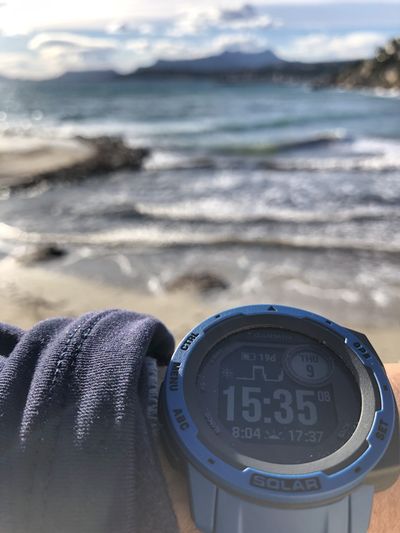 An SVG clock — Dec 18, 2021Sometimes we experiment and play with technology. The clock below is an SVG clock using SVG and Canvas technology to display local time. Doing it with these two technologies was easier than with JavaScript. The code doesn’t require calculating thousandths of a second like another clock I tried. The tutorial to make this clock is here: W3 Canvas Clock....
 -
An Interesting Podcast — May 22, 2007I listen to a lot of current affairs programs but occasionaly I enjoy listening to more light hearted podcasts. Over the past two or three days I have been listening to John Foster’s Beerschool. This is a podcast aimed at those who want to learn to appreciate more than one type of beer. He also jokes that “the best part about beerschool is of course the homework” which consists in drinking beer. It covers the San Francisco area speaking about a variety of beers and the breweries and bars where they are served. It’s a great resource for those who may drop by that part of the world and want to experience that aspect of the culture. Aside from this point I was recently mentioned in their podcast for a comment I wrote about the “Rockstar” program. I was quite amused by this....
-
An e-book morning — Feb 25, 2018This morning rather than use the phone, check twitter, look at Facebook, or look at Instagram I took one of my two e-book readers. I have a Kobo and a Kindle device. I have both because I don’t want to lose all of my books if one company goes out of business....
-
 An Apple Break — Nov 2, 2021A few weeks ago I bought some software via the Apple Store but changed my mind about wanting the software. I requested a refund, as I have in the past, and they asked for a justification so I gave them one, and they refused again. Out of principle I then cancelled all my app subscription renewals, as well as stopped looking at the Apple book store....
 -
Amersports and Sports tracker — May 5, 2015Today Amer Sports announced that it has bought Sports tracker. Sports Tracker is an application that I have been using since I had the Nokia N95 8GB. I used it on symbian, iOS and Android devices over the years. What I love about this app is the way it displays information about the work out. It gives you several screens while you are exercising with the option to select which information you want to see most. [gallery columns=“2” ids=“2305,2306”] Once you arrive home and synchronise the workout with the web interface you can see the information displayed above. You can choose whether there is a topographic map, a normal map or satellite imagery. It is simple and intuitive to read. Suunto make devices that I like using. I have used the Suunto D9 diving computer, the Suunto D4i diving computer, the Suunto Ambit 2 and the Suunto Ambit3. Suunto dive computers are small diving computers that you can wear in day to day life. When you are passionate about diving this is nice. The Suunto Ambit family are more interesting for people who do land based sports. I used the Suunto Ambit 2 and 3 when doing via ferrata, hiking, cycling and other sports. The advantage of these fitness watches is that they have long battery life. This means that you can be active for two or three days before worrying about the battery dying. In this respect they are far better than mobile phones for fitness activity tracking. Suunto products and Sports tracker do not communicate natively. Suunto products synchronise with movescount. From movescount you need to export the GPX workout files and import them to Sports tracker. I would like to see Suunto devices communicate directly with Sports tracker. In my eyes the best option would have been for Sports tracker to buy movescount and for them to take over the web interface for Suunto. They both provide interesting web interfaces and combining the two would have been mutually beneficial. Time will show whether Amer Sports with links to sports tracker, precor and Suunto will come out with an interesting amalgamation of the three products/services. I look forward to finding out....
-
 Adopting the Safety Razor. — May 14, 2023For more than a decade I was happy with a Gillette Mach 3. I used it every day for years. Eventually I found an affordable electric razor so I switched to that, and used it until I had to replace the blades at least twice. I only reduced my use of it because the blades became dull. That’s when I started to experiment with a bamboo razor, a Gillette Glide, and finally safety razors....
 -
Adobe and Digital Rights Managment. — Mar 23, 2008Digital rights managment is a sore point for a lot of users. Anyone with more than one laptop dislikes how their playlists can’t be synchronised across more than one machine without a little ingenuity. Adobe offers DRM content control for DRM...
-
Access to contemporary technology helped promote my habits as an early adopter. — Mar 13, 2015Parents in the silly con valley are idiots. They are in a trillion dollar industry and make billions a year because people want to use the technology they are developing. Think about how different my childhood would have been if we had learned camera work and video editing in art classes rather than painting, pottery and other less interesting art forms. Imagine if as a child I had not watched Cousteau Documentaries. Two of my strongest passions would never have emerged… scuba diving and documentary making. The luddites who amass personal wealth worth billions should understand that new technologies promote creativity and innovation rather than the opposite. Look at games and how they have evolved. Look at the emergence of multiplayer gaming right up to the leading edge games like Ingress among others. Without creativity and free time with new technologies revenue would be less forthcoming. My passions for video and editing were held up for many years because I had no access to an edit suite. Imagine how the children of Sillicon Valley execs are having their creativity stunted because of the very people who have most to gain from their children being early rather than late adopters. “Those who endorse this approach say computers inhibit creative thinking, movement, human interaction and attention spans.” These people demonstrate just how limited their understanding of modern technology is. News organisations are teaching their staff how to shoot and edit news stories using mobile phones, others are using tablets to write books and more. The idea that information technology prevents people from moving around in today’s world is redundant. How many of you still have a desktop at home that you use regularly. I personally use my mobile phone and a laptop most of the time. The laptop is with me everywhere I go. As a child and as a professional the thing that limited my movement is classroom and office time. In the classroom you learn at the speed the teacher chooses. There is no fast forwarding, skimming or rewinding. Everyone learns the same information at the same speed… in theory. In practice we learn at different speeds and information technology allows us to build knowledge actively. As children we had books and we learned by reading different chapters at different moments. Imagine studying the Roman civilisation as a child and wanting to see pictures and video from the time. Multimedia devices and computers would bring more to life quicker. I strongly believe that children should be given the freedom to use the technology or medium they want to use. It is not up to adults to decide which tools are relevant to their children. As an early adopter contemporary values and norms have held me back and stop others from keeping up....
-
A Week and a Half With The Garmin 45S — Feb 18, 2023I have spent a week and a half with the Garmin 45S and it doe what I expect the Garmin to do, but with more regular charges. The battery is rated to last for a week working as a watch and up to 13 hours working as a sports tracker. You can track your workouts with GPS, GPS and Galileo or GPS and Glonass....
-
 A Walk Between Moments of Rainfall — Jul 8, 2021Today I woke early, shopped, studied German, read the news and then studied WordPress Child themes. It rained on and off, and I took a break from studying to go for a walk and I stayed dry almost the entire time. I carried a Sea to Summit three litre bag with me, in case I needed to keep the phone etc dry. For a moment I thought it would start raining but it didn’t so I stayed dry....
 -
A trip to the apple store — Sep 14, 2007Playing with technology is fun especially when you could fit it into your shirt pocket. The ipod s one such device. it fits easily into the pocket and can play video, allow for the viewing of photos and more. I also like the user interface, whether the fact the screen is split into text on the left and images on the right or the ability to search through songs and such. Two of it’s disadvantages are the small click wheel. Whilst easy to get used to it may leave some people with broader fingers slightly frustrated. Another flaw is that when video is dark there’s no image. It’s only good for normally lit subjects. That’s a shame since you’re always in the mood for Film noire on the tube. The ipod classic has a newer user interface than the ipod I’m using at the moment and the search option is there. The most interesting feature is still the size of the hard drive in relation to the device. I’d like to get a nano because it’s so small that for a night out it’s more appropriate than the classic but the classic is interesting when you’re in need of a data backup of your laptop for example. My laptop drive is the same as the larger classic so theoretically it’d be a good alternative. Of course small drives are more fragile so less dependable over time....
-
A temptation to go diving. — Nov 15, 2014It makes me want to go diving again. Now that summer is over the lakes should be better. Visibility should have improved....
-
A really good conversation from TWiM — Mar 22, 2008This Week in Media 85 is an interesting conversation about media news for the past week with a technological slant. This week’s interesting is particularly interesting as it explored the future of television and how people consume media. From the PVR and the ability for people to discuss the content they enjoy to machines that talk to each other they cover many topics. They also discussed computer literacy and whether the youth of today are as computer litterate as previous generations. That’s an interesting point. The idea is not whether someone can get a computer to do what they want but rather whether they know how to set it up. Think of Linux. Would you be able to setup a linux box. It’s the type of discussion that’s good to follow to give you a number of points of view....
-
A MacBook, a MacBook Pro and a Remote — Oct 9, 2007Yesterday I was lucky enough to be asked what the remote on the new MacBook and MacBook pros were for. I went to the owner of the Macbook’s room and picked up the remote. Both my machine and hers were side by side and I started to play. I was controlling both computers at once. It’s not the type of thing I usually do but it’s amusing. You could control quite a few more machines if you like....
-
A Healthy Amount Of Downloading — May 29, 2007[...
-
A chevreuil in 4K — Sep 12, 2015Yesterday I went for a walk around the foot of the Jura and there is an enclosure where deer are kept waiting to be slaughtered for meat. As the Chasse season is coming up this park might not be as busy. This video was shot using the Sony Xperia Z3 compact. The image is a little blue for my liking. I look forward to testing the Xperia Z5 compact with it’s improved sensor and new image stabilisation technology. I have no 4K monitors on which to assess image quality at the moment....
-
7000 youtube views — Jul 30, 2008Over the past month I have seen an increase of 7000 views in relation to the videos I have posted on youtube. The two events that helped make this a reality are the Geneva Lake Parade and the Paleo Festival. For the Paleo Festival scantily clad girls were an attractive proposition. As to the paleo it was taking video I had streamed live on qik and sharing it via a number of video sharing websites of which youtube was one. To give an idea of the audience peaks we saw over 900 views for the Lake Parade footage and over 1300 views for Manu Chao. That’s a respectable audience. The question is whether there are any events you would like me to cover (via live streaming from a mobile phone) and whether that would attract a big enough audience....
-
59 Twitter is Too Simple- Twitter is Just Right — Sep 21, 2007Twitter is one of those things that’s really hard to explain due to it’s sheer simplicity. It’s a website that allows you to answer the “what are you doing question”. That is the initial phase. When you’re new to twitter you’ll be confused because you know no one therefore the codes and conventions are blurred. You may tweet once or twice a day and that’s enough. Over time you will look at what other people are doing and that’s when you move to phase two of twitter use. When I first started using twitter I had no idea how to use it. i thought that it was a storm of 140 character postings that are completely unrelated. Some refer to it as microblogging but it’s not a blog. instead it’s a great tool for entrepreneur for two key reasons. The first is brevity. Anything you say must be summarised to 140 characters. As a result you’re efficient. The second factor is the interaction between twitter users. If you take a look at my profile and my twitter block then you’ll see the ten most recent tweets in my public feed and what everyone within my circle are talking about. As a result of this you’re entering a communal environment. Out of those I’m following on twitter I know from ten to twenty of them, occasionaly meeting a few of them two or more times. As a result I know what they’re doing and they know what I’m doing as well. Each one of us is in charge of a number of projects we find of interest. I’m a recent graduate therefore I tweet about one set of things. Loudmouthman and Documentally both tweet about other things that are related to their activities. Links help to get all of this information and work distributed to the right people. Most of those on twitter have at least one website and quite a few profiles on a variety of other websites. We’re embracing what’s called web 2.0 by many people. It seems to be the tool of choice for entrepreneur to keep up to date with what everyone else is doing at the time. Just take a look and you’ll see this for yourself. Twitter is a great tool for it’s brevity and it brings together a great number of content creators who are having a conversation across borders and timezones. It’s boundless in that it can be viewed from the mobile phone to the Itouch to the computer. It’s versatile and quick and I’m going to continue using it for many months to come....
-
Excess Use of Network — Apr 22, 2007Here is my daily good morning message from the ISP: Yesterday you exceeded the daily usage limit of 500MB as referred to in our Terms and Conditions. This type of activity could have a detrimental affect on our network unfortunately be forced to downgrade your service to a throughput limit of 56Kbs dial-up speed, for a period of 5 days. I download over a gig a day when I’m at home on average, that’s 30 gigs a months or more. Detrimental effect on our network: What about every time you cut me off for no reason, what about the interruption of service when I get beyond the number of hours allocated p0er month. What about the fact I have over 20 gigs of data transfer but can’t use it? Limit to 56K, It’s already limited to that speed. If you exceed these limits on a regular basis, we may be forced to suspend your account. So interruption of service for no reason isn’t an interruption of service? For users of Peer-to-peer (P2P) applications such as BearShare, Warez, Morpheus, BitTorrent, iMesh and KaZaA note the following: Why not stop whining about this and block those services rather than destroy the rest of the services Most P2P applications you install will usually be configured so other users can access your hard drive and share your files all of the time. This constant file transfer can degrade your computer’s performance and generate heavy traffic loads on the network, making it difficult for other users of the network to work well. The network is a shared resource and we all must use it responsibly. Network bandwidth consumption is monitored. If your usage could possibly impact the overall performance of the network, your computer may be blocked until the situation can be discussed. One gig a day is nothing. Two nights ago I downloaded over two gigs of podcasts within an hour without any problems suffered by the University infrastructure therefore why can’t these people cope. If they’re going to block internet access from my machine then that’s a Denial of servic although not an attack. Just sub standard. Should you have any queries regarding this email, please contact Customer Services Context and analysis Diggnation is 120 megabytes per program and Nouvo by the TSR is around 80-120 megs as well. The BBC’s daily news is around 20 megabytes. This week in tech, this week in media and others are around 20 megabytes each. Diggnation =1/5 of my daily allowance, nouvo = 1/5 as well. Twim etc are a little less but quickly saturate the amount allocated per day. What’s more interesting is that they currently have at least 7 fibres for 100 people. If the Cern were using those fibers it would be the equivalent of at least 3.6 gigabits per second, as was tested at the 2003 Telecom world event. 7 fibers = 7 gigabits per second, at least theoretically. For 640 users that would be 10 megabits per second. compare that to the 50KB/s and you see why I’m dissatisfied with the service....
-
Excess Use of Network — Apr 22, 2007wham - Apr 1, 2007...
-
17 After the Event- Carrying the Conversation Forward — Sep 22, 2007There are two key events I have been to since the beginning of summer. These are PodcampUK and the Twitter Meetup. Both of these events have been followed up by a continuing collaboration between participants. The first event was the London twitter meetup. I went there knowing just two participants, Sizemore and Jess. Over the night I would end up with interviews with quite a few members of the London twitter community but nothing much would be done with this footage as a result of not having known that I would be doing these interviews. It meant collaborating with Jess and getting an edit ready in the hope that GETV would use it. They didn’t so that was slightly dissapointing. I met another individual. Nik Butler of Loudmouthman.com. Following on from a good conversation on the twitter meetup night we decided that we would collaborate on other projects. One of these is ongoing, Twittervox. Twittervox is a weekly roundup of the week’s twitter news in review. It’s had over 2600 views over that time with up to four live participants at once around the world ranging from the US to different parts of Europe. That project has been featured by Operator 11 on a number of occasions which I would like to believe is testament to it’s good content. Twittervox is also of note because it introduced me to Phil Campbell and his work. Since this was a few weeks before Podcamp UK it meant that I would know at least two members of the conference. At Podcamp UK I got to meet quite a few of those who are part of the British podcasting landscape, from teachers to academics, broadcast professionals and hobbyists. This broad range of people would lead on to more projects. There were some interesting conversations and presentations which brought me some new ways of seeing certain aspects of the podcasting stream of content creation. It would make me think of podcasting as the equivalent of Amateur sports in relation to it’s “threat to broadcasting.” Within a week I was sitting at the Frontline Club listening to Andrew Keen but that was written abo I’m glad I met Documentally whilst at Podcamp because of possible future collaborations we may work on in the near future. As of yet nothing is set in stone but already I’ve met him a few times to work on three or four projects which you can find on his website and on a number of video sharing websites already. From what I’ve described above what I’ve found is that the conversations from events are leading onto some interesting projects and that it’s been a good transition from the student life into the professional one. It’s been a great opportunity to meet some interesting people and through blogs, twitter and meetings in the real world the conversation is as healthy as ever. I feel I’ve gained from these events and their aftermath and look forward to participating to many more in the weeks and months to come....
-
10 megabits per second on I-HSPA — May 9, 2008Mobile data transfer is speeding up 10.1 Megabits per second over I-HSPA. Nokia Siemens Networks, a provider of mobile broadband solutions, completed tests with Mobilkom Austria recently testing its new I-HSPA solution. The call, conducted with an unspecified mobile device, reached downlink data speeds of up to 10.1 Mbps during the tests. Source...


