
Up to date earth imagery every day....
Posts tagged “observation”
-
Will Marshall: Tiny satellites that photograph the entire planet, every day — Nov 24, 2014
-
why RSS feeds should be complete — Nov 27, 2007When you’re creating web content that’s fed please think about those that are reading your feed from a device that is disconnected. here I am on a train and I’m captive to the content that you make available on your feed. Some feeds have the full article but others don’t. The result of this has a simple consequence. There is no use for your feed on my mobile device since there is no content. I would thus urge anyone with a feed to make sure to make all content available so that people may access it on the move, especially since Wifi is not yet ubiquitous....
-
why RSS feeds should be complete — Nov 27, 2007Jennifer - Nov 3, 2007...
-
Why Audiovisual Content That's Not On-Demand is Dead to Me — Oct 14, 2007I’m online from 10-15hrs a day on average and as a result I’m used to having everything available within a short amount of time. I also had access to a PVR with a hard disk upgrade for quite a long time. As a result of both these developments anything that is not available to me when I want to watch it goes unnoticed. That’s because “It’s an on-demand world” as was concluded in one edit I worked on for a client about the future of broadcasting....
-
Why a 20% drop is not necessarily a bad thing for myspace — Sep 12, 2007According to recent articles myspace is losing user share in relation Facebook but this is not necessarily a bad thing. When you think of facebook you know that it’s a glorified phonebook therefore everyone “needs” to use it to remain in the loop. In contrast Myspace is a specialised music sharing site for artists and creators of music to come together and collaborate as members of the same art form. As a result of many users leaving myspace for other social networking websites so Myspace will have far less noise, in other words extra chatter that does not contribute to the appreciation of music. I for one have found myself using Myspace slightly more due to certain bands using the website. There are a hardcore group of people that are part of many social networks at once and they are able to cope with the demands. Most people spend twenty minutes in front of facebook getting up to date with their friends before disappearing. “MySpace’s lead in terms of “attention” is almost embarrassing: it scores 10.79% against Facebook’s 1.67%.” source. People look at more content on Myspace than Facebook and user involvement is what counts to advertisers. Myspace is good for the sharing of music you create without people having to install extra api whilst Facebook is personalised by adding api and hoping that your friends install the same. Both will co-exist happily for another few months whilst waiting for the next site of interest....
-
What I'm reading - Kadaré's L'Hiver de la grande Solitude — Aug 28, 2007From friendships and the people we meet so our knowledge of authors increases. It is through English literature classes that I learned to appreciate Milan Kundera. I read all his books over a period of years. Following a conversation with an Albanian friend I heard of Ismail Kadare. He originally wrote in Albanian and French, living in Paris for many years....
-
Watching clouds form as a 360 timelapse — Jun 22, 2016Time-lapse videos are fun because we can see something happen faster or slower than real time. By watching this content we gain a better understanding of the world and how it works. For years I have been filming time-lapses and the results can be fun. In some cases we record time-lapses with video cameras and at other times we set an interval timer to take pictures every so many seconds. In this post you will be watching clouds form as a 360 timelapse. I have chosen to share both the flat image and the spherical image. The reason for sharing both versions is to give you an overview of how objects move in both....
-
Village Photography — Nov 25, 2014On Google Plus, one of my muses, I saw that instead of Street photography someone suggested Village photography. I like the idea because villages are such an integral part of my life. Life in villages is a privileged one. Every time we go for a walk we cross people we do not know and say hello. We walk from field to field and along paths. We see which crops have been planted and which ones are being harvested. We see frequent horses and dog walkers. We also see families. We hear the sound of rifle practices at the local gun range. The practice is for military service most of the time. We also have fountains and old buildings. We hear the church bell every half hour and hour. We see the fountains with wooden chalet to protect from the cold in winter. Villages are seasonal. In summer the sounds of children playing, of fireworks and of barbecues can be heard. In Autumn the sound of wind blowers can be heard. In Winter we see lights on as the neighbours prepare their evening meal. In the mornings we see parents bring their children to school before the bell rings and they head in to their classes to sit and wait impatiently for the school day to be over so that they may go out on adventures. That’s why village photography captivates my imagination. I know villages well. I appreciate them. I look forward to looking at images from the past, and preserving today for future generations....
-
Videocamp, Paris — Apr 9, 2008A few days ago I was in Paris to meet the Francofous and in the process I passed by La Cantine where they were holding a Videocamp. It’s like a barcamp but rather than talking about radio and podcastng people talked about peer to peer video sharing, citizen journalism and other topics. I filmed a few people presenting what their seminars had been about and finally they’re available via my website. Please note that the videos are in French. [Video 1](http://www.main-vision.com/richard/video/paris0408/just got to work014.mp4) [Video 2](http://www.main-vision.com/richard/video/paris0408/just got to work015.mp4) And yes it is very lazy of me to distribute the videos like this but I don’t have time to edit the content at the moment. If anyone wants to offer a transcript of what’s said I’ll credit you for the work....
-
Unseen — Mar 8, 2013Unseen is a documentary divided in to two parts. The first part is about five individuals who provide tours of various parts of London which they inhabited as homeless person and the second part is feedback and advice....
-
Twitter as a way of life — Apr 14, 2008Twitter is not a social network, rather it’s a way of life. The more you use Twitter the further it gets into your way of life. It allows you to follow current affairs, geek out about social media and keep in touch with friends that uses the social network. What’s more it’s a network that does not require any specific device. At first it’s a confusing place. Look at the public timeline and it’s a torrent of junk and sifting through it will take hours a day. As you spend more time on twitter though you find people of interest to follow. In some cases it’s friends from the physical world, in other cases friends from other websites on the web and then more. In reality what makes twitter interesting, and part of what makes people use it is how efficient it is at getting a message across. You’ve got 140 characters to express yourself. In Paris I was told I speak in 140 characters or less. That’s not a bad thing. In fact it’s good. It’s about the continual flow of information. Imagine you’re swimming down a river but everytime you move to stay afloat you have to close your eyes. That’s what article and blog reading is. As you focus on one task so your ability to focus on anything else dissapears. That’s fine in the old media where pages are static and where airwaves are limited. In the modern world though it is necessary to absorb many sources of information at once. How many of you have your ipod, laptop and mobile phone with you at the time you’re reading this post? I’m sure most. How many of you have more podcasts than you can view or listen to? How many of you have more programs recorded on PVR than you can watch? That’s why twitter is a lifestyle. It’s about constantly looking for information and building an understanding of current affairs through constantly taking in little bits of information. Stop talking about the social media on twitter, rather start talking about the good old fashioned time efficient soundbyte. Want to be heard. Don’t take people’s time. Encourage interest instead. Many people are complaining about the decentralised conversation, the notion that blogs are no longer the center of attention, that twitter, friendfeed, facebook and others are killing the conversation. In fact quite the opposite is true. If you’re in New York you’ve got one set of people, if you’re in London you’ve got another. if you’re in Geneva you don’t have much… To have a decentralised conversation means that many ideas can be explored at once and as pillars of the online community meet at various events so the conversations can once more converge. Don’t worry about comments on a blog, think about the conversations and the people you’re having them with. That’s where the fun is to be had....
-
Twitter as a way of life — Apr 14, 2008Laura Whitehead - Apr 1, 2008...
-
Transport tycoon Deluxe as a PAF — Mar 29, 2011Transport Tycoon, the popular game, is now available as a portable application file. This means that you can install it on a USB key and play the game from anywhere. This comes alongside the openTTD which is an open source movement to keep the game around for us to enjoy. The aim of the game is to create a transport empire using, trains, trucks, buses, planes and boats. As you build more networks so you gain more money and your services can expand. It is a management game to help you see the hours away in your free time....
-
The Tiny House movement and travel — Dec 17, 2016The Tiny House Movement and travel combine well together. In this video a Czech couple bought a fan and transformed it into a self contained home to live in for a year. They chose it because they wanted room for the surfboards, wet suits and more. It has space for cooking lamb shanks, socialising and sleeping. You can enter the van both from the front and the back. I really like the idea of this van. It would be fun to travel for a few months from place to place, do what there is to do, see what there is to see and then move on. This would adapt well to hiking, climbing, via ferrata and other sports. It allows you to live comfortably without spending money on hotels, villas or other places. The project cost them around 10,000 dollars to build so if you work and save up for a few months you could easily take a gap year and afford to do such a project. Working on such a project does require some skills in wood working. He said that it took hundreds, if not thousands of hours to prepare the van. If you’re travelling then a few steps a day for a few weeks would get to this final result. At one moment they speak about the herb garden that they have in the glove box. As they had the space they planted some mint and other herbs for cooking. As a result of this herb garden they said that when driving on rough roads the Mint plant gets shaken about and in the process the van smells of mint. It’s a natural air freshener. In a month they will move on and sell the van to continue travelling. If I was travelling to New Zealand I’d like to try living in a van like this and use it as a base to go hiking, climbing and enjoying other sports. This seems like a pleasant way of travelling....
-
A theoretical Seven Minute Workout a day — Jan 9, 2018Seven Minute Workout for 36 days...
-
The year the Internet lost the cloak of anonimity. — Dec 31, 2007This has to be the year where I have met the most people online before meeting them in person, which is quite amusing. It’s also the year that warzabidul as a nickname became a person in the physical world to more than two or three people. It’s the year an online person become a nickname for a real person. It’s the year where, at least for early adopters, Twitter and Seesmic both helped create opportunities for people to meet and get to know each other online before taking it back into the physical world. It’s the year I went to a Podcamp, some tweetups and some seesm’up. It’s the year many of us stopped hiding behind avatars and nicknames and moved towards creating a brand or identity, depending on whether your point of view is that of marketing or personal fun. I’ve enjoyed learning about the “social media” and all the new possibilities. I look forward to 2008 when many more such networks and events will be organised. It’s been a fun year to be introduced to the “Social Media” and I’m happy to have met so many people....
-
The year the Internet lost the cloak of anonimity. — Dec 31, 2007Jennifer - Jan 4, 2008...
-
The Year-Old Pandemic — Mar 2, 2021Thanks to the incompetence of leadership during this pandemic Switzerland went from a low of 21 cases per day in June 2021 to a high of 3600 or more over Christmas. This is really a shame. For a short period up to the 21st of June Switzerland really looked as if it would end the pandemic....
-
 The Thirty Book Rule — Jan 25, 2019Marie Kondo’s rule that you should only keep thirty books, that you should only keep those that you personally want to read or enjoy is a silly rule because it encourages people to limit their scope and perspective on the world....
 -
The Social Media Lifestyle — Dec 15, 2008I believe I’m living the social media lifestyle, that is that wherever I go I have both my mobile phone and my ipod touch. As a result I am never more than a hotspot away from the world wide web and it’s content. In Switzerland I’m online as I hike through the mountains taking pictures which I can then upload to flickr for you to enjoy. That’s also the reason I decided to start a new blog called The Social Media Lifestyle. The purpose of the new blog will be to explore the thoughts and conversations I have with non social media nuts and why they are not interested in being as active as we are. I have based my first serious post around a conversation in the TGV from Paris to Geneva and some overheard comments at a cinema in Switzerland. What I hope to achieve through this blog is to shift the conversation away from how advertisers can promote brands and products and instead promote the adoption of new social tools such as Facebook, twitter, seesmic, flickr and plurk to name but a few. We’ve got to find the best way to explain to our audience why and how the social media will improve, rather than degrade their lifestyle....
-
The Social Media Autumn — Oct 22, 2008Liz Strauss wrote about the leaves and the trees and that got me thinking of the Social Media autumn. It’s the time of the year when everyone gets back to work after summer and they no longer have as much time to be sociable, whether online or offline and as the trees remains so the leaves are gone. Of course in this context the trees are the social networks and the leaves are the users. How many of these trees are deserted? Kosso was wondering whether people will keep using phreadz in the same way. Loic Lemeur was questioning how people would keep using Seesmic. At the same time we’re going into what will probably turn out to be a recession and we get repetitive news. One of those stories is about how Yahoo is getting rid of ten percent of it’s work force. That’s hardly new. They’ve had a few purges recently. That’s what you get for being one of the top three companies in search (or has it changed since then?). One person recently wrote that the advantage of the recession is that it gives you an opportunity to get rid of those that are not as productive as they should be. It’s an opportunity to streamline the company and find new ways of being more productive. You see that’s the advantage of silence, of time apart, of a little time to think. It’s the time when those in the social media, but it applies everywhere. How long will the recession last. Which networks will remain and who will stay. Why will they stay and what collaborations will thrive. Now is the time to see which ideas have the most potential. How will the social media look covered in snow?...
-
The small matter of Cairo — Feb 5, 2011What makes the situation in Cairo so interesting is the number of media outlets that you can use as sources. From 24 hour news channels like France 24, Al Jazeera, BBC World and others to individual people with mobile phones. For France 24 you have three languages to chose from, with Al Jazeera to you have three languages to chose from. With Sky News you have the choice between Standard definition and High definition. You have live cameras looking into the square. There is no lag time between the acquisition and distribution of images. There is the challenge of aquiring images from the ground though. Journalists have been attacked, as reported on twitter, and through interviews once they arrive in their home countries. Tweets have told us of arrests of certain individuals, of attacks on certain media offices etc. It means that whilst those within the country may not have access to this information we on the outside see it. One of the aspects that is so interesting is the way in which people have been able to organise themselves. Facebook, twitter and other social websites have been important, like Bambuser and flickr. Mainstream as well. I am looking forward to the literature that will come out from this event, especially if it successful. Imagine comparing a situation like that of Tomas in “The Unbearable Lightness of Being” to this situation, especially if the end result is greater freedom....
-
The Seesmeetup — Dec 29, 2007It’s taken no more than a few days from the time I first saw Fred2baro on seesmic to our first meeting with Deek in London for the first Seesmeetup… so called. In fact it was both Sizemore that had the first meeting although more private in nature. One of the questions that one of Fred2baro’s relatives asked was why would you want to be part of Seesmic? Aren’t people pretend and fake? Aren’t you uncomfortable with this? My answer was the following: When you go to a bar or you meet people face to face rather than via twitter or Seesmic you’re quite often in a bar under the influence of a drink or two. As a result you’re not as genuine as you’d be if you met in another place. In other words Seesmic and twitter are a way of getting to know people before you meet them in the physical world. What this means is that you can generate some great friendships, some strong ones. It’s also a new contemporary method of networking than the bar. We’ve got too many distractions at home. Whether it’s from the computer, the phone or the television to feel the absolute need to go out to bars where we’d sit and be bored anyway. The point is the following. To me the social media, especially twitter and seesmic are a great way of creating new friendships in the physical world where limitations of time and travel distances are cancelled out. If’ we’re part of an international society why not meet people online and bring it to the physical world rather than the other way around. How many times have you been sad to see a friendship disintegrate because of distance? I have, many times. Time to enjoy these new toys....
-
The Rescued Film Project — Jan 20, 2015Undeveloped World War II Film Discovered from The Rescued Film Project on Vimeo....
-
The podcasting demographic — Sep 4, 2007Whilst listening to a conversation between several podcasters in their debriefing they were asking the question of how to involve a different demographic in the process of podcasting. This is an interesting question. As one participant pointed out the demographic seems to be for white males over 30 years of age to create content whilst younger people seem not to be active. If that last statement is true then I am an anomaly to the rule since I have over four years even to reach that age. What is the strength of podcasting and how does it differ from mainstream media? What is the difference between the mainstream media and podcasting What makes a documentary a documentary rather than a podcast? Are podcasts and amateur pieces of work because the person creating that content has less experience? If so does the habit of podcasting turn them into professionals and do they as a result lose their identity. Is podcasting about content on demand and fed automatically to the player? In that case how long do we wait before the mainstream media do the same thing? It’s an interesting topic and I’d like to see what people have to say about this. I know that some people at the Podcamp complained about people talking about podcasts in podcasts but there are some important questions to be answered. I don’t see myself as a podcaster because I’ve spent so many years in Uni studying this that I believe I deserve another label. I’m a television producer, or at least I aim to be one. There’s something that has really changed from my childhood to now. When I was no more than ten years old I decided that I wanted to do video and that I wanted to edit but I had no access to any hardware that would allow me to do anything. There were two reasons for this. The first of these was cost. At the time two beta sp decks would cost 30,000 CHF a piece. Now for 3200 CHF you get yourself a portable edit suite. Add a small camera and you’re doing ENG. What growing up when I did meant is that I had to content myself with books on the subject. I bought books about editing, about basic camera work, basic betacam work, theory books by Eisenstein and still more books. What this meant is that although I had never been able to edit the material I had shot I had the chance to think about shooting and editing style. It was nothing more than an intellectual pursuit. As a result of the time I spent daydreaming about having the facilities to produce television programs it meant that finally when I had the equipment I was in a much better place than young content producers are today. Most people pick up a camera and film something without thinking of sequences of shots, story telling and more. Instead they do anything and put it together. As a result there are some products that are hard to watch. What about duration. In broadcast when you’re a beginner you’re given one or two minutes for the video you want to create. As you prove your skill at short items you progress to longer, more informational and more interesting pieces. Of course those are documentaries in the Griersonian sense of the word rather than podasts. You see documentaries are the creative treatment of actuality. They are built as a means by which to document what happens in real life rather than something setup. These are actualities, Actualié in french. Find the means by which to make them about current affairs and you have a documentary. Dziga Vertov with “The Man With the Movie Camera” played with this idea. So did Flaherty before him with Nanook of the North. John Pilger, Nick Broomfield and documentaries after them have also experimented with different styles. All of them were broadcast. Now we’ve come to another era in factual production. This is the personal era of video production. If you think of early literacy you may have seen the same fears as there are now. If everyone can writ then what prevents them from writing their own books and no longer buying material by those who do it for a living? Time, for a start. Producing high quality content takes a lot of time and thought. What is the difference between a podcaster making a documentary about the steam railway and Fred Dibnah? Contacts, budget and organisation. Fred Dibnah is in front of the camera telling you so much about what he knows but how much information did the researcher go through before providing the right amount of information. How long did the script writer take. How many shots in a professional production are handheld and whom do they have access to. Did they spend three days to get the shots they needed. Of course they did. As a documentary maker you’ve got the pitch, the proposal and getting it agreed, the budget and getting that agreed, the shooting schedule and then editing. You also need to understand the demographic you’re providing content for. Podcasters do it as a hobby and they’re surprised when people watch their programs. It fills them with joy and pride. I saw many people and the passion they had for their productions as podcasters. They’re filled with ambition and this is what makes their programs interesting. They give us their point of view and it’s great. I think teamwork may be what’s lacking from podcasting. Lot’s of people want to create content yet when you meet them you see that many of them do so alone. If that is the case then the reason to have Podcamps is to encourage people to create networks and teams. As the teams grow and as a variety of people with specialist knoweldge join together so their product increases in visibility. What makes Leo Laporte such a great podcaster? The people he involves in his work. He recently stated that he has at least two podcasts a day to record and that he gets other people to do various things he needs help with. He’s got one or two guests to speak about law, a few more to speak about Macs and yet more for This Week in Tech. As a result he’s got a “Twit Army” to help with content creation. With more Podcamps and greater participation there is a greater chance of teams being formed and creating nice networks of podcasters to produce compeling content. Europe as a whole needs to provide much more content so that we get a European take on all these topics. Better still, involve a variety of people. Get women involved. Mention the name Allie (sp?) and see how many of those at Podcamp remember her. Why aren’t more girls involved so that we may remember and interact with a team of them. I’ll see what others have to say about this...
-
The Modern phonebook — Aug 19, 2007Recently I have been trying to categorise websites and how they are used into single words. To this end I have recently started to view facebook as a self actualising phonebook. There are a number of factors which help to contribute to this feeling. One of these is the ability for me to add all “real life” friends without adding any “virtual friends” - friends I do not know in person. In so doing it limits the number of people in my contact list to those I have talked to in person at least once, but occasionally spanning two decades or more. What is great about facebook is that those you have not seen in a decade are once more part of your daily life. I look at what people are posting and I know they’re in a number of countries. I can see which are their favourite films, whether they have recently travelled, whether relationships have crashed and burned or more. I can also see what they’re up to. Twice in the last week I have noticed events put on by friends. One event was by friends whom are part of my University of Westminster days whilst others are from when i was a Bournemouth University student (albeit in Weymouh an hour away). When I went to the Westminster event I recognised quite a few faces since they are part of my recent history. It allowed me to meet new people and one comment was interesting. The girl who organised the event commented that most of these people did not know any others. She was the degree of seperation between all of us. As the night progressed so the links would strengthen and people who had been strangers just a few hours before would become familiar once again. The next day saw me going to another facebook event but this time with people I had not seen for half a decade. By taking a look at the newsfeed in facebook I could catch up with these people. I saw that one friend was having their birthday that night and that another friend from the same time period was also going to be there. Looking through the photo stream I could see what the latest adventure had been. If people think that it’s important to mention something then it’s easy for you to notice and aknowledge this once you meet them next time. When you think of a phonebook you usually associate a limted amount of details like phone number, address, business and address. Facebook gives these details but it also gives us so much more. It’s a great tool for those of us who are mobile and willing to travel. There are three contributing factors which help make facebook popular; the first of these is mobility, the second is international travel and the last is broadband. The first two factors are related. I am thinking about the distance and time it takes to get from where you live to where the friend lives. If you’re in North London and your friend is in North London then it’s easier to keep in touch via the facebook newsfeed than to commute over an hour to see that individual. At the same time as more of us have international groups of friends so the cost of phone calls and ability to see how friends regularly declines. We need technology that allows us to keep up to date with friends and that’s why we need the enhanced phonebook. Broadband is the enabling technology. There is a lot of information. Imagine taking two hundred pictures of an event where twenty of your friends are. If you have to mail each of these to each friend then this is going to take a lot of time and effort. Facebook allows you to do this without hinking about it, hence keeping friends you may not see frequently current to the life you are currently leading. In effect the more open your network of friends are the easier it is to remain up to date with current developments. At this moment in time Facebook is one of the best adapted to these needs...
-
The Macbook Air — Jan 15, 2008I really wanted a small device mid way between the ipod touch and the macbook but Apple have decided to come out with a thin rather than small device with five hours of battery life and a solid state drive. These are great features but the device is so incredibly limited that it’s not interesting for me. I’ve got a macbook pro and it’s a great machine for anyone that wants to do video editing. I’ve also got an ipod touch which is great for twittering and keeping up to date with current affairs. One of these devices is great for computing, the other is great for browsing. What I wanted is a small machine that’s easy to carry, along the lines of the powerbook but I’ll have to wait a little longer. The key limitations I see with this device are the need for an external optical drive, only one USB port and a phone jack. That’s great for business men who travel a lot but what about the rest of us. If you plug in the USB drive how are you going to plug in anything else. If you’re like me you charge your ipod and your phone from the laptop because it’s convenient. The price is also prohibitive. It’s a luxury product that doesn’t fill any new market niche. Let’s wait and see for new devices. I will drop by the apple store and play with it of course and give you a hands on review....
-
The Ice finally came — Mar 4, 2018A few days ago I went towards the lake to take pictures. The wind was strong and cold. The temperature was close to -9°c. The last time we had such cold weather the lake side became beautiful as the porcelain ice formed around boats, trees, over grass and cars. As this only occurs every few years it is a rare treat....
-
The Francofous like to migrate — Oct 9, 2008The Francofous are part of the seesmic community and can be differentiated by their ability to speak french and their avatars. Originally formed around Seesmic and twitter they are now migrating to both plurk and phreadz, two services I have talked about in the past. What is nice about this community is that it’s a core of 20-30 early adopters who move and try new communities as a group rather than individuals. What this means is that whereas in previous years we would jump from one community to another, start without knowing anyone and over weeks and months get to know people here we have a core of people moving with the times. Of course I speak about the Francofous this way but they’re not the only ones. Many of my English and international social media friends are doing the same thing, moving from one fesh community to another to see what the strengths and weaknesses are. They’re also testing out the sites, seeing what works and what doesn’t. They’re illustrating how many of you will use these sites once the barriers to entry have come down. There’s another factor that’s important to take into consideration. Those who are early adopters are used to using twenty to thirty sites several times a day from google reader to plurk, to seesmic, to phreadz to gmail to flickr, youtube, dailymotion, vimeo and many more. At the same time most of my university friends are happy with facebook and gmail. They’re lucky, everything they want can be found in one place ;-). How far are these communities from the mass of mid to late adopters? Quite a few months to a year ahead of the pack....
-
The Francofous like to migrate — Oct 9, 2008richard - Oct 5, 2008...
-
The Crosscall Odyssey Plus — Apr 22, 2015The Crosscall Odyssey Plus fills two niches. It is a rugged weather proof phone rated to the IP 68 standard and is equipped with dual sim capability. This makes it ideal for the sports I enjoy, mainly via ferrata as pictured below and hiking. It comes with a smaller carabiner than the one pictured below. I swapped it for one of my own. IP 68 is a code to determine how resistant a device is to both particulate matter and liquids. 6 denotes that the device is dust tight so particulate matter will not make it’s way in. 8 as defined by the manufacturer denotes that this device can be submerged for half an hour at 1m before damage occurs. If you get caught in the rain or have to cross a river the phone should survive. Another interesting feature is the dual sim capability. This phone allows for two microsims to be used at once. In my case I have a Swiss sim card and a french one. Both sims are constantly active so you can select whether to make phone calls from Sim 1 or Sim 2. You can also select which sim card is using the data plan. It runs android 4.3 and works fine with the TomTom app, the ingress and others. I found that battery life is also comfortable. With me as a user the battery lasts for a day. more info...
-
 The SUUNTO SPARTAN SPORT WRIST HR BLUE — Mar 18, 2017I have logged 799 activities with my Suunto devices. This includes hikes, via ferrata, climbing, swimming and scuba diving. I like Suunto devices because their battery life is good enough to last through entire days of hiking and the battery lasts for weeks between charges when used as a simple watch. I like to track my heart rate but I often feel self conscious about putting the heart rate monitor belt on. With the latest Spartan watch I no longer need to worry about the belt. At the same time as I start the activity I will be able to keep track of the heart rate. This is especially good for group activities when you do not want to keep people waiting and in winter when you’re wearing layers of clothing. I like that devices like the Fitbit Charge 2 can be worn at almost all times and track heart rate effortlessly when at the climbing gym and during other activities. I look forward to the same simplicity with a Suunto device. I especially like that Suunto devices survive swims and showers. I like that the Suunto Ambit 3 tracks how many steps I take during the day. It’s a shame that the step count is not logged and visible on Movescount. I like to see how energetic or lazy I have been on a daily, weekly, monthly and yearly basis. It’s not unusual for me to go from a 21,000 step day to a 6000 step day. It depends on weather, work and other factors. If you go for a bike ride your step count will not be high. I will wait to see whether they apply this technology to the Suunto Ambit watch collection. If they come out with the Suunto Ambit 4 Wrist HR then I will be tempted to upgrade. With 799 tracked activities I believe Suunto devices have demonstrated that they are reliable....
 -
 Summer without a car has taught me to live locally — Sep 28, 2018This summer I was thinking of buying a car until I found out that my contract break was for six months rather than three. As a result of this my ability to buy my own car vanished. I used the scooter, my feet and eventually the bike to travel thousands of kilometres....
 -
Spy-cam wildlife filmmaking — Apr 17, 2016Spy-cam wildlife filmmaking is an interesting discipline. It builds upon the decades of innovation that the documentary film genre has built upon. From the earliest images by the Lumière brothers of the workers at a factory to the development of film editing by Eisenstein and Dziva Vertov demonstrated by "The Man With the Movie Camera to sync sound with the Crystal sound system used by Jean Rouch for Chronique d’un été. The BBC is seen as the leading example of high quality television programming and this has been the case for decades. The Natural History Unit is responsible for some of the best wildlife documentary films and series and with good reason. They adopt the latest technology, hire crews for months or even years at a time, to capture nature’s spectacle and beauty, and bring it to living rooms around the world. Sensory: BBC Wildlife Director John Downer & the technology of ‘spy-cam’ filmmaking from Getty Images on Vimeo. This attention to detail and this dedication to getting the best images has resulted in some of the best looking documentaries around. the Blue Planet Series, the Planet Earth series, Life and others have provided people with what I like to call a video encyclopaedia of the natural world. The technological innovation that we see in the video above demonstrates how animals and behaviour that we had seen through a tele-lens can now be seen up close and with as natural a behaviour as possible. Almost every book I have read about the documentary genre speaks about capturing life with as little alteration of natural behaviour as possible. This technology is making that wish a more realistic goal....
-
Social networking and freebase — Aug 24, 2007As you’re painfully aware by now there are hundreds of social networking websites but none of them have a communal database. If you’re on orkut your data stays there, if you’re on yahoo communities your data is there. All these social networking websites are very similar in what they ask of you but different in how they link you. Loudmouthman got me thinking about how you could use a database like freebase to share this data between networks, sort of like openid but with more data. Freebase is a database for volunteers, similar to a wiki but whereas the wiki is a collection of articles this is a database where you write the front end and implement it according to your needs. If you’re interested in video production and television for example you could take the television section of that database and make it accessible within that site. If you encouraged your users to create their profiles within that communal database then details which are not so critical to your persona (whilst being careful not to make phishing to easy) could be used so that you input your data only once. By having a communal database the migration from one social networking website to another would be far smoother, more transparent. You’d have the same user profile in a number of places and you would have more freedom to concentrate on what you feel is important. If one website goes down then that is not as critical since your presence is spread in a number of places therefore there is less opportunity to be in trouble should your main social website go down, as was the case with Facebook and Skype within the past few weeks. RSS feeds are already helping to spread your presence across a number of websites and sites like Jaiku and tumblr help aggregate your daily output to a number of locations. As a result of such practices. In effect you’d have built in redundancy. If one node goes down then five others can be used whilst waiting for your preferred social network to come back online. In summary since we are members of more than one community there is a demand for a communal database from which the sharing of certain types of data would promote the spread of online presence between more than one community at a time. By facilitating the process of setting up a number of communities there is less opportunity for us to be bogged down in content we are uninterested in. Communities, rather than forums could be far more specific to our needs. I would welcome your views on this topic....
-
Social conversations and the social media — May 1, 2015If you read “How to Win Friends and Influence People” you see how important it is to take notice of other people, to be positive and to be interested in what they are doing. That can be a challenge for everyone. We all have different priorities so putting other people first is a challenge. The World Wide Web is a place where we can listen and talk at the same time. We listen to a conversation and then we comment. We can start our own conversation and wait for others to see it and respond. As a result we are both engaging with others and letting others engage with us. There is a bilateral trade which leaves both parties feeling good. Social media, today a misnomer, was a conversation place. Everyone talked with everyone and everyone became familiar with everyone else. The Global Village that Marshall McLuhan wrote about looked like it would become a reality. At the time when this reality looked the most feasible was the time before mobile phones and proper data plans. At this time we used computers from a fixed location, either at home, an office, university or other places. With Wifi we had some freedom but nowhere the freedom that smart phones and data plans have provided us with. That’s why people’s feeling that mobile phones are disconnecting people is such a ridiculous notion. In my vision of the world, in the adoption cycle that I observe the mobile phone is the great connector. We meet people online, we appreciate them, we meet them in person. Seesmic and the early days of twitter were very good tools for this lifestyle. As data plans included more and more data so it would follow that social media websites would be about individual to individual conversation. It would logically follow that people would feel more at ease conversing online as their friends adopt the technology and have chats. Facebook, twitter and Google Plus should be social web forums where people are interested in the people they follow. What I see, as data plans and smartphone adoption rises is the opposite. People share links and promote rather than converse. Social media should be rebranded as Ego Media, brand media or advertising media. The platforms that should have made us conversational have been overtaken by advertising. It’s a good time to continue blogging. It’s a monologue until you contribute a comment. The World Wide Web is a de-centralised conversation tool and we move from platform to platform looking for the places where the personal connections are strongest. As the social media days fade in to history now is the time for each of us to blog, to write about what we feel passionate about....
-
A book on Sleep and Sleep Tracking Apps — Jan 9, 2018Why We Sleep...
-
Shuttle Launch as seen from a plane — Aug 26, 2008Some video of a shuttle Launch as seen from an Air Canada flight. Turn off sound, it’s better without....
-
Shifting away from early adoption — May 3, 2008There’s no one in Europe using brightkite yet but I’m there and I see that no one is in the vicinity. That’s because there’s a huge amount of attention on what the US is doing and not much left on what Europe is doing. It’s a simple website to tell people where you are at all times. Of course there are a few projects like that in various countries and whilst it’s great for some people others feel uncomfortable. Personally I’m indifferent, since there’s no one in the vicinity that I could take the time to meet via that method. Of course there are others What I’m looking for are European social platforms that would create a similar environment to the one I would find in London when I lived there....
-
The Selfie Stick cutter — Sep 4, 2016In some cities you see a strange set of creatures and the selfie stick cutter is there to resolve this issue. People carry long poles at the end of which they stick their camera. They look at the phone held at a safe distance and smile, do victory symbols and other such gestures. These sticks would be really interesting if they were used to provide people with interesting images. Instead they are used to take pictures in interesting places with ordinary people in front. As a camera operator I photograph landscapes or monuments. It is an old fashioned habit. The selfie stick is so endemic to some parts of the world by now that pranksters run around and cut people’s selfie sticks with the phone still attached. You can watch as dozens of phones fall to the ground in this video. Mobile phone repair shops must really enjoy watching this video. Look at all the work they will soon have. I think that this video is meant to be seen as a joke but can you imagine how much anger such an action would generate. Can you imagine how fast you would have to run away from some of these people. You see these people look surprised and in some cases betrayed. They have a quarter of a million views so far and it will grow from tomorrow onwards, as people in offices share the video with their friends and colleagues. Maybe by next week it will have more than a million views. Selfie sticks are popular and so are pranks. With the money they could make from monetising this video they could compensate the people whose screens they broke. [caption id=“attachment_3349” align=“aligncenter”] The story is not viral yet Selfie sticks do have one practical purpose. You can fix 360 cameras to them and take pictures without the giant index finger getting in the way. That is how I use one. You can get them for cheap from certain types of shops. You do not need to spend 29 euros....
-
Rome's Lost Empire — Jan 1, 2015Documentaries have been a passion of mine for as long as I can remember. This year I started with the Documentary Rome’s Lost Empire narrated by Dan Snow. With Sarah, an associate professor they travel from Rome to Transylvania, to Petra and to Tunisia to uncover the Roman Frontier. Using a mixture of both satellite and Lidar imagery they are able to identify archeological sites before going to them in person. The documentary provided me with a greater understanding of how technology helps archeologists today to do their job and to provide me with information about aspects of Roman Civilisation that I had not spent too much time thinking about. For this reason I recommend that you watch the documentary....
-
Rolling in the Deep — Jan 1, 2014Rolling in the Deep - Anilao from Dustin Adamson on Vimeo....
-
A Rock Crawler and Wildlife Film Making — Jul 8, 2016When Gordon Buchanan was following bears in the United States we watched the resulting documentaries on television. We have seen him a number of times in episodes of countryfile as well. Now he is working on getting footage of wolves in the wild. For this project he is staying out in the wild and following a pack of wolves day after day for weeks. As part of this project he is filming with a broadcast camera and gopro cameras which he fixed on to a “rock crawler”. The Rock crawler is a remote control car with the body removed. The BBC were working on a documentary about polar bears and for certain shots they created a den for filming purposes. It helped to tell the story but people felt that the purity of that documentary had been tainted. This genre of documentary aims to tell a genuine story with no reconstruction or trickery. Everything has to be genuine. As we see from the footage above Gordon Buchanan was able to get the camera right up to the den and film the wolf cubs from the mouth of the den. This technology is great for story telling because it provides the camera operator with greater flexibility. He is able to get the camera to where he wants it to be without going there in person. In theory animal behaviour is genuine....
-
Ridley Scott is exploring an idea discussed by Dziga Vertov several decades ago — Jul 25, 2010Disclaimer: These are thoughts, rather than a well structured post. Ridley Scott wants your user generated videos for a film “A Day on Earth” and whilst people are hyping this idea as something new the concept is an old one. Dziga Vertov had an idea that he would capture Life Unawares. Eventually he would end up with an experiment in six reels called “The Man with the Movie camera”. It’s aim was to show Soviet Russia as it was. It was an experiment in editing and in story telling. Skipping ahead you also have the Cinéma Verité movement, where the camera and micro trottoir would go out into the street to interview people and find out their opinions on a variety of topics. I would be more specific but I haven’t watched the film in a long time. What I do remember is the Eclair camera with “crystal” sync sound. Technological innovation freed the camera operator and sound man to continue experimenting. Today everyone has a video camera. Everyone has one on their phone as well as their photo camera. Life is constantly being documented in video form. 24hrs of video are uploaded a minute to youtube. video recording is an everyday part of life. I’m sure we will see a great diversity of moments, some births, some sailing, some rock climbing, some sporting event and more.I haven’t taken a look at how long they want the finished result to be. Seesmicers have had fun with this idea already. We had hat days, we had other events, we would go out with the cameras and film. With Qik too we did this. There is nothing new about the process. There is only a far greater ease to share the material internationally and collaborate. As a side note we still remember Pangea day, another event with the same line of thought, but where people presented finished products rather than moments....
-
replaced mother boards, the n95, press accreditations and qik — Jun 6, 2008Because every day is not the same this one has been quite normal. At eleven in the morning I found out that the motherboard for the macbook pro needed replacing and this should be accomplished by Tuesday. In second the day of work was a good one so I was energetic enough to drop by the caribana for a second night, meeting a few friends. It was also an opportunity to do some live streaming of concerts by Alanis Morisette, Stereophonics and last but not least (so far at the festival) Manic Street preachers. Here is a collection of the streams. If you tolerate this your children will be next Something to do with Autumn You all know this one: Your love is not enough. Stereophonics, Dakota Stereophonics, crowd having fun. Alanis Morisette, broke but happy...
-
replaced mother boards, the n95, press accreditations and qik — Jun 6, 2008mousewords - Jun 5, 2008...
-
 The Refugee Cultural Festival Kickoff Party — Jun 9, 2017Last night many of the volunteers participating in the Refugee Cultural Festival could come and meet who they will be working with for the duration of the event. Falafel, samosa, hummus, wine and beer were among the offerings available to those people. Along with this was a drive for them to tell their stories either as migrants, refugees or allies of both. This is within the framework of the I am a Migrant campaign by the International Organisation for Migration. As usual with most Geneva events this was a culturally diverse group of people. Just an ordinary day in Geneva but special for those who have not grown up with such cultural diversity. The Refugee Cultural Festival itself will take place on two key dates. The first of these is the 17th of June. The Swiss National day of the refugee. On this day there will be singing, dancing, international karaoke, discussions, music, yoga, photography and much more. You can find a full list of events on the 17th here. They will be around Les Grottes from 10am to 1900 and from 1800 until late at Perle Du Lac. On the 18th of June there will be interactive activities around Photography and Visual art from 1400-1800 at Bellevue. The 20th of June is World Refugee Day. This is the day where you get to "Celebrate World Refugee Day with a Grand Cuisine and Cultural Party made up of international delicacies from Syria, Afghanistan, Sri Lanka, Eritrea and more. This event will take place at Bois-De-La-Batie, 20, petit-lancy. On the 21st of June there will be a dinner hosted by Asile LGBT from 2000-2400 in Paquis and on the 22nd of June it will be the IFTAR dinner hosted by RMCA, Cusine Lab & Foodhack. Disclaimer: I am a volunteer within the comms team for this event....
 -
Real Beauty Sketches — Apr 18, 2013Real Beauty Sketches from John X. Carey on Vimeo....
-
Print advertising and google — Nov 19, 2007The way we’re consuming information has changed completely. i see the freesheets as doomed and look forward to the day when more and more people have ipod touch like devices. I want to see a world where you select the news and information you consume as you’re on the room rather than before setting off. Already I’ve got a taste of the future (although to the occasional few it’s the present). Apparently google is looking at an advertising model that would see kiosks print out magazines with adverts tailored specifically to the reader’s needs. Personally I don’t see the interest anymore as this seems like an old media strategy within a social media future. Most of the media I consume is in portable form, whether it’s a podcast, video content or other. It’s fed to me via RSS for processing at my own speed. Where is the relevance of such a patent when print is becoming less and less relevant?...
-
Posting about friends — Nov 28, 2007When people write about friends should they post their twitter profile page or the websites their friends are working on. I’m asking this question because whilst reading a post today I was interested in the ability to follow these friends and see what they’re up to rather than read the website. Reading a twitterstream is quick. 140 Characters are read almost instantly and adding someone that sounds interesting is instantaneous. As a result I’m far more likely to follow and read a person’s blog if there’s a consistant reminder both of what they’re doing and who they are as a person. It’s about time. I’m a scanner. I scan through content rather than trudge through it. If you’re linking to twenty people and you link to twenty blogs then there’s no way I’m going to have the time to read all this content. I’d saturate extraordinarily quickly. Following another person on twitter takes seconds to do and I’ll track these people. Point me to a blog and there’s a chance I won’t take the time to look. Has anyone had a similar reaction to twitter vs. blogs? Do you write about a group of friends, all of whom have twitter accounts? If so have you linked to their blogs or to their twitter profiles?...
-
Posting about friends — Nov 28, 2007Nicholas Butler - Nov 3, 2007...
-
Post-fact Britain — Jul 6, 2016I was in the graduating class of 2000 with 99 other students representing more than one hundred countries. As an individual I already have three nationalities and four identities. I am British, Italian, Polish and a foreigner living near Geneva, Switzerland. As a result of this mixture I said, when I was in Tanzania in 1999 that I was European because that was the simplest way to describe my identity. When I first heard about the Brexit Referendum months ago I thought that this was so stupid that I thought it was not a serious project. It did become a serious thing, especially in a post-fact Britain....
-
PodcampUK - Part 1 of the debrief — Sep 3, 2007There are many podcamps but Podcampuk was my podcamp. This was an event which was similar to just one previous experience. It was an event where everyone you talked to had at least one website and others may have had several. They also used twitter and prepared radio programs. What is great about the podcast UK crowd is that they’re a creative entrepreneurial group. Rather than take a 9 to 5 job some work as freelancers. They have a variety of skills from drivers to information technology people, university and schoolteachers and more. They range in age from mid twenties and upwards. It’s a nice sample of people. When I arrived on Friday night I heard John Buckley talk about his podcast Dissident Vox and it was interesting to see him describe the cost of creating podcasts. He was talking about time. For certain topics he would spend more than seventy hours researching the topic in order to gain an in depth understanding of his topic. Another podcaster mentioned how the personal nature of podcasts, reaching their audience through earphones, meant that he should be careful about how to present his research. In reality certain podcasters are highly informed people who want to present their ideas and worry as much as academics about what they present. Podcasting I simpler than some thought initially. One great example of this is the presentation by Jason Jarrett who talked about how he had complicated his own life when learning about podcasting. Equipment requirements for podcasting are not as great as some had expected. He talked about how he had purchased one piece of technology and then another to attempt to resolve an issue he was having, sound in just one ear. It’s only after a few weeks that he was informed that the problem was mono sound. He was a great presenter getting many laughs from his audience. Another presenter that was of interest is the one by Trevor Dann from the Radio Acadamy talking about broadcasting. What I got from his presentation is the contrast between professional sports and broadcasting. In both mediums people who are at the top of the scale can make really good money whilst those at the bottom do so mainly for the pleasure. One point which I thought was of particular interest was that of amateur cricket players not taking money away from the professionals. In other words both could cohabit quite easily. I really appreciated that sentence. For months or even years I have been worrying about the new media and what effect it will have on me whilst I look for work. If more and more people want to get content for free and appreciate mediocrity would this mean that there is less space for professional content to be in demand. According to that speech I understood that whilst people’s consumer habits are changing the need and appreciation of well-produced work will still be great enough to make a living. In effect both complement each other. As more and more people pick up a microphone and camera to create their content so the same passion from amateur footballers watching the best of the best is transposed from the amateur viewer to the professional player. Podcasting has a great diversity of talent and some participants of podcamp UK looked at this from an education point of view. Joe Dale from the Isle of Wight was telling us about how he was using podcasting within the classroom. He is in charge of students ranging from 7 years and up and encourages them to create audiovisual content which will help them learn French. They have to produce, write and script their own shows. As a result of this they are involved in improving their written work as well as their aural skill. This is a great, and for young students, far more fun way of learning. It also creates an opportunity to link with people living in different parts of the world. If you’re in England and you’re learning one language then via the World Wide Web it is easy to reach a global audience who may give feedback as to how you could improve. What made Podcamp UK so interesting is the European flavour of the event. One person travelled from Rome to be there whilst UK podcasters came from everywhere in England. As a result of this we saw what the British podcast environment has to offer rather than be limited by what’s going on in San Francisco. I’m glad I got to meet so many interesting individuals with so many interesting projects and I hope to remain in contact with them and see how their ideas progress. It was a great look at the podcasting sub-culture and how it’s progressed in parallel with mainstream media....
-
Paléo Festival De Nyon images, Nexus and Olympus — Jul 24, 2010Here are some images of the Paléo festival. These pictures were taken with the Nexus One [flickr-gallery mode=“photoset” photoset=“72157624569201440”] And these pictures were taken with the Stylus tough 8010 minimu tough 8010. [flickr-gallery mode=“photoset” photoset=“72157624567505952”]...
-
 Out of my comfort zone - A day of trying new things. — Jun 23, 2017I was out of my comfort zone for a day last week and enjoyed it. This involved trying improv theatre for the first time. Vinyasa Tango Yoga and Bollywood dancing. I tried all of these things within the framework of the Refugee Cultural Festival that took place between last week and this week. I was assigned to the room where these activities took place and took the opportunity to try everything....
 -
On the origins of OK — Sep 30, 2018If you’re a french speaker you will probably remember that scene from Les Visiteurs where they say “OK” over and over again. You might also remember it from films like “The Right Stuff” when they speak about things being a-ok. The history of the word dates back to the 1800s when people would say “all correct”, then “all Korrect” and because they liked abbreviations it eventually became OK....
-
On the lack of Common interests and mobile phones getting the blame — Aug 6, 2015On Linkedin and Facebook people believe that mobile phones are making people less sociable then they would be if phones were not around. They believe that the world in which we lived before mobile phones was an open and sociable place where everyone communicated with everyone. These people are forgetting the social context that brought them Home Alone, Problem Child and other films. Society and social interactions have always been about finding the people whom you appreciate and those whom you prefer to keep away from. In the age before mobile phones I remember watching films and cartoons where certain characters were ostracised for being different. These people were seen as isolated or loners. Society does not like these people. We see it conversation and we see it in films. If a group of people in the physical world does not want to spend time with you, does not want to listen to you because your passions are incompatible with theirs, because your tone of voice is not right then that is their right. These people though, are not satisfied with excluding you from their conversations, are not satisfied with having their monologues and showing no interest in you. They will go a step further. They will prevent you from entertaining yourself. One of the most common forms of entertainment when people are not fully engaged with groups is the mobile phone. Mobile phone use is stigmatised by a lot of people. Just a few weeks ago I took a chance and met with a new group. As I am an ingress player and as I had nothing positive to add to the conversation I took the opportunity to farm from two portals that were in range. As I live in the countryside Ingress “farming” is a treat and I took advantage of the opportunity. I was listening to the conversations taking place on both sides of me. On one side it was the stereotypical “What do you do?” International community conversation and on the other they were discussing a few topics. One of these topics was music festivals. I have had a lot of fun at music festivals but I also have some views that I share with facebook friends rather than the wider world as it would see me ostracised. As I drove home from the meeting above I got a text message and felt that it would be bad. I read it when I got home and left the group. I won’t be told how to behave by strangers. I won’t be judged in a town by a group of people who hike and do via ferrata. If you participate in both of these sports there is a good chance that you will appreciate my company. When I am in the mountains one of the cameras I carry around is out but my mobile phone is in a pocket until I get to the end of the activity or the car. I am a member of the Geneva Ingress Resistance as well as the Lausanne Ingress resistance. As a result of this I have access via Google Hangouts to at least 120 people in the Lac Léman (lake Geneva) region. These people are unique. What makes them stand out is that they’re always looking at their mobile phones and when you see the entire group is silent it’s because they’re “glyphing”. I like to spend time with these groups because we eat crisps, drink wine, eat ice creams, hike and do other activities. These people meet because of the game but you see that there are deep friendships that have benefited from mobile phone use. I love the paradox. The paradox is as follows. Every user is in the Google Plus community, every user converses with other players in Google Hangouts and every player meets other players in the real world. The mobile phone is a link between those who are not present and those who are present. In effect whether you converse with these people from a computer, by mobile phone or in person changes little. Last week at the end of one operation to field over Yverdon with blue fields and another operation to field another city a phone call was made via google hangouts and we all answered and put the phones to our heads for a conference call. Instead of the mobile phone isolating people it is doing the opposite. It is uniting people. Look at the conventional social interaction. When two normal people call each other the people you’re with are isolated for a period of time. It’s the same when people in face to face conversations start talking about mutual friends, certain types of activities and more. Sometimes the conversation that two conventional people are having is more likely to isolate the people you’re in the same physical location with. More often than not small talk is frustrating because A) you don’t know whom they’re talking about and B) you don’t know the context. As a result small talk is less polite than mobile phone use. I love the mountains and I enjoy via ferrata and hiking when it’s with the right people. I also enjoy spending time with ingress players. With these three groups of people I feel that I can be myself. I spend no time acting and performing. They appreciate the real me. When I go to towns and listen to normal people small talk I get bored and I feel isolated. It has nothing to do with the mobile phone and everything to do with the difference in interests and passions. If we don’t have the same interests and passions then don’t blame mobile phones for our lack of conversation. Either we find something we are both passionate about or we co-exist in the same space without talking much… Sometimes the inability for people to accept silence when they are not alone encourages others to be alone....
-
On the Importance of understanding what you are writing about — Nov 27, 2007Nick O’Neill needs to do more research. Most of what he writes is speculative based on two or three months of research rather than sociological research. He goes after trends and gut feelings. As a result whilst his content is interesting to keep a track of it’s not relevant to the type of content I am looking for. Podcasters and social media people need to take a more academic approach to their writing. I’ve found myself angry with what Leo laporte and other podcasters have said. Some of them are really pro certain technologies and boasting about their advantages without taking a media tech and society view. What I mean by this is that technology and communication are cyclical. What was really common in older media is going to become common in new media as more people come to use it. Radio and letter writing are what podcasting and e-mail are to their contemporary period. It’s the same with the iphones being bricked. There was such an outcry within the early adopter crowd that you’d think technology has never evolved. We all know that more apps would be created for the Ipod touch and iphone for example. It’s interesting to see how things are evolving and how by looking at previous technological trends we can see how the future will take place. Those who write about technology need to have a media studies background for a proper, well based understanding of their topic of conversation. If you want historical information you want to find professors and their PhD thesis, the same should be true about technological writing....
-
On the importance of observation in Social Media marketing. — Mar 22, 2008However, many purported Social Media experts are merely engaging in cultural voyeurism at best. They look from afar and roam the perimeters of online societies without ever becoming a true member of any society. This means, they don’t truly understand what, where, or why they’re "participating," only jumping in because they have something to say and have access to the tools that will carry it into play. This is unfortunately a representation of the greater landscape of Social Media Marketing and it’s time to take a step back and study the sociology of Social Media in order to keep communities intact and unaffected by outsiders....
-
On the challenge of being brief. — Aug 27, 2007Back in 2000 I arrived in the South West of England as an 18 year old who was used to watching 24 minute documentaries on a range of subjects and I wanted to do the same thing. For the course I was doing when I was told that I had to do one minute pieces I was dissapointed because I thought I would never get through what I wanted to say in that amount of time. It took a lot of effort and thought during those two years on that course but eventually I understood the importance of briefness. I understood that you can get the same idea in twenty words as you can in 2000. As a result of this when I arrived in London to study for the BA in media and television studies I had the one sentence one point mentality and when i was told to make a ten minute documentary I saw this as more of a challenge than when I was told to make short documentaries. The reason for this, precision. There are a number of bloggers, used to the written word, who are moving over to video to deliver their message and as they do so their inefficiency with getting the point across gets in the way of the quality content they have to offer. On a number of occasions people tend to record ten to twenty minute interviews without cutting anything out. As a result the signal to noise ratio goes down. As a video producer one of your most important tasks is to find the key points that someone makes in their argument and get them across to your viewer within the shortest amount of time possible. If you think that a news item is between one minute 30 to 2 minutes these are the timings you should work for. There is far too much content on the world wide web for me to waste a quarter of an hour listening to someone who cannot be conscice in the way he expresses himself. It’s a shame because what is said may be of interest but I’m not ready to spend 15 minutes on one video clip unless it is a highly and well produced piece of documentary making with a range of interviews and analysis....
-
On television accuracy within this "New Media" landscape — Sep 26, 2007Since I had some free time I went over to the Old Theatre of the London school of economics and what we found out from that conversation is that people don’t trust television. According to one of the chairs this was at a ratio of 4:3. This is an interesting situation since the question of trust is one that as academics we all worry about. Any student, whether a primary school child, an undergrad or a grad knows one thing. Get as many sources as you can and from the information you find work out what the reality of the situation is. If you’re starting a research project then find out who’s written about it and compile this information. This is important whether it’s from books, magazine articles or documentaries. That’s the purpose of academic writing; to become an expert in a specific field. Now I want to ask why it is that people don’t trust television. There have been a spate of fake phone ins, some miss-information and more but what does this really mean. Does this mean that program makers are untrustworthy? In reality most of these problems had two things in common. The first of these is that they’re phone in’s for the most part. In other words their aim is to generate some form of income and to promote audience participation. The second is ratings. With the Queengate, as some call it, the problem was a little error in editing which meant that they woul have to apologise for the editing. At the same time it’s attracted a lot of media interest therefore the promoters may have acheived their aim. Part of the discussion also focused around the idea of training. If everyone is allowed to apply for media jobs yet none of them need to display their credentials vis-a-vis the ability to research and document their programmes properly then there is a disparity between the standards that are expected between broadcaster and audience. This aspect of the conversation was interesting because there are so many runner jobs where the aim is to prepare coffee, tea, get tapes and more yet how many of these running jobs promote the academic riguour you’d expect from university students within the realm of programme making? As someone who is currently looking for opportunities to work within certain production companies I liked the comment that people should be taking into internships and properly trained to be good researchers and accurate content creators. It seems logical that for those who want to create quality factual programming they should be trained more about accuracy. Maybe there are certain fields of study that take this far more seriously than others. It was interesting to listen to Roger Graef at this event. I had heard and read about him for so many years that when I saw he was one of the guests it was a great moment to see in person one of these personalities of documentary history. He was asked about noddygate among other things. When asked his opinions on noddies he did say that they’re part of the conventions but that when noddy is used to fake one person being in location when they are not that is misleading to the audience. One speaker later on commented, quite rightly that the noddy is lazy programme making since there are a number of other ways of transitioning from one topic to another. MTV have their own style, they take two video cameras, one is a random shot of the room and the other is framed on the interviewee that way there are constant cut aways. That’s a luxury (although mediocre in itself) for the aquiring and use of cut aways. In thinking about this topic I’m wondering what people mean when they say that television can’t be trusted. Do they mean that it’s a more devious medium than other mediums? If so then why is this. Should television, like the printed press show it’s bias. We know Fox News’s bias but with a body such as the BBC we expect it to be neutral, a great feat in itself. Impartiality is hard to come by and there are documentaries that are so well researched it’s amazing. In some cases I have watched documentaries that may easily have had more than thirty to fourty interviews with well known and respected views on the topics they are discussing and as such provide a great insight into the topic. If you’re watching Panorama do you trust what you see after they have worked on each programme for extended periods of time. Do you trust programs like Hard Talk or Meet the Press. There are a lot of programmes that have high production value but most people do not have the time or inclination to watch the well researched sources of programmes because they are “long and boring” yet they complain because something is over simplified and innacurate. The audience needs to think about how it consumes the media before it complains about issues of fairness and accuracy. If you can’t sit through heavily fact driven documentaries because you prefer a one minute summary every hour then the complaint is void. In the same way you don’t read the Sun for an informed view of the world so you should not tune into a sensationalist tabloid news source. My final point takes a look at accuracy on television in contrast to that of bloggers and user generated content. As more and more people may produce and distribute content so some of them will have high production values, making sure to get many points of view across and get an accurate and complete image of what is taking place whilst others will take whatever view is most comfortable and speak about that. There is a great deal of accountability on the web and one of the great things about research on the web is the hyperlink. With every statement you make you may take the time to source that comment and so the audience will understand what bias is relevant to that quote. In so doing there is a great, and practical, method by which to assess how accurate the content you are viewing is. Over the next few months and years we shall see many more arguments of accuracy and as the audience becomes more media literate so the debate may finally slow down and a new media landscape will be the norm once again....
-
On Film and Television — Nov 29, 2014I like that I can watch days of television series and that I can’t spend 90 minutes watching films. Television series are about people, places and situations and the characters are realistic. In contrast films are superficial, shallow and too full of special effects for a story to be told. The cinema loses out because it is too superficial, too pretentious without offering something contrast at the end of the donated time. We do donate time to the media we appreciate and gain from....
-
Of Casio and Smart Watches — Dec 2, 2022Over the last five and a half years I have tracked every walk that I have been on, and I have tracked about five and a half million steps per year. That’s a lot of steps and a lot of going around in clrcles. Going around in clrcles makes tracking walks with smart watches/gps watches less interesting. That’s probably why I have been distracted by Casio watches....
-
Obama's inauguration as seen in Geneva, Switzerland — Jan 20, 2009This video filmed with the HDR-SR12 in Geneva Switzerland at La Reserve wine bar. The event was organised via facebook....
-
Netflix provides a better opportunity for documentary content distribution than Discovery — Aug 24, 2015In the 1990s when satellite distribution of television content was in it’s infancy we got a satellite dish and I would watch the Discovery Channel from the start of the broadcast day to when the programmes were played for the second time that day. By watching so many documentaries I learned a lot about the world. I watched Mythbusters, Lonely Planet, Modern Marvels and many many other documentaries. It is only ten years later that I stopped watching Discovery. By that time I was no longer in the family home and so documentary viewing was more restrictive. Whilst at the University of Bournemouth and the University of Westminster I did take advantage to watch as many documentaries as I could find. The dissertation I wrote during my third year of studies was about the documentary genre. I had an academic reason to watch these documentaries. It was no longer a hobby. Aside from the selection of Discovery channels and University VHS tapes documentaries can also be found on national and European channels. I am thinking of Temps Present, Passe Moi Les Jumelles and other factual programmes and current affairs content. These documentaries fit within a specific format to be broadcast at the same times every week. We then have artistic documentaries like those broadcast on Arte, shown at independent cinemas, festivals and more. These documentaries are not adapted for mainstream viewing. They fill a niche. They are sometimes hard to watch and other times so niche that aside from those with that passion or interest no one will ever watch them. The Discovery Channel network broadcasts set documentaries at set times on set channels for a set number of hours per day. Viewers can either watch documentaries as they are broadcast or on demand. As PVR arrived viewers could shape their viewing habits around their lifestyle rather than the other way around. Discovery channel documentaries have two serious flaws, that as a documentary professional cannot stand. The first of these is commercial breaks. When I watch content I want to watch it from start to finish. I don’t want it to be interrupted because it means that for two or three minutes I have to find something else to do. This could be a serious trigger to people having a laptop or tablet with them when watching TV. The second very big flaw with Discovery TV documentaries is sensationalism and repetition. I found that when watching hour long documentaries on Discovery television channels more than half of the time is spent repeating what has happened and what will happen with very little content left over. You will spend an hour watching a show that could have been over in just 24 minutes. This is an excellent way to lose viewers. Netflix is a video on demand platform. This platform makes available all of the content it has licensed to it’s customers. This content is ready to play within seconds and has no adverts. This is great for content creators. It means that they can spend more time moving the story forward. There is no need to worry about viewers starting to watch a show half way through. It means that if you have a 42 minute slot you can spend 52 minutes telling the story. This is great for content creators. The flaw of Discovery Channel documentaries and commercial television in general is that they make mediocre content and then add adverts every few minutes. This means that a mediocre programme will be watched from one commercial to another before the channel is changed. They live under the misconception that sensationalism and excited narration will keep viewers. It has the opposite effect, at least on me. Netflix allows you to watch the BBC Blue Planet and Planet Earth documentaries with no adverts. This gives documentary makers an advantage. Imagine watching Planet Earth documentary episodes that are 52 minutes long with an extra 15 minutes or more of adverts thrown in. For this reason Netflix is an excellent documentary distribution platform....
-
Moving Sugar Beet — Nov 24, 2022For a few weeks you see piles of sugar beet at one end, or another of fields. They stay that way for a while, until it rains for some reason. When it rains those piles of beet are loaded into hundreds of tractor trailer loads and transported to the train yard. The closest to Nyon is in Eysins....
-
Mouse trap videos — Oct 2, 2018When I lived by the seaside in England I was told by one of my flat mates that they had seen a rat go into my room and I don’t remember how I felt about it. Rat traps were soon placed to catch them. A few years later I saw a flat mate have the comic book reaction of fear upon seeing a mouse and I found it deeply amusing. I was also surprised by how ugly that mouse was....
-
Monday Night Picadilly Line People — Jul 31, 2007Last night’s fourty minute trip meant I got to see a lot of faces as I headed from one side to another. Some of these people would be forgotten within a few seconds whilst others would be remembered slightly longer. One girl had a disarming stare, as I headed to my first destination of the night. She got off within a few stops and my journey continued. On the way back I was in good spirits after filming a few people perform their songs. I left so that I would have plenty of time to make my way home. It’s on this tube that I noticed all the people on the tube. Two guys, each with a drum stick were tapping to a beat no one else could hear. Another person was leaning to the right, onto the glass that prevents you from falling in front of the door should you sleep whilst commuting. A food guide was being read by another person, either after a good dinner or because he was still hungry. Two or three more people were half asleep. One individual had bloodshot eyes, possibly from excessive drinking. He had to stand since no seats were available. The London light was entertaining another. Hair could be seen playing with the draught you get from the open window at the back of the carriage as she traveled along the tunnel to her destination listening to her iPod. To my left was a woman reading the media guardian. In the back pocket of one individual was a booklet for The Phantom of the Opera as he waited to get off as his tube stop was coming up. To his right, a woman gesture to her companion indicating the booklet. They looked happy with the thought of going to the event. In front of me were two women around my age. One had a breadcrumb on her lip but didn’t realise it. To her right the opposite, an attractive girl with sandals, a golden coat and a silver iPod nano to keep her entertained on the journey home. Hearing was taken care of by the headphones but the eyes were darting around the carriage. One way, then another, without settling anywhere specific. Everyone must have done this, sat in a tube train, and looked at everyone around them, noticing little details, noticing where people had been and where they were going. It was the Monday night tube taking many of these people home....
-
Modern Life Is A Western — Jan 3, 2015A few afternoons ago I tuned in to a Western on Television and I thought about how similar our modern lives have become to Westerns. Either we’re the ones travelling all the time meeting new people and then leaving them behind or we’re the ones staying in place while everyone around moves. The Western is out of favour but modern life makes Westerns more relevant than ever. Life is about perpetually meeting new people. doing new things and visiting new places. Every Monday and Friday I arrive or leave work and see people with suitcases. Either they are leaving to another city for the weekend or coming back. Lives in a place like Geneva is a migratory one. On radio they announced that over 15 million passengers transited through that airport. There are far fewer people living in Geneva. Geneva has 184,500 people according to a google search several seconds ago. That’s 81 flights per capita. That’s not bad. That’s a trip back and forth twice a week for fourty weeks out of fifty one. After this you have the jobs that people do. Humanitarian work, journalism, business etc. Every one of these activities keeps people travelling. If we are of the right age we are called The “Easyjet generation”. Can’t drive a car but can afford to fly every single weekend, see every european capital and have friends in every country. When I graduated we were 100 students from 120 countries… That’s not bad. This explains why when people ask where we’re from we mention a country rather than a city. ;-). Imagine going back to village life, imagine going back to living within 30 kilometres of where we were born and never travelling beyond- We are not just the easyjet generation. We are also the social media generation because phone costs and SMS are less affordable than facebook, twitter, instagram and google plus. Imagine how often a group of friends would meet up and converse without modern social networks. Imagine if the social networks had remained as a place for friends to converse with friends. If that was the case I would travel more because I would be sleeping on a couch at friends’ places in various countries....
-
McLuhan's Thoughts And How They May Relate To Twitter — Aug 15, 2007“The simultaneity of electric communication, also characteristic of our nervous system, makes each of us present and accessible to every other person in the world. To a large degree, our co-presence everywhere at once in the electric age is a fact of passive, rather than active, experience. Actively we are more likely to have this awareness when reading the newspaper or watching a tv show.”...
-
 Looking Back In Time — Feb 13, 2020For a few days now I’ve been looking through thousands of pictures to make sure that they’re synced from iCloud to the Photo app before they’re deleted. In so doing I noticed how far in front of a group I was hiking a few years ago. Instead of hiking with the group I was so far in front that I could get group shots without trying. Eventually, they did pose, as if it had been intentional rather than my walking habit....
 -
Life Cycle by Northcube AB — Feb 3, 2017Life Cycle by NorthCube AB is a life tracking application available on iphone. It allows you to keep track of your sports activities, time spent at work, sleeping, shopping, socialising and more. At first it knows nothing about it. It learns of your home location, your work location, where you go climbing and do other activities and then automatically logs the time spent doing various activities. At the end of the day you can see how much time you spent at work, at home and running errands. If you go for a walk, a bike ride or a run it detects the difference in cadence and will log that sport. I did get false positives when riding the scooter. It logged this as cycling. It also keeps track of the time you spend in transportation as well as the time you spend commuting to and from work. They are separated so that you can see how much of your day is devoted to commuting as opposed to travelling between locations for other activities. If you practice sports such as swimming or climbing you can tell it that at this location you practice that sport. From this moment on every time you go to this location it will log it as being for that sport. This is valid for socialising, coffee, the cinema and more. At the end of the day you can see a summary of how long you spent doing each activity. At the end of the week you can see how much time you spent on each activity. The bigger the donut slice the more time you spent on an activity. Assessing whether you spend too much time commuting, at work or socialising is simpler. As a freelancer working in a number of locations you could mark the locations where you worked and at the end of the week log your hours to double check that they are correct. This app is simple and intuitive to use. Unlike Foursquare/Swarm and other apps it requires minimal interaction. This app is a natural progression from apps such as Google Latitude....
-
Learning about Tiny Houses — Dec 5, 2016Learning about Tiny Houses is interesting. There are a number of features/documentaries online where people build their own tinyhouses either from shipping containers, trailers or other structures. The aim of these tinyhouses is to maximise space and reduce costs. Some of these homes are entirely off the grid. They collect rain water and solar panels provide power. The bedroom is often built above the kitchen and climbing wall holds are used instead of ladders or conventional stairs. One home folds out from a truck to become a castle. One tower serves as a toilet and the second one serves as a shower. The space above even features a bath. Another Tiny home is designed as a tree house providing a beautiful 360° panoramic view of the landscape around. This tiny home is interesting because it’s built out of half a shipping container. For a change the bed is below and the living room is above. The kitchen and office are next to it and there is a shower from which to watch birds. I have seen a lot of people speak about minimalist living, living off the grid and living out of cars, campers and other vehicles. By watching videos about tiny houses you begin to understand that there are certain basics that you need to have and that these basics fit in to small spaces. If you have a van, a caravan or other vehicle then you can live as comfortably as these people. This last video would make for a perfect summer home for recent university graduates or high school graduates. It’s small, light and mobile. You’re self sufficient to a great extent and as long as it’s warm you have your own space. It’s amusing that in at least three videos we hear about people learning to be neater through living in such small spaces. As a scuba diver, rock climber, cyclist and geek the biggest challenge for someone like me would be to find a place where I could store my diving gear and especially the scuba tanks. They’re bulky. Diving gear also needs to dry properly to avoid the smell of the lake (as I used to dive weekly in the lake). My view of living in a tinyhouse has changed through the watching of these documentaries. It shows you that what you want is functionality rather than size. You want “gadgets” as these maximise how you use available space....
-
La fête des collabos — Jul 27, 2006Here are some images from the party. I’m still in the process of uploading the images but the pages can be found at this location...
-
K2 With a Drone — May 6, 2017K2 with a Drone is a documentary following Petr Jan Juracka, a scientific photographer’s trip to K2 with Klara Kolouchova with two drones. He performed extensive testing before setting off on the trip. He flew the drone in a hyperbaric chamber to see how it would react. He flew it in freezing conditions to check that the batteries would cope and then he flew in other places. He had already flown his drone in a multitude of countries and Pakistan was the latest challenge. We see the journey to base camp. We see images of the snow and ice, of rivers, of challenging roads and more. The documentary mixes fixed camera footage and drone footage in a pleasant to watch manner....
-
John Fisher Burns at the frontline Club — Sep 19, 2007A few days ago I went to listen to John Fisher Burns, longest serving Western Journalist in Iraq at the frontline club in London. The talk was both informative and interesting. I enjoyed being surrounded by people who knew from personal experience what the situation is in that country. if you’d like to see what the conversaton was about then follow this link and follow the conversation of the evening....
-
Jamaican Gang Culture And South African Drug Culture - Unreported World — Oct 17, 2007As I write this I am happy that I have been to watch quite a few interesting documentaries at the Frontline Club. The two most recent were made for Channel 4’s Unreported World. This is channel four’s “acclaimed foreign affairs series” and covers a number of topics. The two documentaries I watched were South Africa: Children of the Lost Generation and Jamaica: Guns votes and money....
-
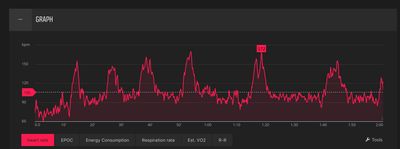 Interval training and climbing are a good combination. — May 5, 2017If you were to look at the graph below you would clearly see that it’s a form of interval training but you’re at a loss to know which sport it is from. With running and cycling you would see 2-3 minutes of hard effort and then two to three minutes of less effort and it would repeat form 15-20 minutes. This graph is from an activity done for two hours. [caption id=“attachment_3480” align=“aligncenter”] What is the first sport that comes to mind? This graph is from indoor climbing yesterday. You see that I started tracking the heart rate at least ten minutes before my first climb. You see that the heart rate during the first climb climbs consistently until I reach the top. As I get lowered back to the ground my body goes back to being relaxed and you see the low heart rate as I belay someone. The second climb is more challenging so you see the peak earlier in the climb and then it remains stable. The third climb was a little harder and you see that I had to rest at least twice. The fourth climb was managed without resting. With the fifth climb we see that I really needed to rest at the point where the troth is. From what I remember of the last climb it was easy except for parts where you really need finger strength. As I do not I cheated. I don’t climb frequently enough. I noticed that Rocspot Echandens has logged their climbs so that they are compatible with myclimbs, an app that I installed on my phone many months ago but forgot about. At the time it was still in early development so was not of much interest. Next time I go I will use the app....
 -
 Watching independent film rather than mainstream cinema — Aug 28, 2016When I saw the Wired headline below I was happily going to say that I haven’t been to see a film at the cinema in years but that isn’t strictly true. As you have seen from my blog I have been an active appreciator of independent films. I was at FIFAD earlier this month and I was at the Montagne En Scène a few months ago. I have been to a few film screenings at the Graduate institute among other places. [caption id=“attachment_3335” align=“aligncenter”] I have been to see quite a few films this year I love watching good films and I love going to the cinema but at the moment there isn’t a single mainstream film that I want to see. Every single film is filled with CGI and fantasy and as I have joked about why would I spend 25 swiss francs on a film ticket to go to a film screen at a specific time when I could watch youtube gameplay videos and discover the story at the same time as the youtuber. Last week I decided to stop my netflix subscription for two reasons. The first reason is that the content is crap. As they have a selection of films that have recently been shown at the cinema there is nothing that makes me think "That’s what I want to spend the next 90 minutes of my life watching. Imagine if Netflix showed more extreme sports, adventure, environmental and other films. Imagine if they showed films that make us dream and aspire to more. Films need to be for other people than sci-fi geeks. They need to be for sports enthusiasts, for people that follow current affairs and for people that live in the real, rather than fictional world. When I was living in the South West of England I went to the cinema ninety times in 9 months and what burned out was not my passion for the cinema but my ability to watch the same story line over and over again. The lack of creativity and originality is destroying people’s desire to go to the cinema. I have no reason to go to Pathé or other cinema complexes around Geneva because they do not show the films that I want to see. They do not address my niche. Montagne en Scène, FIFAD and I think the Coupe Icare film festival fulfil my desire to watch films. They cover topics that I am either interested in passionate about. Les Icares du Cinema 2015 from coupeicare on Vimeo. Doesn’t the trailer for the film festival make you want to go? Don’t you want to watch people pushing themselves to the limit of their courage and endurance? I watch a trailer for an event like this and I definitely want to go. It fills my desire to challenge myself through the sports I do but also to see beautiful scenery and lanscapes. Why would I want to go and see CGI films when I can see extreme athletes challenge themselves and their equipment to the limits. Watch the video below. Coupe Icare 2016 from coupeicare on Vimeo. I watched this video at least twice and you see that whilst hollywood is filling its films with make believe the independent sector is documenting those with a real adventurous spirit. Imagine going to the event for the film festival and staying for the aerobatics. For years now the film industry has been re-hashing the same content with no appreciation of societal changes. As a result they fail to capture our imagination and our desire to spend money. They need to inject new blood and find new creative directions that will make us want to go to the multiplexes rather than independent events. I enjoy the multiplex experience but the content dissuades me....
 -
Ijustine and the Fake Steve Jobs — Aug 18, 2007The fake Steve Jobs linked to this video before writing a short commentary. _ “Phone Bill Girl and one of her fellow Ph.D. candidates are discussing the work of Roland Barthes and narrative theory in the context of Derrida and Chomsky, with a deftly handled digression into the recurring sexism of Norman Mailer’s work” _ I have no idea where the inspiration for the video came from but the little remark is amusing. Fake Steve’s comment is about citizen journalism and by referencing Ijustine’s video he brings a satirical look at the question. In effect we hear so much about problems with accuracy and mis-information that this video is a nice break. it’s satirizing the idea of citizen journalism. _“Somewhere in heaven, Marshall McLuhan is weeping. Either that or laughing his ass off.” _ This comment is particularly relevant to the quote I used two or three days ago. _…makes each of us present and accessible to every other person in the world. To a large degree our co-presence everywhere at once in the electric age is a fact of passive, rather than active, experience. _ Marshall McLuhan wrote that last comment fourty three years ago and today it’s a reality, but not as he envisaged it. The video of Justine having a little fun with a friend is a perfect representation of what the Web has become. Having spent some time researching the Operator 11 movement I have been surprised to find that people are video chatting to each other in a public place. Some of them are without shirts, others have a glass or a bottle next to them and yet more are falling asleep. People are living their lives online. They’re going out to meet friends but they’re also social from the comfort of home. Looking at what several people have done on operatr 11 I found myself thinking that this is beavis and butthead web 2.0. The reason behind this thought is the nature of the programs. Users like Rubberbangirl start a “show” and users connect to the stream and comment both in video and through the text chat. As they do so we get a sense of community and well being. Anyone anywhere in the world can participate at any time of day and McLuhan’s thoughts are getting more concrete with every day that passes. At this moment in time Justine and other participants of Justin.tv are walking with the cameras life casting their lives. At the same time hundreds of people are sitting behind their computer screens at home watching as a number of lives occur in real life. Within a few months I expect that we’ll see these streams straight to mobile phones so that as one person lives and broadcasts their life so someone else is living their life as they watch another. We’re living in the digital/electric age where everyone can talk to everyone else. Whilst Fake Steve is having fun in his way so we see a little snippet of how Justine has her own fun. Neither of them is write or wrong. They’re reflections of trends that are active. The only difference is that whereas Fake Steve and Justine have a high profile so most users are still relatively anonymous....
-
 IFSC Climbing World Cup Villars 2016 — Jul 14, 2016I will be present at the IFSC Climbing World Cup Villars tomorrow. For me climbing has always been an active rather than a passive sport. It has been a sport where the landscape is nice and the crowds are small. Tomorrow will be the first time that I go and watch as other people climb. It’s not that I don’t watch people climb. Between climbing gyms, bouldering gyms, via ferrata and Rock climbing it is a sport that I have explored in depth. What I haven’t explored in depth is climbing with an audience, climbing as an event, climbing as a competition....
 -
Hit the ground running (waking up in Web 2.0) — Oct 5, 2007There was a time when you would wake up and it’s only half an hour later that the world around you would be clearly visible. In today’s web 2.0 world you wake up and twenty other people are wishing each other good morning. Many are celebrating that it’ Friday and others have pathetic status messages about 40 days of celibacy, about being overworked and all those other messages. Of course everyone has the right to their feelings and to their own experiences but as certain individuals spend more and more time online they notice these status messages and trends and get really tired. Look at the level of media saturation about the McCann story. I muted a podcast for mentioning the story. Careless parents lost their daughter, end of story. It’s not worth as much airtime as it’s been given. Then there’s the “back from the dead media coverage” that gets just as tiring. If a royal driving a car doesn’t wear her seat belt and dies as a result of a crash then she should not be idolised in the way people have done. It should have been an opportunity to promote the use of seatbelts to avoid repeat deaths in such a manner. Then there’s the enthusiast’s oversaturation of the media. In particular I’m thinking of the Iphone. Of course it’s a beautiful new interface, of course it’s ushered in the fully screen tactile device but for anyone outside the US the media saturation has become too much. If you’re an active consumer of new media news then there’s a good chance you would have read several thousand articles boasting about how great it was. As a result a lot of people got media burn out from the story. It’s only as a result of getting an ipod touch that I can tolerate those stories once more. The 30 minute news round up in the evening preceeded by the daily newspaper has been followed by an era of instant access to news stories once they have been written. What this means is that for ardent consumers of new media it is easy to reach a burn out/saturation point. we, as new media consumers must be careful not to read about single topics so much that we are unable to hear about specific topics anymore....
-
The Gopro Hero 5 karma advert is aspirational — Mar 8, 2017I love sports and I love the outdoors. I really like snowboarding when the conditions are good and when there are few people. I love to climb, to hike and to do via ferrata. Last year during a film festival I was invited to try Paragliding for free and the flight lasted 45 minutes. In light of this you can see why the Gopro Hero 5+ karma above is so fun for me to watch. It’s not that I want a gopro camera. I’ve had at least two of their devices and except for filming two or three dives and two or three via ferrata the cameras have stayed in drawers or boxes. GoPro show adventures and experiencers that I aspire to. For this reason we want to watch these edits. We enjoy these edits. Modern film making does away with cranes, jibs and tripods replacing them with drones and devices like the Karma Grip. If you look at the adverts you see that video production has shifted from being a profession to a pass time. At the time of writing the Grip costs about 350 CHF and the drone has not been priced. GoPro is competing directly with DJI and their product line. With systems like GoPro and DJI are providing the term prosumer evolves. Thrill seekers and adventurers get to play with technology that they can afford to buy and use during their trips or weekend adventures. With this technology fixed cameras are a thing of the past. The camera moves with the action. In practice the camera operator doesn’t need to be an athlete to get in position to get the shot. Assistants are no longer required to carry heavy gear. You carry everything in a bag on your back and it’s ready to use within a short amount of time....
-
Google Arts & Culture — Jun 13, 2017Google Arts & Culture App...
-
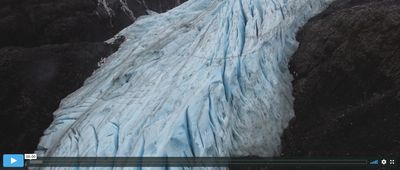 Glacier Exit - A short documentary showing a glacier's retreat — Sep 3, 2018https://vimeo.com/198306286...
 -
 Getting Cold On A Scooter — Jan 23, 2020I don’t often spend two hours on a scooter driving from Geneva to Nyon and back, especially not when it’s about 1°c. In such conditions, I’d drive to the closest train station and be done with it. I waited until ten or eleven in the morning to drive. Any earlier and it would have been really cold....
 -
 Getting an audience to film screenings — Apr 17, 2016Adam Aron, CEO of AMC recently made a generation of cinema non-goers angry with him when he said that he would allow texting to take place during projects. My generation, previous generations and the generations of the future complained on social media. Getting an audience to film screenings requires an understanding of what they prefer to do instead. In the “Golden Age” of my cinema going life I would go to the cinema up to three times a week. I went this frequently because I lived close to the cinema, because we had two GBP Tuesdays and because it was something to do when other people were not available. Over a period of months I went to see more than 90 films. A consequence of this habit was over-familiarity with the codes and conventions of mainstream cinema. Since that “golden age” I have seldom been back to the cinema. When you know everything that will happen in a film within the first 15 minutes you get bored. I know AMC through its television Series of which the Walking Dead is one. This is a series that I did binge watch when it was fresh and again when it was made available via netflix. Television series have better writers and better storylines than films. They also don’t overdo it with super hero rubbish and special effects. As these productions have storylines we care enough to watch one episode after another. Films fail to engage us in this manner. When I was in London I went to a few screenings. The screenings I usually went to in London were at the Front Line Club. You would watch a documentary about current affairs and there would be a panel to discussion to discuss what you had just seen. In Geneva I found that the graduate Institute has started to do the same thing. I regularly go to such events because I like to complement what I already know by watching interesting productions and then listening to questions and answers sessions and learning something new. Montagne en Scène is an example of what AMC should think of doing. They need to find and fund the production of films for niche markets. Montagne en Scène is an event where four mountain related films are projected to a specialist audience of mountain and sports enthusiasts. This niche usually relies on youtube and vimeo to find and share footage of their passions. By organising a special day these enthusiasts are encouraged to come to film screenings. AMC is competing against mobile phones, televisions, Virtual reality goggles, tablets and Video on Demand via the World Wide Web. what they need to do is lower the price and make it more convenient for people in contemporary culture. Having panel discussions at the end of a screening is one way of attracting people. Lowering the ticket price would be another way. If they stopped making CGI films with no story then I would start going to the cinema again. This complain extends to the crappy films currently available, at least in Switzerland on Netflix. If Netflix did not have television series I would have stopped paying for their service months ago. If you treat your customers/viewers like mature adults then there is a good chance that you will attract them to film screenings on a more regular basis....
 -
Geneva Lake Parade - McDonald's FIFA theme. — Jul 12, 2010[flickr-gallery mode=“photoset” photoset=“72157624344703307”] Every year I go to the lake parade and this year I tried something different. I decided to take photographs rather than video. By the same opportunity I am testing Flickr gallery, a plugin that makes including your flickr images into wordpress a two step process....
-
Foursquare and evolving electronic social meetings — Jan 9, 2010We’ve all got smartphones. Some of us are using Nokia, others are using blackberries and yet more are using Android and Iphones. As a result when we interact with people we are not interacting with them from a desk somewhere in a building. We’re interacting with them from the middle of the street or on public transport. As the shift from computers to mobile devices gains momentum we will be meeting more and more people this way. For the past decade it was reserved to geeks through many different sites. At first it was all about protecting your identity and being anonymous. That changed. From Geocities, through myspace and to facebook we have grown more accustomed to sharing more personal information about who we are and where we hang out. As a result of this increasing familiarity, and as more people grow to understand the advantages and pitfalls of online interaction so a new type of activity is taking form. From twitter where avatars were used to facebook where profile pictures are used our digital identity has evolved, become more open, and more open. On twitter we used to use avatars but more and more people use pictures of themselves. As a result of this the level of trust has improved. That’s where brightkyte and other websites are starting to become the norm. Recently I have been using Foursquare. I can follow as more and more people locally, in Geneva check in to different places. If I’m at Geneva airport for example I check in and I can see who else has checked in at this location. It’s an international location so there is a good chance of not meeting people there. In other locations though, as more people from our physical group of friends, and by this I mean non geeks, use these services so they gain relevance for “normal people”. Mix this in with the Iphone and the ease of use of the mobile apps we have some interesting new tools and services by which to meet new people. If I go to Les Brasseurs in Lausanne, Geneva or Nyon so I see who else has been there and could decide to meet them and see whether we enjoy their company when meeting face to face. Foursquare has a feature that I find interesting, we can share our phone number with those whom we trust to be friends and so we can exchange a few messages before meeting them in person, building trust and assessing the character of the person before meeting. Over a period of a few weeks as trust builds up so we can discuss whether to meet in person. For those of you reading this on my blog the idea is old. You’ve already been to 20 tuttles, tweetups, seesmeetups and other events and you’re a veteran of this type of meetup. For others, who are more used to glocals and facebook though the idea is relatively new. You might feel uncomfortable about this way of doing things. To you I say one thing. As more of your friends use these services, and as your network of trusted friends grows on these services grow so your motivation will grow to meet others. Take the frontline club in London as a case example. If I went there once and checked in only that time, never to come back then you would know not be so inclined to see about meeting me. If you see someone else checks in often to this place then your motivation to meet them may increase. As a result of several people checking in to that same location a number of times so the cluster of people may increase and become more important. As an example think of the independent cinemas that may be close to where you live, the City in Pully in Lausanne. As four or five people check in more often and through the common interest finally you may decide to meet. The key advantage of services like foursquare is that these sites are local. That is to say that you are kept aware of what those around you are doing. You are not inundated by the irrelevance of what the international community are doing but rather the local. The benefit of such services is they are providing you with local more relevant people to meet, without the effect of isolation that other types of services may make you feel. The drawback of services like twitter is that you are given a lot of irrelevant information. You don’t need to know who chats with who, what they are doing. Instead you simply see where they’ve been and how often. That’s where the relevance of the badges and mayorships come in. For different type of activities so you get a unique type of badge. If you check into a gym for example, you acquire the gym rat badge. It is unlocked for going to a venue with the tag gym. If you go ten times in a month, so people will know that you enjoy going to the gym. As other badges are created, for going to the cinema or the pub so you can see which people are most active in those forms of activities, hence learning of the relevance of their interest in similar activities. This is not a dating site, and it’s not a place for geeks. Unlike yelp and trustedplaces you do not need to give your opinion of the venue, it’s a three second “this is where I am and this is how many times I’ve been there” type statement. As the number of users increases so the opportunities to meet people with similar habits increases. Of course you can add tips and what to do at these locations, which others can see. As different types of personalities go to different places so the recommendations will increase. As you see what people recommend you do, at different times of the year so the wealth of ideas will increase. The foursquare app on the mobile phone allows you to arrive in a place you have not visited, click on what’s near me, see what venues are already in the database, see what people recommend you do and for you to go to those places and add yourself to those places and acknowledging that you have done what others have suggested. It’s an interesting idea that will come of age within the next few months as more and more users pick up these new habits on sharing local information and experiences. This is in effect part of the social medial lifestyle that some of us have been discussing for a number of years by now....
-
Flight to the Monzino Refuge and hike. — Sep 12, 2010A short helicopter flight to a mountain refuge in Aosta, on the Italian side of the Mt Blanc. Good fun, walk to the glacier and back. I also tested my Iphone 4 phone....
-
First World War Via Ferrata and the tunnels dug by soldiers. — Oct 27, 2014For two years I have been doing research to find as much information as possible on the topic of via ferrata. Visiting the via ferratas which date back to the 1914-18 war would be interesting. In this short video recording we see some of the tunnels dug in to the mountain as well as where soldiers would have slept. Via ferrata is not just a sport to see nice landscapes. Historic exploration is also possible....
-
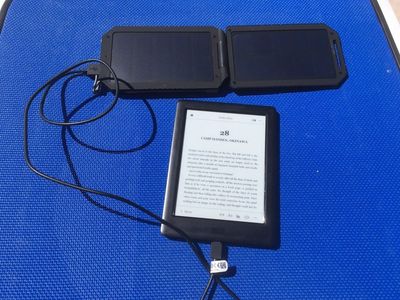 Finding time for Long-Form Writing and Other Pursuits. — Jan 6, 2018Finding time for Long Form Writing...
 -
Finding time for Long-Form Writing and Other Pursuits. — Jan 6, 2018Chloe Gilbert - 7 Jan, 2018...
-
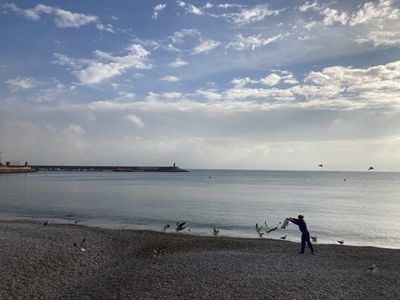 Feeding the Seagulls — Jan 3, 2023Feeding the Seagulls by the Mediterranean Sea...
 -
Feeding the Seagulls — Jan 3, 2023Feeding the Seagulls by the Mediterranean Sea...
-
Facebook, a personal rather than social network — Aug 28, 2007Ten years ago if you met someone and they gave you their visit card you’d put it away somewhere and eventually you might have come back to it but the information would need updating. Over the years social networking tools on the web have evolved from simple mail clients to web forums and finally to Myspace and Facebook. With Facebook we find what I think of as an enhanced phonebook. When you meet someone at a party today there’s a good chance that this individual has a facebook presence. As a result when you go home they may add you as a friend and in so doing you are brought into their lives. You can see where they’ve worked, for how long and what they were doing. you can see whom they associate with and how they tend to meet people. Facebook has become a daily feature of contemporary life. Facebook does not limit your interactions to the people you’ve met during your time at parties, events and more. It also allows you to join groups, some are based on occupation, others on passions and yet some more on soemthing that may be relevant to only ten to twenty people. As these groups multiply so you decide to associate through these people through forums and the likes. For a time I was part of the Lecture napping appreciation society whilst others were part of the “curse of the N18” amongst other groups. Today a friend joined a group which I would never join for the simple and good reason (simple et bonne raison) that reflects the views for which I avoid the place. I’m living between London, a city of up to twelve million (depending on the demographics you chose) and a village of no more than 2000. I love the contrast between the two and as a result feel no need to visit the place that the group boasts about. The point is that as a medium becomes more commonplace and as more people feel comfortable with the technology so their personalities are reflected in a variety of ways which give a great wealth and diversity of character to the medium they are using. It is precisely because of those differences in interests that we gain as a social group. We, the international internet users, have a great wealth of opinions and views available within a few keystrokes and we should constantly aim to promote those interests that most effectively reflect our character, things that friends may take years to notice but that can be made obvious online. Facebook, in my opinion, is a personal, rather than social network where you promote the interaction between friends you’ve had for years and friends you’ve only just met. There are other networks that are great for making new online friends but Facebook should be kept for those people whom you have met face to face....
-
 Environmentalism and Traffic Lights — Jun 9, 2017When you’re driving from Nyon to the airport without traffic the journey takes about twenty minutes. If you decide to drive into the city of Geneva that journey time is doubled thanks in main part to traffic lights. It once took me over one hour when scuba diving in Hermance to drive from Place des Nations to the other side of the Mont Blanc Bridge. That’s over one hour for less than two kilometres. That idea cooled down my motivation to dive in Hermance. At the time I was driving a petrol rather than a diesel car. Yesterday I was driving from the foot of the Jura to Cornavin and the drive from the foot of the Jura to Geneva was fast. It’s when you drive from the motorway to the centre that you lose time. 23 minutes to drive 3.8km. I don’t have a start/stop car so when I’m spending 23 minutes at traffic lights the engine is running and polluting the air for nothing. There is no gain from blocking traffic lights. It was even worse when I was on Rue Montbrillant. The GPS indicated 15 minutes to travel about 750 metres. Can you imagine the carbon footprint of traffic lights? That’s 15 minutes of nitrous oxide that had no need to be sent into the air. Imagine the health impact of keeping vehicles trapped at traffic lights. Within 30 seconds I went right and parked at Place des Nations and walked the last 750 metres. I wasn’t going to waste 15 minutes because “environmentalists” decided that the best way to discourage people from driving was for them to sit in traffic and pollute the air. When I was working on Rue Montbrillant I was taking the train to and from Geneva every day and I used an abonnement de route to reduce cost. It works well until you’re reliant on bus schedules. Some routes have one bus an hour. This means that a 30-40 minute drive becomes a one and a half hour public transport route. If you finish your day at 1800 you’d arrive home by around 1930-2000. This means that although you’re taking the environmentally friendly option you’re spending two and a half hours a day to commute. During warmer months and drier days, the scooter was a good alternative. Within minutes you’re on the train to Geneva. That’s the paradox of environmentalism. You want people to be environmentally conscious and you want them to minimise car use but rather than provide them with time efficient solutions to encourage them to take public transport you trap them at traffic lights. Waze, Tomtom and other GPS manufacturers should take the heat maps we generate with our mobile devices every time we drive and design public transport infrastructures to replace the need for cars. This data is already available. Below are two heat maps of cycling around London and Switzerland. If you used the same type of data from cars you could design a system that replaces the need for cars. When you live in a city you see two kilometres as a big distance to drive but when you’re in the countryside 2km is nothing. London on a bike feels tiny after walking and taking public transport. In Geneva it’s not that you have much traffic. It’s that the traffic lights give the illusion of traffic. Most of the side streets are empty of traffic most of the time. [caption id=“attachment_3570” align=“aligncenter”] Distances in London are shrunk by bike. I think it’s the best form of transport, when the weather is favourable. This week I wanted to cycle in to Geneva for my lunch time meetings but chose not to because the bike ride is energetic enough without the weight of a 15inch laptop on your back. I did buy a bluetooth keyboard for the mobile phone as a mac book air replacement. That should make cycling more pleasant. I also have spare tires in case I get a puncture. [caption id=“attachment_3571” align=“aligncenter”] Cycling in Switzerland and France Geneva’s traffic light policy did work on me. Several years ago I became so tired of waiting at traffic lights when driving into and out of Geneva that I stopped going. Instead of meeting people in Geneva I drove to various lakes to scuba dive and to the mountains to climb, hike, cycle and do other more environmentally friendly activities. This is especially true when we drive other participants. When I climb Fort L’écluse I meet people at CERN and when I meet people to go to Swiss VF I meet them at the Nyon train station, Fourmi metro stations or even the Lavaux motorway stop....
 -
Eclau in Lausanne — Dec 17, 2008The Co working space in Lausanne (ECLAU/FB) is an interesting idea for freelancers and those who have some work to do but do not want to work from home or a cafe. There are desks and couches, a meeting space and more from which individual work and team work can be done. I was there for an Apero last night and got to meet a few of the people. At the moment there are four people there using the space full time and another who go there occasionally. For those like me who go there very occasionaly we can drop by and work there if we so desire. It’s easy to get to from the motorway and apparently not too hard from the center of Lausanne. One of the members is a cat, apparently he loves to come in through one window, sleep on the couches and distract certain people before walking out through a window at the other side of the space. What’s interesting is that the participants of L’Eclau think of him as a sort of alarm clock. He’s there to remind them that they should take a little break from the work they were doing. I know quite a few people in Lausanne now so it might be an interesting place to meet some people when there are some collaborative efforts to be done....
-
Driving and Situational Awareness — Mar 7, 2009How comfortable are you behind the wheel? How many hours a week do you think you spend driving? The reason I ask these questions is that I often spend fourty minutes a day on the road and as a result I tend to watch everything that’s happening around me. That’s because car driving is about situational awareness. One of the things you’re taught about when driving is forward planning and anticipation. You look at the sides of the road and develop situation awareness. Where is that child looking. Is there a chance that ball is going to bounce in front of me. What’s behind that bend? You’re constantly analyising what’s around you. Recently as I drive on the motorway to and from work I watch how the cars are lined up. I know how many cars are behind me, how fast they’re going and more. I also know what’s going on in front of me. As a result I change from left to right lanes in a dynamic manner. I’m constantly looking at whether I’m going to be blocked or whether someone else is. In the morning I avoid the left lane. You see people driving just two meters from the car in front of them at over a hundred kilomters an hour. Occasionaly they come a cropper and i can’t help but laugh. It’s well deserved on the part of both parties. I did once have a jeep chasing me down the motorway and I could pull in to let it pass. It came right up to me and I slowed down. I wanted to give myself enough stopping distance. It annoyed the driver behind me but the important thing is that I was safe. If an emergency appeared I would be able to stop safely, and I’d bought the person behind of me a little more reaction. You see what a nice guy I am? The reason I speak about this is that in everything you do situational awareness is one of the best things to have. What are the things that can go wrong, what can I do to avoid them. Are there any tell tale signs? It’s like living in London. You know that the tube may be delayed by ten to fifteen minutes so you make sure to compensate for that. In some cases it means catching the train before the one you need to catch, just so that you arrive on time. If you’re like me you often arrive early. That’s not a problem. When you have a live video transmission t’s better to be half an hour early than 3 minutes late....
-
Day In Auschwitz — Sep 27, 2015“If you were young and healthy and if they needed labour then you were selected as slave labour. You would have suffered a slow death rather than a fast one”. This soundbite is 13 minutes in. In this documentary a concentration camp survivor takes two girls who are the age she was when she arrived through the camp and tells them about her experiences. We owe it to future generations to keep re-sharing these accounts and documentaries to prevent such actions from ever happening again. I have just finished watching the documentary and I feel almost shell shocked. I have been to the camp and I have read about the topic. I have also watched a number of topics on this topic. What makes this the most poignant documentary is that this woman, this grandmother of eight is making sure that future generations are aware of what Auschwitz life was like. She tells us about survival....
-
David Pogue's Style — Aug 3, 2007Too many video podcasts are badly produced and that is why David Pogue’s most recent episode was enjoyable to watch. He has a distinctive style. Whilst most video podcasters are content simply using a fixed camera at a desk he takes the time to create entertaining demonstrations of how the tech he is discussing is interesting....
-
D-Day Film archives on Facebook — Jun 7, 2017Yesterday D-Day Film Archives were shared on Facebook. These film archives were of landing crafts landing troops on the beaches, of battleships firing rocket salvos at the coast, of gliders being pulled by planes, of paratroopers getting and more. Over the years films have been preserved by transferring the footage from one film stock to another and then transferred from film to tapes. The problem with film and tape is that they are stored in a physical location that only archivists have access to. This means that if we’re curious about seeing the footage, like the footage included in this post we would have to go to the film archive and ask for permission to see this footage. Within a few hours, days or weeks we might get an answer. We would have transport costs, access costs and more. The advantage of digital video archives accessible online is that everything is accessible within a few seconds with the right keywords. This means that a child hearing about the Second World War for the first time can do a quick search and see this footage. History, rather than being words on a page, is brought to life. It stops being an abstract subject for the mind. In this footage, we see our grandparents and our nephews and nieces see their great-grandparents. An effort, by the international community, should be made to preserve, digitise and then make available as much of this film material as possible. The technology exists today so that, at the very least, we can have digital backups of all of this material and in the best case scenario for this material to be available for future generations to watch and study. I have already spent 15 months as a video archivist and media asset manager and I would like to continue this line of work. I find it to be a fascinating and interesting way to learn about history. It inspires to find books that contextualise the material that I am seeing on screen. This material makes us more informed citizens of the society in which we live....
-
Cycling in Winter — Jan 21, 2016After cycling over 1100 kilometres in 2015, I aim to cycle 1200 kilometres in 2016. This goal is an easy one to achieve. It’s the 21st of January and I already have 100 kilometres logged. The weather over the last three weeks has been cold and wet. We have had rain almost every day and it recently turned to snow. As there is a lack of good weather there is no choice but to go out in the bad weather. Cycling in these conditions is messy. Your clothes get soaked from the rain and as I cycle in the countryside I come home covered in mud. When I get home I change into dry clothes and I recover quickly. Rain is easy to deal with once you’re ready to feel wet and dress for the cold. What is more challenging is cycling on slick tires on snow. Some of the roads I cycle on are salted and cleared but as I also use agricultural roads they are covered in snow. Safety takes focus and concentration. The rear wheel skids if you apply too much force to the pedal and the bike can skew if you are not careful. Cycling in such conditions is not ideal. It demands resistance to the cold, stamina to continue making the effort and determination to set an achievable goal. I will continue towards 200 kilometres by the end of February. Cycling consistently now will make summer all the more pleasant and rewarding....
-
Current Affairs in Podcast Form — Oct 19, 2007There is an increasing number of professional outfits now offering their content in podcast form, from Euronews to the BBC, from Reuters to The Guardian and others. As a result there are a number of great resources for news content....
-
 Colza, Sheep, Metamorphosis and Mindfulness — Apr 27, 2023Yesterday I took a picture of brilliantly yellow Colza with the Jura looking dark due to storm clouds overhead. If you walk at this time of year you will see a lot of cola. At the moment it is brilliantly yellow and at it’s prime. Later on, the colza will be passed its prime, and at this moment it will lose all of its petals, and become green, before drying up and becoming brown. Colza is not beautiful for that much of its growth cycle....
 -
A Climbing Two year Old — Aug 24, 2016A Climbing two year old is ordinary. They try to climb on to chairs, they climb to stand up. They climb up the stairs and the swings. What is less ordinary is for a two year old to rock climb like a grown up. As I watch the video below what inspires me the most is to see such a young human climb like a grown up. She learned by watching others and by being given the opportunity to practice at home and in climbing gyms. This video makes me happy because it is nice to see such a young person learn to climb. If I had been given the support and opportunity, and if the sport had been more evolved, then I too would have started climbing at a young age. I used to climb trees, climb on to garage roofs and occasionally climb rocks from which I could eventually get down. I had to wait until I was more than 20 years old before I could climb my first “dalle”. This child was given access to that world from a very young age. Her first memory will surely be of climbing. To make this story news worthy they had to add conflict of course. They had to speak about how some people who watch this think that it is dangerous to allow a child to climb. As the mother said “When she climbs in the gym we are watching her and she has 19 inch thick matts to fall on. The playground and the street are more dangerous”. They go on to say that she face planted on a street. Every single child does that. That’s the beauty of being a child. You’re bound to fall, cry, be picked up by your parents, and then a few minutes later start playing again. Climbing when you’re with the right people is no different. When and if I have children I will teach them about snowboarding and rock climbing and snorkelling. I want to pass on my passions. I want them to be the next generation of sports enthusiasts....
-
CCTV, Two Exhibits, one town crier and of course John Bull — Oct 10, 2007England is a CCTV nation with more cameras per capita than any other nation. As a result there is great interest from people like Christian of documentally.com and Our Man Inside and John Perivolaris. Both of them are working on CCTV related pieces....
-
Canyoning and a new camera — Jul 21, 2010On Saturday I went canyoning, or as you Americans would call it Canyoneering and the adventure was fun. You suit up in 30°C heat and walk for fifteen minutes through a mountain path before going down to the river and jumping from pool to pool. The natural cooling effect of the water is welcome. As you go down the river so you get opportunities to jump from a variety of heights, from 7 meters to 11 meters. Land the wrong way and your palms may hurt. That’s not actually the point of this post. The point of this post is to speak about how much fun it is to spend your time going down a river in such a fun and relaxing manner. The drawback is that most cameras are not waterproof. The Nexus one mobile phone for example would be afraid. You may regret bringing it along. That’s why I have a new photo camera. It’s the Olympus Stylus Tough 8010. It’s a small drop proof waterproof camera rated to 10 meters below the surface. That means I can jump from 11 meters with it in my clothing and it should survive for me to take pictures of the next people jumping down. In a little over a week I’ll be playing with this camera during a rafting trip so I’ll upload the pictures at that point, if i don’t end up in the lake before then. I’ll leave you with a test gallery of pictures taken with the new camera. [flickr-gallery mode=“photoset” photoset=“72157624545521618”]...
-
Brainless television and the Tabloid Media — Apr 27, 2017I saw the headline to this article and feel that we should discuss brainless television and the tabloid media. The article was written by a fifty year old who blames the number of distractions for voter apathy. The answer, I fear, is they’re too busy being mesmerised by an ever-increasing plethora of high-tech distractions directed specifically at them. The changing nature of the youth-obsessed entertainment industry is in danger of inadvertently creating a race apart, an entire generation that instinctively prefers the cyber world to the real world. Rather than blame the youth of today and technology for the situation that Brexit England is currently in I would look at where people got their anti-European rhetoric from. They got it from decades of anti-European articles in the tabloids. They got it from decades of Anti-European Tory rhetoric and they got it from radio and the sides of buses. Even the Guardian and the BBC are guilty of consistent anti-European rhetoric. Just look at the amount of airtime given to MLP rather than Macron. In a recent feature Katya Adler gave minutes to the far right and seconds to pro-europeans. The same is happening during the French election. In times gone by, the 18-24s tended to feel alienated by mainstream entertainment that wasn’t for them. The counter culture flourished because there wasn’t enough for young people to do. The atmosphere was ripe for passionate anti-establishment politics. Now, with global corporations focussing all their efforts on capturing the lucrative youth demographic, there’s way too much for young people to do. The poor things barely have time to think. I was both a teenager and a twenty something year old in the Internet age and I can say with certainty that the counter culture has not suffered as a consequence of new technology. I would point to youtubers, snapchatters and others as examples of this. I would point at Anonymous and other groups as well. I would point to the various critical mass events and more. Footage I took of a Silent Disco flash mob was used in an ARTE documentary about the walk man. Counter culture is alive and well. It’s just a matter of using the right medium. It’s easy to blame the youth for apathy and it’s easy to say “A more likely scenario is that the vast majority of these allegedly pro-EU teens would not have made it to the polling booth” but maybe if the older generations had not been indoctrinated by years of Anti-European rhetoric they would not have voted the way they voted. The reason that young voters are pro-European is simple. They haven’t spent decades reading anti-European propaganda so they understand the benefits of Europe. Online culture contributes to this....
-
 Blobs in Geneva — Jan 22, 2020How often do you see blobs guarding the entrance of an old town?...
 -
Black Gold - Documentary about ethiopia and coffee — Oct 28, 2007Whilst in Paris I was given a coffee due to a misunderstanding between the waitress, a friend and I and as a result this was the first coffee I ever finished. It’s almost a week later and I’ve just been to see the documentary Black Gold which discusses the plight of Ethiopian coffee farmers. The documentary is shot in an observational style with the use of intertitles rather than voice over. As a result those that are telling the story are those that are most affected. We have one main character who works on bypassing several links in the chain from farmer to coffee shop whilst having the conventional chain being illustrated in parallel. The documentary touches on a number of interesting points but I will leave that to you to discover as you watch the documentary. The documentary producer was present at this screening and took some time to explain the reason for which he chose this topic, how certain coffee companies tried to discredit the film as a result of which I think some time should be taken to get more information about the topic out there. Fair trade is a hot topic so why not have a blogactionday which is focused on poverty alleviation and which informs us about what should be changed and what is already been done....
-
 Bird Watching — Feb 22, 2023Sometimes when you go for a walk you spend time watching birds. In the video below you see a flock of gulls flocking around a tractor as it prepares the field for a crop. You see hundred of gulls wait for the tractor to open up the ground and then they rush in to find some snacks. I think they’re happy with worms, insects and small rodents. Anyone that thinks that vegetarianism doesn’t result in hundreds of animal deaths is wrong. These birds love to explore behind tractors....
 -
Back to Solitude — Jan 23, 2013Playing with your sense of time and logic....
-
After two months as a camera operator in the UN General Assembly hall in Geneva... — Sep 11, 2007A tall slender woman was sitting on a chair by the podium where her husband was delivering a presentation to a hall filled with people. Each group of four people had a white board in front and on this board was the name of the deleguation. Canada, USA, France, Lithuania and more. In the balconies NGO names could be spotted. The location is the general assembly hall in Geneva and the occasion is Abdullah Il bin an Hussein the second of Jordan speaking to all these deleguations. I was the cut away camera and I was told to focus on cut away shots. This took place on my second year of working for the International Labour Conference, general meeting of the International Labour Organisation. My job during this time was to cover the plenary sessions. Whenever a deleguation requested for their presentation to covered I had to be there and record it, either on VHS or Beta, depending on what the client wanted. When the ILC began you would always find every seat was filled but as breakout sessions took place so the general assembly hall would empty. You would find only three or four deleguations at a time and quite often you would spot them leaning back in their chair with a beige object over one of their ears. This was the simultaneous translation. Quite often the deleguate would have both eyes closed. Was he sleeping or focusing on what was being said. I’m not sure. You can see diplomacy in action in such halls. Occasionally there would be an important person speaking and many other deleguations would come and listen. Once the speaker finished talking everyone would get out of their seat and go and congratulate them on their great oratory and the things they had brought up. Some of these speakers did deserve the praise but most of the time they speak in droning monotonous voices, hence the closed eyes I described earlier. Occasionaly I would get something fun to do like press conferences. There are two press conference rooms where i might have gone. Room 1 and 4. Room 1 is an informal room with tables and the personality would speak at the head. Each of these rooms had a breakout box so that placing a microphone was not necessary. Room 4 is one you have seen many times in news items from Geneva. That’s the room with the blue UN logo repeated over and over again. Above is a mural. The drawback to working at the UN is the long corridors you walk down to get from place to place. When you’ve got a camera, two batteries, a tripod and two or three tapes you’re lugging quite a bit of wheight. Add the summer heat and you see why it’s not to everyone’s liking. Personally i miss it. Once the press conferences were over I’d head back to the general assembly hall and sit through ten more plenary speeches. Occasionaly i would take the camera and the tripod and walk around the room getting cut away shots. That’s quite fun. You look at people and you see what they’re doing. You isolate people. You see a person writing something down, you get a shot of that, someone else yawning you get that. If someone is focusing on the speaker you get that. In certain cases you get shots of the deleguate and the board saying which country they represent. Other times you’d get a behind the shoulder shot looking up at the speaker. There are some press conferences that are emotional than others. I remember taking one of the nicer cameras and recording a press conference about slavery. During that event some experts talked about the situation in certain countries before getting to the special guest. One of these guests started to talk and described her ordeal, how she had left her country of origin only to end up as a slave in a western country and how she was never allowed to leave. Hearing someone speak about this and not having a television screen or monitor to separate you from their reality has a powerful effect. Such occasions take certain things from being abstract to reality. When I went to Tanzania I was one year away from completing the IB and I saw such a different way of life that I wanted to stay there. I was impressed by the improvisation and happiness of those children. I also liked having to walk for fourty minutes through banana plantations and fields to get from one place to another and experience their culture, at least fleetingly. If there’s anyone reading this that needs to cover the humanitarian work that they are doing to bring awareness to their work then let me know and I’d love to be part of those expeditions....
-
Access to contemporary technology helped promote my habits as an early adopter. — Mar 13, 2015Parents in the silly con valley are idiots. They are in a trillion dollar industry and make billions a year because people want to use the technology they are developing. Think about how different my childhood would have been if we had learned camera work and video editing in art classes rather than painting, pottery and other less interesting art forms. Imagine if as a child I had not watched Cousteau Documentaries. Two of my strongest passions would never have emerged… scuba diving and documentary making. The luddites who amass personal wealth worth billions should understand that new technologies promote creativity and innovation rather than the opposite. Look at games and how they have evolved. Look at the emergence of multiplayer gaming right up to the leading edge games like Ingress among others. Without creativity and free time with new technologies revenue would be less forthcoming. My passions for video and editing were held up for many years because I had no access to an edit suite. Imagine how the children of Sillicon Valley execs are having their creativity stunted because of the very people who have most to gain from their children being early rather than late adopters. “Those who endorse this approach say computers inhibit creative thinking, movement, human interaction and attention spans.” These people demonstrate just how limited their understanding of modern technology is. News organisations are teaching their staff how to shoot and edit news stories using mobile phones, others are using tablets to write books and more. The idea that information technology prevents people from moving around in today’s world is redundant. How many of you still have a desktop at home that you use regularly. I personally use my mobile phone and a laptop most of the time. The laptop is with me everywhere I go. As a child and as a professional the thing that limited my movement is classroom and office time. In the classroom you learn at the speed the teacher chooses. There is no fast forwarding, skimming or rewinding. Everyone learns the same information at the same speed… in theory. In practice we learn at different speeds and information technology allows us to build knowledge actively. As children we had books and we learned by reading different chapters at different moments. Imagine studying the Roman civilisation as a child and wanting to see pictures and video from the time. Multimedia devices and computers would bring more to life quicker. I strongly believe that children should be given the freedom to use the technology or medium they want to use. It is not up to adults to decide which tools are relevant to their children. As an early adopter contemporary values and norms have held me back and stop others from keeping up....
-
About the Ipad, which I will refer to as the Itablet in this post. — Jan 28, 2010Designers must understand that user interface as well as ease of use are the two most important features of any electronics device. The more intuitive the device the more likely people are to keep using it. As a first generation Ipod touch user and an iphone 3gs owner I see the value of simple, intuitive confident design. Looking at the itablet (ipad) what I see in this design are three key qualities, ergonimcs, ease of use and versatility. All of these combined make this device one of the most interesting on the market at the moment. The smooth, slick design reminds us of the macbook air but without the keyboard. As it is a laptop we will expect less from it but get more out. The macbook air is running the same OS as the Macbook Pro therefore we expect it to do the same things but when it cannot then we say it underperfoms. The tablet doesn’t have that problem. It’s sold as a slate that has a touch screen that can serve as a multimedia device. Ease of use is another key feature. When you’re using a netbook, an N97 or many other devices you need some understanding of how things work. You need to understand how to configure an exchange server, you need to type the right character to complete the word and if you want to transfer files you need specific software. Of course the tablet has the same thing, you need itunes to do this. That’s an advantage and a dissadvantage. The advantage is that whenever you connect to any laptop (With the right library key) you can update podcasts and other content intuitively. The second advantage is that the app store is so much easier to use on the mac than other platforms. We are used to buying apps and music on that device. Who hasn’t downloaded 10-15 apps for their iphone or ipod touch already? Imagine the facebook app on the tablet, or the flickr app. In fact think about the day after a party. Hundreds of pictures were taken and you want to show them to friends, and have a good laugh. With the computer you can do this but you’re stuck at the desk, or you’re sitting down to be more comfortable. With the Ipad you hold it comfortably and a few people can stand around to see these images. Of course it’s less intimate than showing them on an iphone ;-). It’s also a way of demonstrating your picture portfolio or your multimedia showreel. Versatility is the last point of interest for this device. If you want to use it for picture viewing then it could double as a photo frame, if you want to use it as a calendar and e-mail client then you can. If you want to play games then the larger screen means that all the games you already have for the iphone and ipod touch can be used. Finally you can dock a keyboard to the screen and it becomes a 750 gram laptop. The advantage of this device’s keyboard, bought seperately is that you now have a laptop. You’re free to tweet, blog, sort through pictures and edit documents if iworks works well on the device. Now the question you’re wondering, would I buy one? Not until July 2010 after the summer keynote. I want to see how they implement these new features into their line of futre laptops. Will they give us a dual screened laptop where the keyboard and mouse are replaced by a second touch screen or will we get the conventional keyboard and monitor where the screen is now touch based? That’s the point at which we can decide whether the tablet or a new laptop make more sense....
-
A walk through the Vaud countryside. — Jul 25, 2010Every sunday I try not to use the car at all. As a result I went for a walk through the local countryside and experimented with the new camera. I was looking at the streams but they were quite low, not such a great opportunity to test the underwater part. [flickr-gallery mode=“photoset” photoset=“72157624577824618”]...
-
503 is an interesting protest documentary. — Oct 22, 2007Whenever I hear that people are protesting I discount this as bored people keeping themselves entertained but upon watching the film 503 I changed my mind. The documentary is about the protests that took place over a period of 503 days when Augusto Pinochet was kept under house arrest in England for his crimes against humanity. When interviewed the protesters explained that these actions were their way of remembering all the disappeared people. It was through the actions, like the crosses outside parliament square and the 503 day protest outside Pinochet’s house in England that helped them feel better. Describing the moment that they heard Pinochet had been arrested you saw that these people were jubilant. 503 days later that jubilation was gone but the community of protesters had expressed their concerns to an international crowd, ready to listen to what they had to say. The documentary is different from many other documentaries I have watched and I’d recommend watching that one simply to see how protesters are not stereotypical of those we see in newspaper cuttings and films. more info...
-
10 megabits per second on I-HSPA — May 9, 2008Mobile data transfer is speeding up 10.1 Megabits per second over I-HSPA. Nokia Siemens Networks, a provider of mobile broadband solutions, completed tests with Mobilkom Austria recently testing its new I-HSPA solution. The call, conducted with an unspecified mobile device, reached downlink data speeds of up to 10.1 Mbps during the tests. Source...


