

Walking and finding old trees is still possible if you look around. If you’re attentive you can find trees that are hundreds of years old. They are massive compared to younger trees. Their trunk is broad and their branches are complex....
Posts tagged “documentary”
-
 Walking And Finding Old Trees — Feb 21, 2020
 -
Village Photography — Nov 25, 2014On Google Plus, one of my muses, I saw that instead of Street photography someone suggested Village photography. I like the idea because villages are such an integral part of my life. Life in villages is a privileged one. Every time we go for a walk we cross people we do not know and say hello. We walk from field to field and along paths. We see which crops have been planted and which ones are being harvested. We see frequent horses and dog walkers. We also see families. We hear the sound of rifle practices at the local gun range. The practice is for military service most of the time. We also have fountains and old buildings. We hear the church bell every half hour and hour. We see the fountains with wooden chalet to protect from the cold in winter. Villages are seasonal. In summer the sounds of children playing, of fireworks and of barbecues can be heard. In Autumn the sound of wind blowers can be heard. In Winter we see lights on as the neighbours prepare their evening meal. In the mornings we see parents bring their children to school before the bell rings and they head in to their classes to sit and wait impatiently for the school day to be over so that they may go out on adventures. That’s why village photography captivates my imagination. I know villages well. I appreciate them. I look forward to looking at images from the past, and preserving today for future generations....
-
Tudor Monastery Farm - A documentary series — Jun 15, 2015I took advantage of a rainy day to watch a series of documentaries by the BBC called Tudor Monastery Farm. It is a documentary series where three individuals live the life people would have lived at the relevant time period for a year. During this year they try farming, mining, fishing and other skills and crafts from the time. These are observational and experimental documentaries. They take the observational cinéma verité and Direct cinema approach to factual television production. As you watch these documentaries so you are transported to a different time period. For years or even decades I thought of this time period as a bad time period. I thought of the church as being an oppressive force. Through this set of documentaries I eventually felt sad that monasteries and the way of life that was illustrated in the series of documentaries was dissolved by Henry the Eighth. Imagine a monastery with 20,000 sheep, imagine the work that was lost by stone masons as the need for monastery construction and other activities declined. If you find this documentary series I strongly recommend watching it....
-
Third Day of Editing And More Relaxed — Dec 6, 2006It’s the third day of editing and the pressure has been relieved. I’ve captured the footage and edited most of the multicamera show. It wasn’t as bad as I thought therefore there were only a few small things to change. As I’m under time pressure I’m glad there’s less to do although with more footage I may have tried to be more creative. With the myspace documentary, things are going well. We’re up to about ten minutes and need another 2-5 therefore that’s relaxed as well. With that edit it’s a matter of getting the framework finished, finding a few more illustrative shots before finally working on the fine-cut for projection on Thursday or Friday. For the globalisation project, I haven’t had time to speak to that many people so the progression has stalled. 45 credits vs. 15… Both are important but one requires a team to work at all times. The other, only two or three people. That’s it for today....
-
 The Horror of Herculaneum — May 15, 2022Years ago I walked around Herculaneum and was impressed by how well preserved it was. I could see wood, plaster and more. You could see how the rooms looked. It is much smaller than Pompei but it is still worth visiting...
 -
The Editorial Process at Charlie Hebdo — Jan 23, 2015Charlie Hebdo, Before the Massacre from The New York Times - Video on Vimeo....
-
The Dawn Wall film — Nov 22, 2018One of the reasons for which this film is so powerful is that it’s written in the way that Heinrich Harrer wrote about the Eiger. It’s documenting not just a single attempt but the entire process. In doing so we get to know the people well. It gives us some context about their early days and then it spends a big amount of time on the process that led to a succesful ascent of the Dawn Wall....
-
The 50 Years of the City Club cinema in Pully — Dec 1, 2008I was in Pully this weekend for the fifty year celebrations of the City Club Cinema celebrating half a century of existence. There were a number of special events, from a silent film being screened with a live orchestra to a number of documentaries being screened as well. I particularly enjoyed the documentary screenings because the documentary producers and some of those interviewed in those documentaries came to the screenings and presented their films before the film and answered some questions at the end. The documentary the I enjoyed, or at least found most interesting was “La Citadelle Humanitaire”, a documentary by Frédéric Gonseth and Catherine Azad. It explored the work done by André Rochat when he worked for the International Committee of the Red Cross in Yemen in the 1960s. The documentary explored the interesting work carried out by these humanitarian workers and the challenges they faced. It was told as much by André rochat as those that worked with him. It showed some of the challenges they faced, from where to situate the hospital to having more mobility, facilitating prisoner exchanges up to the point of hostage releases being negotiated successfully. It’s a great piece of documentary making and within the next few days a few of the Q&A questions should appear on this blog as well as my own. A second documentary that I watched, but that did not appeal to me quite as much was La Reina del Condòn by Silvana Czeschi and Reto Stamm. It confused me. I couldn’t see why an East German would come to Cuba to speak about Sexual liberation in a machist country. I couldn’t see any of her motivations in carrying out such a project. If I had produced the documentary that’s what i would have concentrated on. I would have interviewed her more extensively, spent more time exploring the personality and the motivations behind what she did. What we had instead was an exploration of three or four people’s views which did not make the documentary uninteresting so much as that famous “So what?” question that an English teacher used to always ask me to elaborate on. It’s the same with this film. I simply think the exposition could have been more researched. Umare Te Wa Mita Keredo (Les Gosses de Tokyo) by Jasujiro Ozu is a 1930s film from Japan looking at two children at this specific moment in time. It’s a silent movie where the two main characters are Children and a few days out of their lives. What made this screening special was the live four piece orchestra playing live at the front of the Room. Finally Lars and the Real Girl was also screened. It was a strange topic to be explored but it made me think of the Film Parle Avec Elle to some extent, the role of online and offline relationships as well as dealing with people with certain characteristics. It’s a comedy and as a result you’ll spen some time laughing but at the same time it’s a reflective film into how we behave. I found the film to be quite interesting but another individual said that it was a little too slow so it’s hard to say whether you’d enjoy it. Overall I enjoyed being at the City Club for their fiftieth anniversary, having interesting people to meet and good documentaries to watch....
-
Swimming Birds — Mar 14, 2007The Planet Earth and Blue Planet documentaries have some amazing footage and some great sights. One of those greats sights is that which starts with birds sitting in the middle of the ocean because the wind is too weak for them to glide. You see the superpod of dolphins and a cluster of those dolphins leave to hunt. The wind picks up and the birds begin to fly. As they fly we see the dolphins get closer to their quarry. A school of fish. The dolphins bring the fish up to the surface, within diving range of the birds. The birds can go as far down as fifteen meters to get their prey. You see the dolphins who help the birds get their lunch. Without the dolphins, the birds would have little food. The dolphins have left and the tuna arrive. They create an artificial seafloor and the birds keep munching and diving for fish. It’s an amazing sight. There are hundreds of fish and hundreds of birds underwater at the same time. It’s amusing to see how they flap their wings to get down and grab their prey, then point upwards and float back to the surface. It’s only within the past two months that I learned that birds can swim underwater. Ducks do it to get to their algae in ice ponds but only whilst the current is not too strong to drown them. The birds described above do it to get their prey. Yet another species of birds dive bombs and leaves trails of bubbles behind them. Ahhh, the things one must watch for dissertation research....
-
Sunday afternoon — Nov 12, 2006Soon I may have internet access in my halls again and at that point the writing will begin again. it’s hard to be inspired in a library. On the positive side I’ve watched up to three new documentaries since last night so I’m wondering whether to look at the origins of french and English cinema. I had some inspiration whilst attempting to watch Nightmail by Grierson. Tonight I shall be watching Philibert’s L’empire des Sourd, documentary I recently read about. I went to see Borat and it’s really amusing, a good excuse to laugh for more than an hour....
-
Spoonley Wood Roman Villa and Mosaic — Feb 14, 2022Roman remains may be found and excavated but sometimes nature reclaims them. These ruins were discovered in 1882 but nature returned and hid them safely away again. Such tweets should inspire archeological departments, and film and TV or BA Media Studies to document the process of re-excavating these ruins, with photogrammetry and other modern tech used....
-
Sharkwater - a documentary worth watching — Apr 17, 2016Sharkwater - A documentary worth watching. If you have one and a half hours of free time I recommend watching this documentary. It discusses the anti-whaling work by the Sea Shepherd, the work it did to combat long lining around the Galapagos and it touches on the shark finning mafia and corruption. The documentary also looks at the public perception of sharks. It shows that they are not the dangerous animal that they were thought to be until recent history. The film ends with a shot of the narrator free-diving with sharks and being perfectly relaxed. At one point he says “sharks are so sensitive that they can feel your heart beat, if you are calm they will stay but if you panic they will flee”. I paraphrased his exact words. Another theme that is explored in this documentary is the food chain. He mentions that plankton absorb a lot of Carbon dioxide and that with the overfishing of sharks the ecological balance will be ruined as the apex predators are lost. He pushes strongly for the conservation of shark numbers. We are familiar with the current Save our Sharks movement. This is an interesting investigative documentary about the economy surrounding shark finning and why it has a negative impact on the food chain. If the documentary was updated it could look at the economic viability of shark tourism that has grown in recent years. Sharks, in some places are more valuable alive than dead. If you don’t have time to watch the entire documentary then I recommend that you watch the last thirty to fourty minutes....
-
 Seeing the Pandemic As A Journey — Dec 16, 2021Last night I was reading and began seeing the pandemic as a journey. The pandemic has been a journey for everyone, but especially for those in solitude. For those of us in solitude, it has required that we completely change how we consume the media and how we interact with the world. We go for weeks without hugs, without kisses, without meals with other people. For weeks, we may exchange a few words at a shop or petrol station but without ever having in person conversations....
 -
Screening: Kosovo, the Valley — Jan 21, 2008Last night I went to watch an observational documentary called Kosovo, the Valley, about the conflict in Kosovo in 1998. The event took place at the Frontline club in London. The documentary starts with a graphic scene of the aftermath of an attack and takes a look at both the Albanian side of the conflict and the Serb. It’s a good documentary that helps to understand how the conflict was. Keep in mind that the documentary was shot back in 1998 and finished in 1999. During the Questions and answers session we learned that the documentary was produced over a period of months, from months of research to weeks of actual production with film camera work and an amusing anecdote about the current Prime Minister of Kosovo having confiscated a few reels of films and more. Thanks to the budget the producer had been given he had the ability and the luxury to learn and understand the story like someone who would file reports could not. As a result there are a few personal stories and it was not meant as a current affairs program. Accessing the UCK (KLA) was apparently challenging because they had no media policy, rather there was some necessity in going via Switzerland although how Switzerland helped is unclear. Is it through the United Nations or other. I’m not sure. Another aspect of this documentary is that through it’s very nature the film makers had the challenge of covering both sides of the story. The producer was faced with having to make sure not to disclose information from either side. That’s an interesting situation to be in but through negotiation they were able not to disclose any information about the others. Following one person’s question we found out that due to the nature of these village communities they lived fairly isolated lives as a result of which they may never have met someone from the other side. As a result prejudice had been easy for some to bring in. A side of effect of this was the lack of a media policy or organisation. One person in the crowd who had gone into the area in 1999 asked whether some questions about military organisation. Apparently they were not that well organised. The KLA had some people in charge of the main part although overall control was according to tribes and the head of the family, more traditional. What this meant is that they did not provide a unified front when attacks occured. Radios were not working. We could see aspects of this in the documentary. I’m glad I went to see this documentary because after having a good friendship with one Albanian girl I saw a lot of their culture as it was in Switzerland. I became interested in the background as to why she moved to Switzerlan. I understood certain of the words and I know about the music. I’m happy I read “Les Tambours de la Pluie” since it meant I had better background information. I’d recommend watching the documentary although some scenes are quite graphic and may not be suitable for all. It’s powerful and I’m glad I went to it. — Update — There is a none english version that can be found here...
-
Screening: Kosovo, the Valley — Jan 21, 2008warzabidul - Jan 0, 2009...
-
A Rock Crawler and Wildlife Film Making — Jul 8, 2016When Gordon Buchanan was following bears in the United States we watched the resulting documentaries on television. We have seen him a number of times in episodes of countryfile as well. Now he is working on getting footage of wolves in the wild. For this project he is staying out in the wild and following a pack of wolves day after day for weeks. As part of this project he is filming with a broadcast camera and gopro cameras which he fixed on to a “rock crawler”. The Rock crawler is a remote control car with the body removed. The BBC were working on a documentary about polar bears and for certain shots they created a den for filming purposes. It helped to tell the story but people felt that the purity of that documentary had been tainted. This genre of documentary aims to tell a genuine story with no reconstruction or trickery. Everything has to be genuine. As we see from the footage above Gordon Buchanan was able to get the camera right up to the den and film the wolf cubs from the mouth of the den. This technology is great for story telling because it provides the camera operator with greater flexibility. He is able to get the camera to where he wants it to be without going there in person. In theory animal behaviour is genuine....
-
One And A Half Years of Pandemic fatigue — Jan 27, 2022For the first one hundred days of the pandemic it felt long but we had a hope, and the impression that respective governments were working to eradicate the pandemic so that we could resume normal life. Eventually though people against lockdowns, and against other measures began to be heard and so societies around the world reopened, and with the reopening of society so the virus flared up again. In the French part of Switzerland society is opening up despite half of people tested for covid testing positive, and despite knowing that the numbers are climbing by around 30 percent per week....
-
On dissapointment — Jan 15, 2007Student unions are one of the best places to meet people and make new contacts. It’s a place where drinks are cheap and normal rules no longer apply. At least that’s what they’d have you believe. The undercroft is one of the worst student bars in the United Kingdom for a number of reasons, firstly the prices, highest in the UK, secondly the location, a basement with rats scurrying about. thirdly poor management, the reason for which many of the staff quit the job. For over two months now I’ve been unable to go due to the management, not the staff, taking a dislike to me. I went in today, not planning to get anything to drink because a friend wanted to drop down. The manager took a minute or two before he asked me to leave. I had not had the time to do anything of any sort. I’m disappointed because tonight is the first night that everyone is back from holiday and I can’t go to be with those I’ve studied and had fun with for two years. I enjoyed the convenience of that bar being so close. After tonight the bar is so empty there is no reason to go anyway but tonight could have been different. On the positive side, I’ve just started my six-day weekend and one friend in the same year is wondering what to do to occupy all our free time. Shall we find work, shall we live at home and commute only for the lessons? Shall we spend three or four days a week on dissertation work? I think so. I need to find work. I need to carry out phase two of the research, interviews, and discussion groups before starting phase three, the first draft, and subsequent copies. Last night I watched the Nile DVD and it’s interesting to see how different it is. It’s an anthropological documentary, taking time to speak first about the geography of the place, secondly about the people and thirdly about how they’re affecting the environment. It’s an interesting documentary that lasts about 100 minutes, 50 minutes per part. Already I’ve written notes about it and I’m getting closer to seeing how it’ll fit in as one of the case examples for what I’m talking about. I still need to read through the two dissertations I have. It’s going to be interesting to have so much time to work on one project. A documentary about the differences and similarities between the two documentary genre. Hours of fun as long as I organise my time so well as not to feel any pressure....
-
On Al Gore winning the Oscar for best documentary — Feb 27, 2007I am greartly pained and sadened to see that Al Gore won the oscar for best documentary for “An Inconvenient truth”. I find that this is absolute lunacy and there is reasoning behind this statement. In the United Kingdom you’ve got the British Broadcasting Corporation working on some beautiful documentary. Just look at Deep Blue, The Blue Planet and more recently the Planet Earth Series. Those are beautiful documentaries showing the world in such a good light. Those documentaries were produced over a period of three years or more using the world as a backdrop. The cinematography is amazing and they had 6 million people watching when they were first aired. They are beautiful peices of work. Al Gore’s documentary is awful in comparison. For the voice over and script they did nothing more than film him giving a speech whilst throwing in the occasional related shot. I tried watching that piece of crap and got bored. Why are so many people making such a fuss about something that’s been mentioned in hundreds of documentaries before this one. If you turn on any of the discovery channels there’s a good chance that you’ll find some beautifully produced documentary with higher production values exploring the subject in a far more esthetic and effective manner. Is it getting an oscar simply because it’s by Al Gore? If that’s the case then all the negative comments that people have made about the oscars are justified. That’s not a documentary. It’s someone giving a speech which have a few shots inserted to give the illusion of the documentary tradition. Where are the interviews? Where are the experts? If the Oscar’s judges consider that oscar worthy then I will think twice about watching oscar awarded documentaries mockumentaries. Previous Best Documentary award winner so I suppose it’s not that bad overall...
-
Objectified - A Design Documentary Split Into Individual Interviews. — Feb 14, 2020Objectified is a documentary about industrial design that has been divided into interviews with individuals about a diversity of designs, from the casing of the Mac Book Pro to chairs, a CD player that behaves like a fan and much more....
-
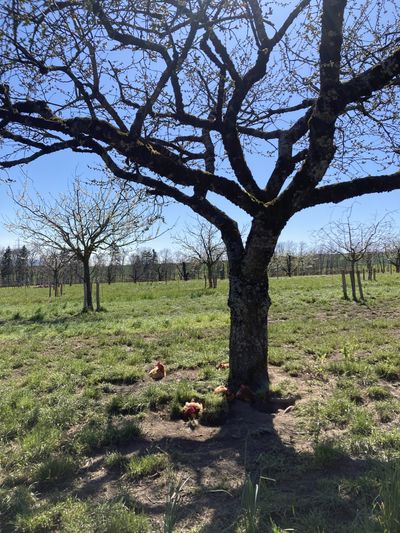 Nanook of the North — Jul 2, 2023Two days ago I watched Nanook of the North, a documentary about an Inuit man and his family. This isn’t a documentary in the conventional sense. This documentary dates back to 1922 when the Documentary film was a brand new genre. This is one of the first documentaries, if not the first. I read about it for years, until, when I was watching Northern Exposure I did a search and came across the documentary on Filmin....
 -
 Mythbusters: A Fun Documentary Series — Jun 29, 2015Recently Netflix Switzerland made Mythbusters available on their service. As I watched episode after episode I noticed the camaraderie between those who participate in the show. We see that Adam and Jamie occasionally argue but that overall they are having a lot of fun. We see them laugh, joke, tease each other, and collaborate....
 -
Multicamera sound — Dec 12, 2006Yesterday sound was added to the multicamera in order to add more depth and it’s almost ready. there’s a little fine-tuning left before it’s ready for release. I’m not sure about the documentary because I took a break from it last night. Two days till the deadline....
-
Much clearer — Jan 23, 2007I went for a meeting today and the documentary idea is far clearer now than before. Thanks to the help of the tutor I’ve got a far more focused way of looking at the question I wanted to ask. I still need to write a third draft of the proposal and get it approved. In the meantime I can already start writing the introduction to the dissertation explaining the context and setting the scene for the remainder of the document. Going to be fun from now on....
-
Monkey Thieves, Great in HD — Jan 26, 2009Monkey Thieves is a documentary about the Gulta Gang, a gang of monkeys in India wreaking havoc. What I love about this documentary is that it’s a great topic in HD. You see all the details. You see the faces, you see how they eat a grape but throw away the skin for example. You see wide shots of the city and you see other animals. It’s all about the visual wealth that documentaries can offer you. It’s just a well shot and humorous look at monkey behaviour. You see smiling faces in the background. The scene is monkeys stealing ice creams and eating them. They hold it with the stick, take little bites and more....
-
Monkey Thieves, Great in HD — Jan 26, 2009warzabidul - Feb 4, 2009...
-
Magnetic - Geneva premiere — Nov 11, 2018Yesterday I went to Magnetic’s Geneva Premiere and I really enjoyed some segments of the film and found that others were less interesting. Keep in mind though, that this film is two hours long and that this increase and decrease in interest is normal....
-
List of books on documentary — Aug 16, 2006Theorizing Documentary (Afi Film Reader) A New History of Documentary Film Television and the Public Interest: Vulnerable Values in Western European Broadcasting Documentary in the Digital Age A few of the books I need to get through over the next few days....
-
Life on earth - as told by David Attenborough — Apr 11, 2007Natural history is an interesting topic to study although whatching the documentaries can be quite challenging. Today I decided to buy a piece of documentary result and as a result I have struggled to stay awake for over two hours. It is not that I do not like these documentaries and it is not that I have not slept enough but simply that by their very nature early documentaries make staying awake a challenge. We’re all familiar with that feeling. As children we would be trapped listening to people for up to 8hrs a day five days a week for weeks on end. It meant that we would have to find any method possible to stay awake. That is not what I have learned from watching these two life on earth documentaries. What I have learned and what I have thought about is the nature of the documentary genre and how it has evolved over the past three decades. When Cousteau and David Attenborough were making their documentaries they were exploring a new world in a new age of discovery. Technological innovation had made the move from exploration of land into the exploration of the sea. Cousteau spent hundreds of hours underwater learning about the marine world and David Attenborough created his documentaries over a decade later. Cousteau spent hours and hours telling us about how his team were working and exploring the new frontier, showing how exciting it was. David Attenborough came along fifteen years later and spoke of a 24 year old Darwin who came to the Galapagos Islands to begin his studies which would lead to his theory of evolution many years later. Documentary production, like all art forms has a natural progression with cross pollination between disciplines and nations. The dissertation I’m working on will explore this much further....
-
Learning more about Dziga Vertov and his views on cinema — Nov 2, 2007Dziga Vertov is an interesting personality because of his ideas of the Cinema eye. His notion was that with the cinema eye, the Kino Glaz you could capture life unawares whilst being involved in the creative treatment of actuality. After making some quick money by answering some social networking questions I dropped by the apple store only to find that computer games are far too expensive for what they are. I dropped down via the usual streets and got to waterstone’s. There is a small documentary section which I have visited on numerous occasions in the past and today I found an interesting book. It’s Dziga Vertov - Defining Documentary Film by Jeremy Hicks. It’s a translation of some of Vertov’s key texts so that the non russian speaking audience may understand his ideas more clearly. I only got as far as reading the introduction but I hope that through the reading of this book I may get some new views and opinions on the current media landscape....
-
Jamaican Gang Culture And South African Drug Culture - Unreported World — Oct 17, 2007As I write this I am happy that I have been to watch quite a few interesting documentaries at the Frontline Club. The two most recent were made for Channel 4’s Unreported World. This is channel four’s “acclaimed foreign affairs series” and covers a number of topics. The two documentaries I watched were South Africa: Children of the Lost Generation and Jamaica: Guns votes and money....
-
Human - A Yann Arthus-Bertrand documentary — Sep 14, 2015The French have an interesting history of documentary film. Jean Rouch explored social questions with his film Chronique d’un été, a revolutionary film at the time because of the tech that they used. The Cinéma Eclair and crystal sound sync. A few decades later Yann Arthus-Bertrand is following in Jean Rouch’s footsteps with a net cast far wider. Instead of Paris and France we see interviews with people from around the world. The documentary is split in to volumes and each volume is divided in to sections. At the beginning of each section you have footage showing the diversity of landscapes in which people live as well as the people themselves. You see images of a caravan on a dune, images of a river delta, a fishing boat being unloaded. People are answering questions about love, abuse, work and more. You feel compassion for these people because they stare straight in to the camera and they are speaking to us, who are in the audience. We feel compassion for these people, we are moved to laughter by some and to tears by others. There are some beautiful images created by what the people say. One person speaks about buying things. He says that we don’t buy things with money but that we buy them with time. That is a beautiful and more accurate image than we are used to. I love gadgets and sports so I often think of how long an investment will take to offset. I used to think “in a week” I will have covered the expense. Another image painted by words that I like is that of wealth and comfort. When you are poor the river is empty and so every stone is a challenge. With wealth you do not need to worry about the stones because the river is full. This is an observational documentary, typical of the cinéma verité movement and the French and German school of documentary. We are not told what to feel or think. We are presented with evidence and we are to draw our own conclusions. It can be perceived as slow and dull by some and beautiful by others. It brings us to the “All Seeing Eye” that Vertov discussed at the very birth of the documentary genre. His ideal was to have cameras that would film and document “life unawares” as they went about their daily lives. In so doing the cinema was an observer, without interacting. Of course these are just interviews so there is some interaction between the camera operator and the talent on screen. They are meant to speak from the heart, without censor. They were meant to give us an honest representation of who they are and how they feel. It gives us a serious glimpse in to the lives of others. it makes me think of the interviews I have listened to, of the stories I have heard told when I was logging and transcribing footage for a video archive. Some of the things people speak about are timeless and others are contemporary. With this documentary record of people’s thoughts and emotions so a moment in time is preserved. I have yet to watch the next volumes and will do so in the evenings. I recommend you take the time to watch at least part of these documentaries....
-
Henry Dunant and IDHR — Feb 28, 2007Whilst doing my work last week in Geneva I was told that I had to include footage from the Film “Henry Dunant - Du Rouge sur la croix”. I didn’t get to watch the film until today but I enjoyed it. it’s an interesting film for anyone who has been brought up in Geneva to watch. There are two cities in the World that have the United Nations, New York in the US and Geneva in Switzerland. Both these locations are important but Geneva is seen by some as the capital of Human rights. Henry Dunant is an important figure in the history of International Human Rights (DIH) because when in Solferino after seeing the ravages of war he wanted to help anyone affected by conflict, no matter the nationality, religion or ethnic background. In effect for him they were “brothers in arms” to quote the film. The film itself is well shot, has a good rythm and a good pacing. It tells the story without getting bogged down in details and serves as a taster for those who would like to do more research on the subject. The acting is good and it’s amusing to see the old town of Geneva in a film, especially since those are the streets around which I have spent many hours on a number of weekend evenings. I love the international aspect of Geneva. I’ve done work for the International Committee of the Red Cross, the International Labour Organisation, I’ve been accredited to the United Nations on three seperate occasions, each one for over a month and I’ve done work for the World Health Organisation. I have been through Two International Labour Conferences, the first ever General Staff meeting of UNAIDS and on the lighter side I’ve been to two Student League of Nations as a precursor. This is part of the reason for which I see Globalisation not as a form of corportage agrandisement but rather as a coming together of the world’s population, living according to specic rules and guidelines which means that we are compassionate about ethnic diversity and co-habitation. Where are you from is not to find out what village or town you’re from but what country. This is because we follow world news and international politics. We are aware of every continent and aspects of many cultures. That’s why we watch BBC World when we have the chance and read the international newspapers. If you have the opportunity of seeing Henry Dunant then do so, it’s worth it....
-
Gael Metroz au City Club de Lausanne — Sep 12, 2008Today I met, Gael Métroz, a guy who decided to travel along the trail of Nicholas Bouvier shortly after his studies. It was an opportunity to try the seesmic style of interview at the City Club in Lausanne. The idea is simple. Those doing the interview have a laptop with a webcam and a good internet connection. They go to film an interview with the laptop and the audience themselves ask questions from the person appearing. It was the first time that the people I was with tried this style of interview and it was a good experience. Nomad’s land - Gael Métroz What was also a nice experience was getting to talk with Gael, getting a more personal view than if we had watched the interview on television. It’s a more relaxed, and in this case, less rushed interview, more personal less formal. I hope that we get to do more of these events....
-
Gael Métroz and Dziga Vertov — Sep 13, 2008For three weeks he had no battery and was unable to record anything but the rest of the time he was collecting 150hrs worth of video for his documentary Nomad’s land. We’re speaking of Gael Métroz of course, a swiss born traveler who wanted to retrace the steps of Nicholas Bouvier. He would travel from Switzerland to Sri Lanka. I want to see the documentary but so far I’ve had no opportunity. I’m more interested in what he talked about in between seesmics. He told us that he would meet with the people and let them use his camera. At first what they filmed would not be so good and he would show them how to get some better results. In effect the people would participate in the making of the documentary. It’s interesting because that’s what Dziga Vertov was trying to do with the Agit trains in Russia in the early 1900s, the idea that the camera would be used to document the everyday lives of groups of people in a country as vast as Russia in Vertov’s case and as big as half the globe in relation to Métroz’ case. That’s the trip you want to do, one where you travel for a year meeting people, experiencing their culture and really having the time to talk. He would bring up that he wishes he had this amount of time in the Western world to get to know people, without having to worry about everything else. It was interesting. That’s what would make an interesting travel documentary, far more in depth than the entertaining Lonely Planets we have watched on numerous occasions. It was also a taste of why I enjoyed going to the Frontline club in London. You get a short introduction about the subject, watch the documentary and then listen as people discuss the issues that are raised by the documentaries. It’s an academic exercise rather than entertainment. It’s a shame there aren’t more opportunities like this that i know of around Switzerland....
-
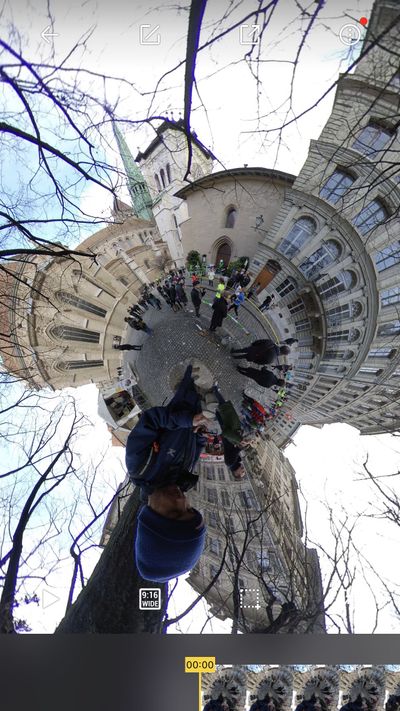 Filming events in 360 — Jan 12, 2020We have all seen events covered by photographers and camera operators but how many events have we seen covered with 360 degree videos?...
 -
Edwardian Farming, a BBC documentary series about the life of Edwardian farmers. — Jun 13, 2015I really like this documentary series about Edwardian Farming. it is a fly on the wall documentary following three people through a year on an edwardian farm close to Dartmoor. They experiment with market farming, food preparation of the time, trout farming and so much more. It is relaxing and without an over-enthusiastic announcer/narration. It’s a fascinating glimpse at a way of life that those who remember it is becoming dead rather than living history. The BBC excel at this type of content and this is what they should focus on producing more of....
-
Dziga Vertov, the Kino Glaz and Web 2.0 — Apr 2, 2007How many of you have a digital photo camera and how many of you have uploaded pictures you’ve taken to the web? How many of you have browsed through thousand of stranger’s photographs? I was in a lecture a few days ago and we were discussing jennycam and how it was something new, something that would lead to BigBrother. Apparently she was creating something new, something that had never thought of before. That is only partially true and here’s the reason why. Dziga Vertov lived in Russia at the beginning of the last century and at the time he worked in radio. His name, Dziga Vertov translated means spinning top. He began his work as a revolutionary when Lenin was still around. He was known for the programs he created. Within a short of time, he progressed onto the Agit trains and into film. The Agit trains were developed to carry information around the Soviet Union, in order to make sure that people all around this vast country would have a sense of belonging. He developed a theory which was based around the Kino Glaz, the all-seeing eye, Kino is cinema, glaz, is glass. In other words the cinema glass. The idea which he developed, the vision he had was to get the video cameras everywhere and capture life unawares as he called them. In other words, he wanted to film ordinary people going about their ordinary lives without them acting for the camera. This was a revolutionary concept that got him labeled by Sergei Eisenstein as a"film hooligan". Keep in time Eisenstein’s famous sequences. Massive shadows on walls, vast skies, and highly staged video sequences. He created the theorie du montage(theory of construction - my translation) after all. In other words, he believed everything was staged. If you’ve heard of “The Man With the Movie Camera” then you have seen “an experiment in six reels”. What Dziga Vertov did pre 1929 was do what Jean Rouch would do with André Coutant’s handheld cameras almost half a decade later. What Dziga Vertov did first showed the theatre room, the seats animated to go down, the arc light to be set to produce a bright spark, and for the film to begin. He then proceeded to show the city waking up and continued from there. He juxtaposed the shots of the eyelids fluttering and the shutters, he got a person waking up from a bench and the city to start it’ daily activities. He was in effect not using narration in any strict sense of the term. It was nothing more than a collection of shots. Aside from the shots, he showed his wife editing frame. It begins with nothing more than one frame, then a strip, then a person looking at one shot, another and we see it being assembled into a sequence. We see the camera move into a glass, move of its own accord, and more. He was playing and he was setting the stage for something that would become increasingly important over time. Leni Riefenstahl in Triumph of the Will uses hundreds of cameras given to the audience to document the events (and spent three years editing the material) whilst the European Broadcasting Union had the first International broadcast in 1956. It was a moment in life seen from various capital cities in Europe. Each national audience could see that of many other countries. Vertov’s vision has just expanded. As the technology evolved so people began to film everyday life, 16mm, VHS, Hi8, DV, and digital. They’re all mediums that allow for the capturing of life unawares. It’s the all-seeing eye. In the past five years, there’s been an explosion. Everyone has a digital camera, whether a crappy phone camera or a 12megapixel single-lens reflex. People are uploading these images to Flickr, to Zoomr, to Facebook. Everywhere. As a result of The kino glaz, all-seeing eye Vertov talked about is now mature. The most recent event though has to be justin.tv, a San Franciscan who has decided to document his everyday life with a camera strapped to his head. No longer is the apartment enough. Now the world is seeing the daily life of a San Franciscan. Remember timecode? It’s like that but one person and live. There is no editing, no staging. I must admit there are some pranksters. I listened to an interview he did for television where he spoke of people calling in a bust on his apartment, ordering pizza for him, and more. Quite amusing, far better than big brother. To conclude I think that we’ve come to the All-seeing eye that Dziga Vertov was talking about almost a century ago and I find that it’s great. I love the idea that every aspect of life is being documented extensively....
-
Dziga Vertov, the Kino Glaz and Web 2.0 — Apr 2, 2007richard - Apr 5, 2007...
-
Dziga Vertov and Social Media — Oct 15, 2019A century ago Dennis Arkadievitch Kaufmann, more commonly known as Dziga Vertov, the spinning top, came up with the concept of the All-Seeing Eye. The Kinoki. The Cinema Eye. His idea was that with time life unawares could be documented and daily life would be captured by cameras for everyone to see....
-
 Documenting climbing feats — Nov 23, 2018Documenting climbing feats is an interesting challenge because you deal with issues of accessibility, projects that can last for months or even years and in some cases you’re dealing with the prospect of the climber understanding the problem, and then achieving his goal. For two or three years I really explored ideas for a climbing documentary before losing steam. My interest in the topic was still there but I couldn’t think of whom to put in front of the camera....
 -
 Documentaries about JavaScript Frameworks — May 2, 2022Within the last week Honeypot Originals have released a number of documentaries. Each episode covers a different JavaScript Framework. So far that have Vue.js, Ember.js, Elixir and GraphQL. Each of these documentaries is about half an hour long and interviews some of the key players. What is nice about these documentaries is that they take names and projects that may be familiar to us, but add faces and context to them. I have heard about some of these people via podcasts and more. With these videos I get to listen to them, and watch them explain the importance of their projects....
 -
Dissertations, documentaries and such — Nov 19, 2006I’ve been reading about documentary makers and it’s interesting. Today I read about several of them, took notes, and explored the ideas that they demonstrate. The one that has confused me is Kossanovksy and his ideas of Dogma. I’m wondering how you do a documentary without having interviews or cutaways. Does he mean that we should not use them gratuitously or in some other manner? I need to do more search on this particular aspect. Once more I’ve watched Control Room, the documentary about al Jazeera. I found it interesting....
-
Deep blue — Jan 18, 2007It’s fun to watch documentaries when you know that they spent at least two to three years in the making. I like the documentary because it’s an opera rather than a documentary. There is a minimum of comment and a maximum of shots. There are some sequences where you see things happening in front of the camera and it switches to a second camera. That’s because for sequences like the penguins jumping out of the water they filmed it with one film camera and one pole. Doesn’t that make you wish you were studying a media BA. where part of your studies is television. Every field of studies has it’s advantages. One person I know is studying James Bond films, another is doing Disney cartoons. I’m doing underwater documentaries between France and England. Another is doing something related to social elements and zombies. One is doing special effects It’s a broad range and that should make it more interesting to those that have to read through all this content....
-
Day two of editing — Dec 6, 2006And there we have it. Day two of editing is over and we’re up to five minutes with a script that’s ready to be fleshed out by a variety of interviews. I love editing and whilst writing this I’m beginning to look forward to tomorrow’s editing. The problem is that I was getting a little tired of being in the same room for so many hours in a day. That’ll change tomorrow as new things occur. We’ve added the sequences to the timeline and it would seem that things are progressing nicely. I have captured the making-of footage for the multicamera project and that should be fun to edit. It will wait until later in the week when the Documentary edit is closer to completion....
-
Day One of Editing Done — Dec 5, 2006Day one of editing has finished and I’ve spent the last two hours resting and relaxing. The editing is quite interesting. We’ve got an interview with someone who was considered as hottest single in the world two or three weeks ago. The documentary is about myspace and it’s effect on the music industry. It’s interesting because we have at least ten interviews, that’s ten points of view, some musical, others more ITish and yet more from the ordinary public. Three segments have been assembled and we have a few more to work on. The duration is only five minutes so far but will progress tomorrow. The rough cut needs to be done by thursday to give an additional week for gathering extra shots and cleaning everything up. I need to make time for the editing of the multicamera project....
-
Day four of post production — Dec 7, 2006And so it came to be known that on the fourth day of post-production a number of people watched the rough edit of the multicamera project. They appreciated it and of course, there are some tweaks. Most of it has to do with sound being added and CG. On the docu front, progress has been slow although feedback has been received. Both projects are going along nicely....
-
 Day 33 of Self-Isolation in Switzerland – A video walk — Apr 17, 2020Today I went on a video walk with the DJI OSMO pocket three or whichever number it has and I took a series of frames. Before going for my daily walk I searched through the Vision Du Réel virtual Film Festival list of films and I found “The Bridge”. It’s available for all to watch during the festival. I didn’t watch it in full but from what I saw it’s a series of shots in the style of Dziga Vertov’s Man With the Movie Camera....
 -
CuriosityStream - a place to find interesting documentaries — Oct 25, 2018Yesterday I started exploring CuriosityStream, a video streaming website that makes finding and watching documentaries easy. You can have a trial run of seven days but after watching three documentaries since yesterday evening I am convinced that it is a place where I want to watch more content....
-
A sunday morning — Dec 10, 2006It’s Sunday morning and yesterday was another day of shooting and editing. As a result of that, the documentary has progressed a little more. One or two more segments have been added, graphics have been improved and the project as a whole looks good. There’s still a lot of work to be done and I’ve been thinking of extra graphics and shots that could help make the documentary more interesting to watch. Another 7hrs before editing is over for today...
-
A crude Awakening, the oil crash — Oct 17, 2007What makes a good documentary is the quality of the interviews and how they are put together to inform and educate us on the topic they are tackling. A Crude Awakening - The Oil Crash is a perfect example of this. Using a great wealth of interviews and archive material it illustrates why the current consumption of oil is unsustainable. It is well constructed and has a strong message....
-
 On the Topic of Vanishing Camera Operators and Photographers — Feb 6, 2026In the Age of the AI bubble, but long before this, photographers and camera operators have been vanishing from television studios as well as from events. Where you would have hired a camera operator and video editor you now hire a video editor/graphist because video editing has moved from editing video footage to creating graphics filled videos. This is part of why I became disenchanted with video and why I pivoted towards media asset management and self-hosting....
 -
 Vision du Reel - I lost view of the Landscape — Apr 14, 2025I watched J’ai perdu de vue le paysage at Vision Du Réel last week and I don’t know whether I like or dislike this documentary, ironically for the very topic that it is exploring. The idea of the eternal return, repeated over, and over....
 -
Vision Du Réel The Mountains Won't Move — Apr 7, 2025Vision Du Réel is a documentary film festival that takes place every year, or almost. It is an opportunity to watch documentary films on a screen bigger than a laptop or television. Many films are screened with the director/producer but they are also screened a second time. Yesterday I went to watch The Mountains Won’t Move. It is an observational, cinéma verité style film....
-
 The Apple TV Vietnam War Documentary Series — Feb 7, 2025Last night I watched the first episode of a documentary series on the Vietnam war, made by Apple TV. It’s eighteen hours of documentaries covering different aspects of the conflict....
 -
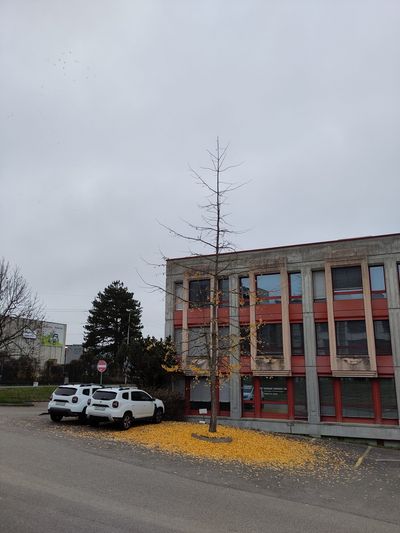 An Arte Documentary Series about Cars — Jan 24, 2025Last night I watched two episodes in a documentary series about a brief history of cars. In the first documentary we see a discussion about the history of cars from the 19th century to modern day with the use of archive footage. In the second we see how the car helped with consumerism. In the third I think they discuss the mental health consequences of cars....
 -
Big Timber - A Netflix Documentary Series — Jun 28, 2023For a few days I have been watching a few documentary series on Netflix. Big Timber is one of them. Usually I like nature that is untouched. I like to see trees that are standing tall and proud, not on their sides, ready to be chopped up into wood for housing....


